Lancaster kickball rules reveal the sport’s precise field geometry
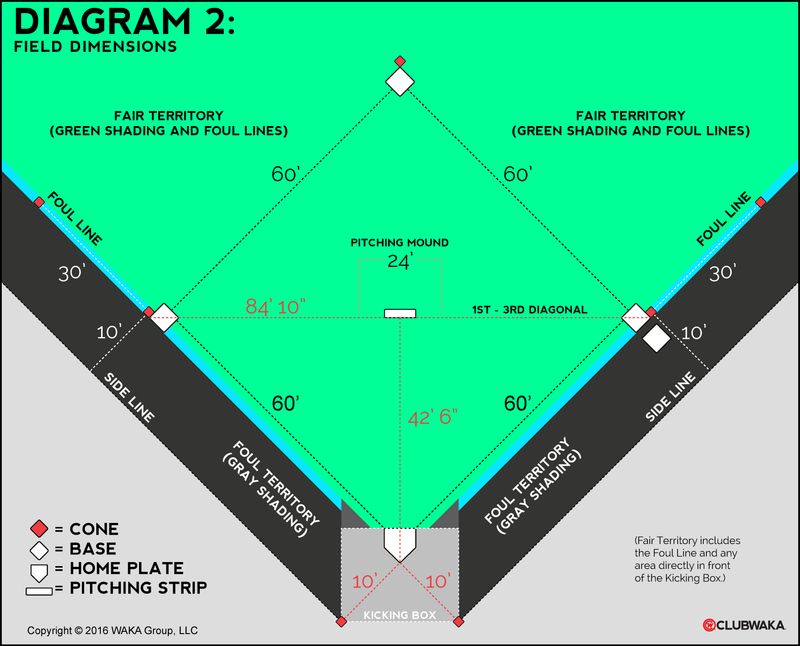
Lancaster’s kickball rules strip away the schoolyard haze and show a sport built on exact measurements. A 60-foot square diamond, 84 feet 10 1/4 inches on the diagonals, and a 42 feet 5 1/8 inch pitching distance make every throw, kick, and step count.
The 60-foot diamond changes the sport before the first kick
Lancaster, Ohio’s rules put the game on a 60-foot square diamond, which is short enough to create instant pressure and long enough to punish sloppy defense. The distance from home to second and first to third is 84 feet 10 1/4 inches, so runners are covering more ground than the basepaths suggest at first glance, especially on balls hit into gaps or misplayed infielders. That geometry compresses the reaction window and explains why kickball rewards fast hands, clean relays, and smart positioning as much as raw power.
The pitcher’s relationship to the field is just as defined. Lancaster places the center of the pitching area 42 feet 5 1/8 inches from the corners, which gives the pitcher room to manage the at-bat without turning the play into a reach-free contest. In practical terms, that distance lets a defense influence pace while keeping the ball playable, so the sport becomes a contest of timing rather than a simple sprint from pitcher to kicker.
The control box turns pitching into traffic management
Lancaster’s rules go further than a basic mound or throwing lane. The pitcher’s control box measures 9 feet by 9 feet, a defined square that gives the pitcher a fixed operating zone instead of an open runway. That matters because the pitcher is not just delivering the ball, but controlling spacing and helping set the tempo of each play.
The strike zone is equally specific: one foot on either side of home plate and one foot high. That compact zone gives low, skidding pitches real value and makes placement a central skill for both sides. A ball that might look routine in another bat-and-ball game can become awkward here because the kicking motion creates more variation in contact, and Lancaster’s box around the plate keeps that challenge tight and consistent.
Why runners and fielders play a riskier game than the schoolyard version
One of kickball’s sharpest strategic twists is that the ball can stay live after an overthrow, as long as it does not clear the fence. Lancaster’s rules preserve that pressure, and it changes how defenses throw the ball after a kick. A hurried return throw can cost extra bases, which means the infield and outfield have to think about the next play before the current one is over.
That is where the 60-foot diamond matters most. The bases are close enough that a hard kick can become a force play almost immediately, but the field is still large enough that a rushed throw can open a lane for runners. The result is a game built on bang-bang decisions: cut the ball off cleanly, relay it on time, and avoid turning a routine out into a live-ball scramble.
Adult leagues use the same geometry, but with different entry points
Lancaster Parks & Recreation’s adult kickball page says the league is for adults 16 and over, with a registration deadline of April 23 and games set to begin May 14. A separate Lancaster information sheet from 2020 listed a fee of $45.00 per person and said a shirt would be provided by the league. Those details show how municipal kickball is organized not as casual pickup, but as a structured recreation product with deadlines, fees, and team gear.
That structure is common across adult leagues. Many rulebooks use 10-player fields, inning limits, and safety restrictions such as no bouncies and no headshots. Some leagues require coed roster balance or alternating kick order, while others set roster minimums and maximums to keep games moving. The format varies by city and venue, but the core geometry stays recognizable because the field itself drives the style of play.
Kickball still carries its youth-sport DNA
Playworks describes kickball as a game for large groups ages 6 to 10 and says its development goals are teamwork, depth-perception, and eye-hand and eye-foot coordination. That framing helps explain why the game lives so comfortably in schools, camps, and recreation programs: the same simple mechanics that make it accessible to children also keep it adaptable for adults.
The adult version only works because the fundamental skills are the same. Kids learn to judge a ball in motion, choose a base, and react to a live play; adults do the same thing, just with sharper throws, more formal rules, and a better sense of how a small error can spread across the field. The geometry is constant even when the competition level changes.
The sport’s rule culture is more organized than its nostalgia suggests
The World Kickball Association says it is the official source for kickball and describes the game as one of the most popular recreational sports in the country. Its FAQ identifies the official ball as the red WAKA Kickball, and its rules page emphasizes that the sport is meant to be social and fun while still publishing formal rules. A 2009 intramural rules post went even further, calling the World Adult Kickball Association the preeminent adult kickball organization, which shows how long WAKA has served as a reference point for campus and recreation leagues.
That formalization matters because it gives leagues a common language. When the sport is played in city parks, on college fields, or through social leagues, the same idea keeps reappearing: a recognizable ball, a controlled strike zone, and a field that rewards smart decisions over chaos. The official rules are not just paperwork. They are the framework that makes kickball legible across different cities and ages.
How the game grew from a playground name into an adult league product
Kickball’s roots go back more than a century. A 2015 school document says the sport was originally called “Kicking Baseball” and was claimed to have been invented as early as 1910 by Dr. Emmett Dunn Angell in his book Play: Comprising Games for the Kindergarten, Playground, Schoolroom and College : How to Coach and Play Girls' Basket-ball. That same source says the game “seems to afford equal enjoyment to the children” and helped them understand baseball.
The modern adult boom sits on top of that old playground logic. Livability ran a story titled “America’s Kickball Boom: 5 Reasons Why This Sport Is Growing” on September 23, 2014, and GO Kickball markets itself as “America's Premier Social Experience” while saying there are dozens of leagues across the country. Put together, those pieces show a sport that moved from a child’s game into a structured recreation market without losing the easy entry point that made it durable in the first place. The field may look simple, but Lancaster’s measurements make clear that kickball is governed by a very precise hidden rulebook.
Sources
- [1]lancasterohio.gov
- [2]lancasterparks.com
- [3]playworks.org
- [4]kickball.com
- [5]fduknights.com
- [6]livability.com
- [7]fergusonhs.org
- [8]gokickball.com