Lee County girls flag football grows through summer drills
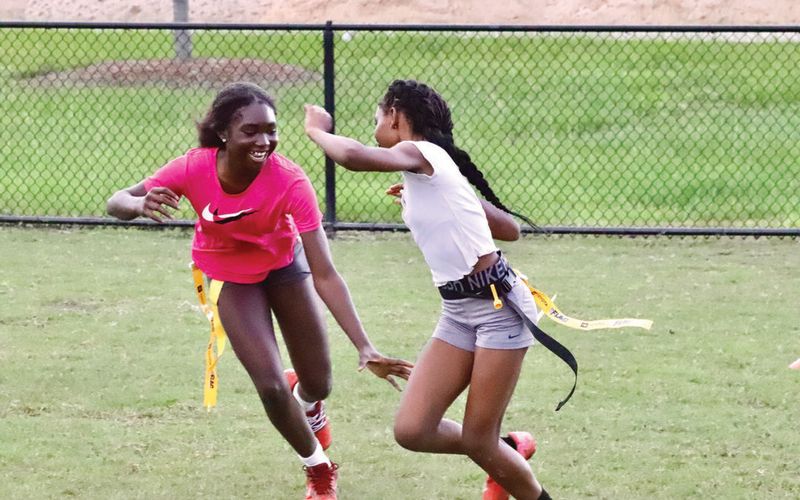
A humid evening at Beauregard Park showed how girls flag football is taking root in Lee County, one drill at a time. The practice stretched for two hours on the multipurpose field, with orange and blue cones, flagged belts and a pre-planned workout that moved from catching and throwing to movement games that made the action look natural by the end.
A field-sized snapshot of growth
The scene was small enough to fit around a single field, but the shape of the session mattered more than the size. Coaches had built the workout in advance, which gave the evening a different feel from a casual pickup gathering: players were being taught how to move, how to react and how to trust the structure of the game.
That progression matters in a place like Lee County because early growth depends on repetition and comfort. A few girls show up first. Then a practice gives them a reason to return. Then the sport starts to feel less like a novelty and more like something that belongs in the local sports calendar.
From basic skills to real habits
The drill work centered on the fundamentals that define flag football before competition ever becomes the point. Catching and throwing came first, then the pace shifted into games like sharks and minnows, which forced the girls to keep their feet active and their decision-making quick. By the end of the session, the movements looked less forced and more instinctive.
That is the hidden work behind every new program. A young team does not become sustainable because of a single game or a headline result. It grows when coaches can use a summer evening to build hand-eye coordination, spacing, pursuit angles and confidence in the same session, and when the players start to recognize those patterns the next time they step on the field.
A program built on intentional repetition
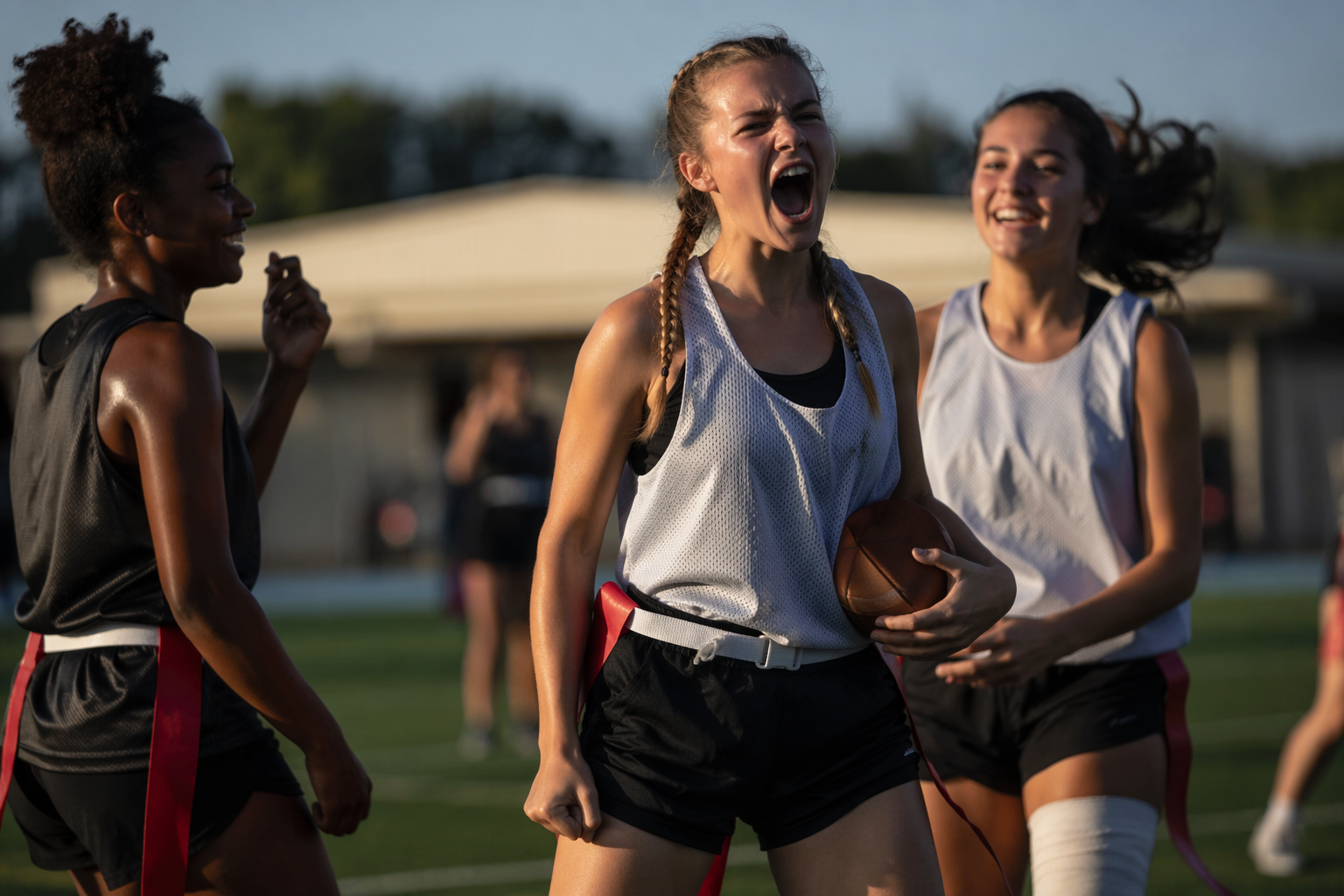
What started two years ago as a handful of girls tagging along with a long-running boys’ program has now become something organizers describe as a developmental summer camp and, increasingly, a pipeline. That shift is important because it shows the sport moving from informal interest to deliberate structure.
The work is not glamorous, but it is the kind that produces real participation. A summer session like this gives organizers a chance to see who keeps coming back, who learns quickly and which players are ready for the next layer of instruction. It also creates the habits that can eventually support school teams, travel teams and the kind of long-term participation that schools need before a program can stabilize.
Why Alabama’s timing matters
Lee County’s growth fits inside a larger Alabama timeline that has moved quickly. Girls flag football began as an Alabama High School Athletic Association pilot in the 2021-22 school year, with about 50 schools in the inaugural season. In July 2023, the AHSAA voted to sanction girls flag football as a championship sport beginning with the 2024-25 and 2025-26 classification periods.
That progression from pilot to championship sport changes the stakes for every local workout. It tells families and players that the sport is no longer experimental, and it gives communities a clearer path from summer drills to school-season competition. The AHSAA says it will follow NFHS flag football rules starting in fall 2025, and new NFHS uniform policies go into effect for fall 2026, further tightening the structure around the sport as it matures.

The national surge behind the local session
The Lee County practice also sits inside a much bigger national rise. NFHS participation in girls flag football climbed from 20,875 in 2022-23 to 42,955 in 2023-24, a 105% year-over-year increase. That kind of jump explains why a two-hour drill session in Beauregard Park matters beyond one county line: local programs are feeding a sport that is growing fast enough to demand more coaches, more fields and more organized development.
The broader ecosystem has helped make that possible. The Atlanta Falcons, NFL Flag and the NFHS helped develop a toolkit to support Alabama high schools starting female flag football programs, giving schools a model to follow as they build from the ground up. That kind of support turns a promising idea into something that can actually be staffed, taught and repeated.
What community buy-in looks like on the ground
The most revealing detail from the Beauregard Park workout was not a play or a score. It was the way the field itself became a gathering place, with cones marking space, belts making the rules visible and coaches turning an open summer evening into an organized lesson. That is what community buy-in looks like before the standings ever matter.
Girls flag football in Lee County is still early, but it is no longer wandering. The sport now has practice habits, a developmental rhythm and a local base that understands the work involved. In Alabama, that is how a new sport stops being a concept and starts becoming a system.
Sources
- [1]opelikaobserver.com
- [2]ahsaa.com
- [3]nfhs.org