Lexington SC players find deeper meaning in community connection
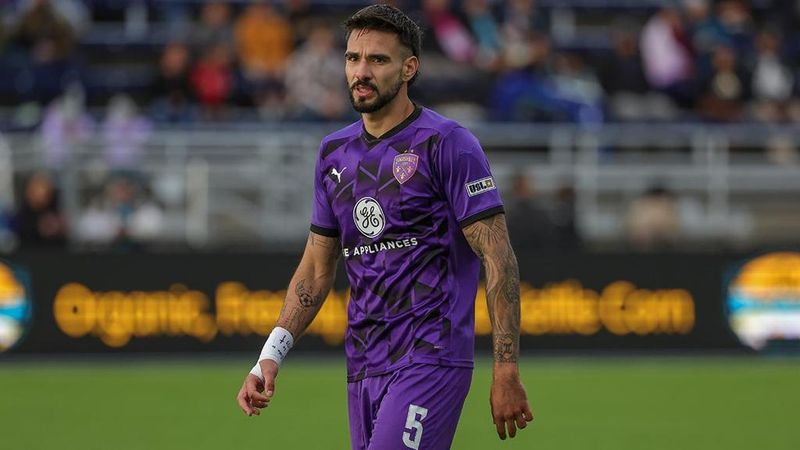
Lexington SC’s second USL Championship season is showing that representation is not a slogan when it is tied to who speaks for the club, who the club signs, and where it plays. For Arturo Ordóñez and Alfredo Midence, the meaning reaches beyond the badge: language, heritage and access to the community now sit alongside tackles, passes and minutes in the league table race.
Representation that shows up on the roster
Ordóñez and Midence are the only two bilingual players on Lexington SC’s roster, and that detail matters in a club still defining what it looks like in the USL Championship. Their presence creates a bridge between a team, a supporter base and a broader Lexington community that is shaped by different languages and backgrounds. In practical terms, representation here is not abstract identity work. It is the ability to communicate, celebrate culture and make the club feel legible to more people.
That matters even more because Lexington SC is still young in the second tier. The club spent its previous life in USL League One before moving up for the 2025 season, and every early-season choice has carried extra weight. A club trying to establish legitimacy quickly needs more than results on the field. It needs players who can help turn a roster into a recognizable civic presence.
A stadium built to anchor the project
The club’s move into the USL Championship was made possible by Lexington SC Stadium, the 7,500-seat soccer-specific venue at 200 Shives Drive, Lexington, KY 40509. The facility can expand to 11,000 seats, and the stadium plus seven training and youth club fields represented an investment of more than $80 million into the community. That scale signals ambition, but it also explains why the club’s identity conversation has to be local, not generic.
The building itself gives Lexington SC a physical home that can hold a larger soccer culture. A new stadium changes the way a club is seen by its own city and by the league around it, especially when the stand is not just for first-team games but is attached to training fields and youth infrastructure. In a market where soccer still has to earn attention, the club’s infrastructure becomes part of the argument for why it belongs.
Lexington SC’s first USL Championship match on March 8, 2025, offered an immediate glimpse of that payoff. The club beat Hartford Athletic 2-0 in front of a club-record crowd of 5,025, a number that underscored how quickly curiosity can become buy-in when the venue, the result and the story line line up. For a second-year Championship club, a debut like that does more than fill a scoreboard. It creates a memory that supporters can attach to the club’s next chapter.
Ordóñez brings a local-rivalry layer to the story
Ordóñez arrived ahead of the 2026 season after two seasons with Louisville City FC, and his path gives Lexington’s representation story a sharper edge. He earned USL Championship All-League First Team honors in 2024, and he was named Defender of the Year, which means Lexington did not simply add a bilingual voice. It added one of the league’s most respected defenders from a regional rival.
That matters in a state where geography and soccer culture overlap quickly. His previous stop in Louisville and earlier time with Pittsburgh Riverhounds SC make his route to Lexington part of the club’s credibility test. The signing says Lexington SC is not only trying to build a community-facing identity, it is trying to do it with players whose resumes already carry league-wide weight.

For a club seeking legitimacy, that combination is powerful. Ordóñez can speak across language lines, but he also brings proof of performance from one of the Championship’s more demanding environments. Representation lands differently when the player carrying it has already been recognized as the best defender in the league.
Midence brings production and roots into the same frame
Midence’s story gives the same theme a different shape. He joined Lexington before the 2025 USL Championship season after starring for Central Valley Fuego FC in USL League One, where he won the Golden Playmaker award with eight assists in 15 regular-season appearances. That production made him a natural fit for a club trying to translate a lower-division identity into Championship relevance.
His first year in Lexington showed that he could contribute across competitions, not just in one narrow role. In 2025, he made 17 appearances across all competitions and logged 1,011 minutes. He scored once in USL Championship play, once in the U.S. Open Cup and added three assists in the USL Cup, giving Lexington a player whose impact stretched beyond one competition lane.
Midence also carries the personal dimension of the club’s representation story. He is from La Ceiba, Atlántida, Honduras, and that background deepens the significance of a bilingual presence on a roster built to reflect the city it serves. When the club talks about community connection, players like Midence make that connection concrete through language, culture and on-field output.
Why fan buy-in starts with visible belonging
Lexington SC says its youth club, academy and pro team unite a community through opportunity, competition and soccer. That structure is not window dressing. The club says its ecosystem includes more than 1,000 players in youth and academy systems, which means the first team sits at the top of a very large pathway. When the professional roster looks and sounds connected to that wider base, the message carries further than matchday.
That is where representation becomes business as well as culture. Supporters are more likely to invest emotion in a club that feels like it sees them back, and young players in the academy are more likely to imagine a path to the first team when the roster includes people who share language, background or a similar route into the sport. Lexington SC’s challenge in its second Championship season is to make that feeling durable, not episodic.
The club’s early milestones already give it a foundation. A new stadium, a strong debut crowd, a 2-0 win over Hartford Athletic and a roster that includes Ordóñez and Midence all point in the same direction: Lexington SC is trying to build legitimacy by making its identity visible. In this stage of the club’s life, representation is not decoration. It is part of how the team claims its place in the city and in the league.
Sources
- [1]x.com
- [2]lex18.com
- [3]lexsporting.com
- [4]uslchampionship.com