Little Fenway shows how replica ballparks define wiffle ball identity
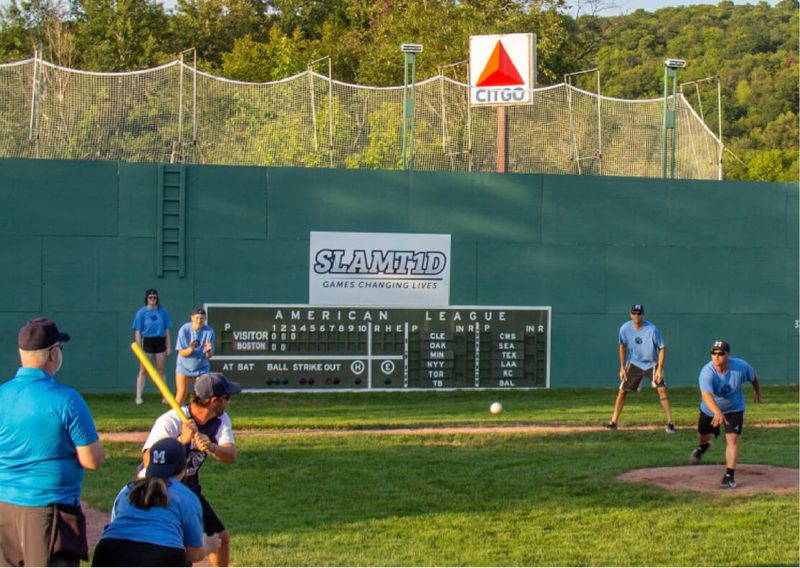
Little Fenway helped turn a backyard game into a place with its own geography. The 14th annual Vermont Summer Classic drew more than 300 players and cleared a $500,000 fundraising goal, but the field itself is what keeps pulling people back: a scaled Fenway Park planted in Essex, Vermont, with the Green Monster, a faux CITGO sign, a right-field bullpen wall, and center-field bleachers built into the layout.
How Little Fenway set the template
Little Fenway was constructed in 2001 by original owner Pat O’Connor and his friends, and Major League Baseball described it as a 23 percent scale replica of Fenway Park on an 11-acre property. The original dimensions mattered as much as the visual details: 41.5-foot baselines and a 30.5-foot mound distance gave the field the tight, fast geometry that wiffle ball thrives on. It was Fenway translated into a scale that still rewards touch, control, and creativity.
That balance is the point. A generic diamond can host a game, but Little Fenway gives the game a face. The Green Monster turns fly balls into decisions, the bullpens and bleachers give every swing a landmark, and the field reads like a miniature baseball memory that players can actually run through.
A complex built from baseball memory
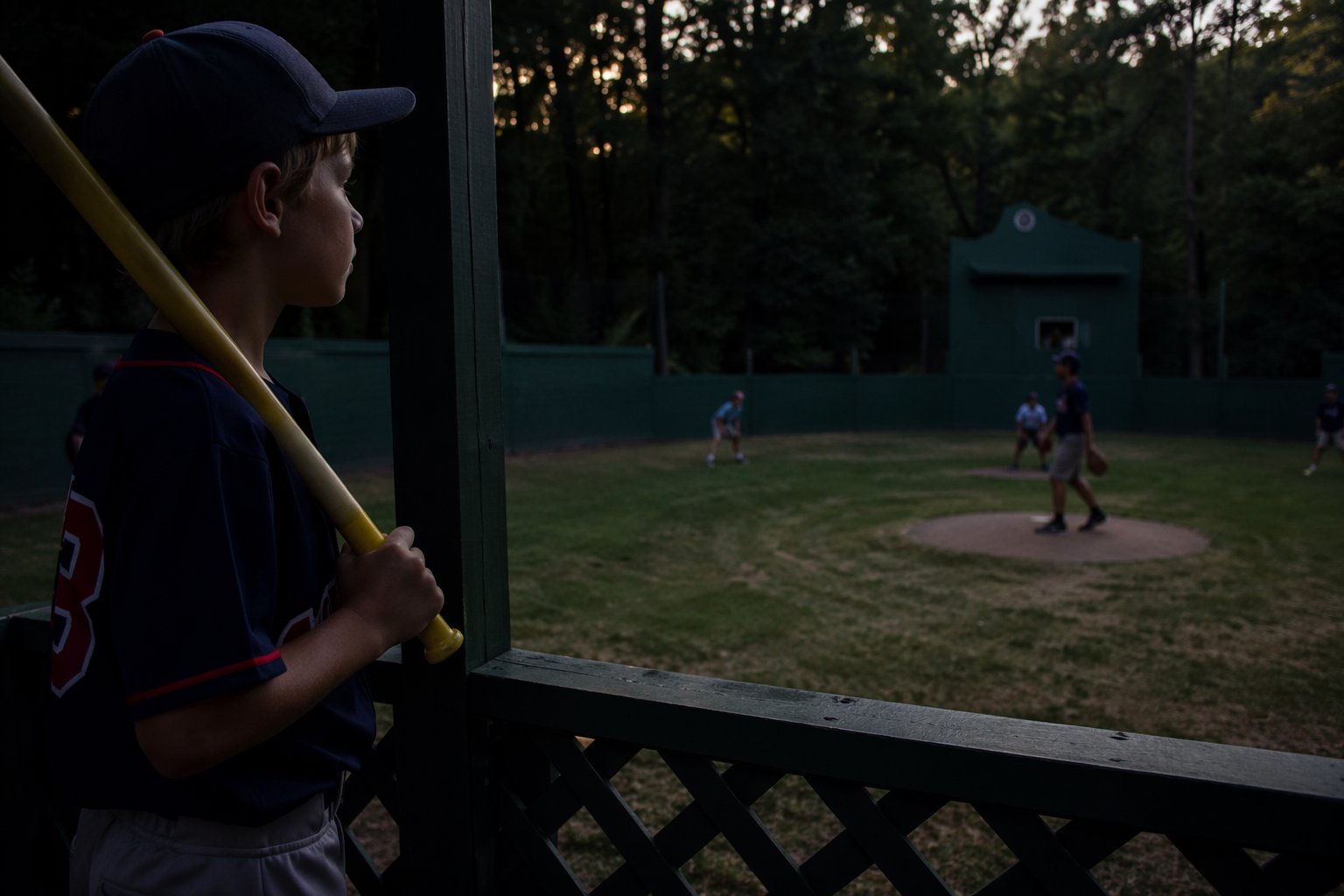
Little Fenway is no longer a single field. SLAMT1D says the site now includes Little Wrigley, Little Field of Dreams, and Little Yankee, turning one replica into a small landscape of baseball history. The naming alone tells you how wiffle ball thinks about identity: not as a blank canvas, but as a series of places players already carry in their heads.
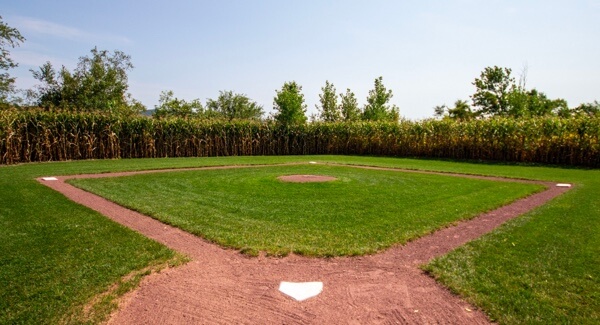
Little Field of Dreams may be the sharpest example of that instinct. SLAMT1D says its outfield wall is formed by more than 1,400 transplanted cornstalks, a detail that makes the field feel both handmade and cinematic. The effect is not just decoration. It changes the way the space moves, frames the ball, and invites the same kind of suspended belief that makes a backyard game feel larger than its footprint.
Why replica parks change the competition
Replica ballparks do more than look good in photographs. They give players a shared language for how a game should feel, because every landmark carries a baseball reference that changes the way the ball is read off the bat. A field shaped like Fenway, Wrigley, or Yankee Stadium gives each pitch, hop, and fly ball a specific identity instead of a generic result.
That is why these venues deepen competition as well as nostalgia. A batter at Little Fenway is not just trying to hit into open space. He is solving a puzzle with boundaries everyone recognizes, and that makes each game more memorable for the people standing around it. The field becomes part of the strategy, and strategy becomes part of the theater.
The tournament engine behind the place
SLAMT1D says tournaments at Little Fenway have raised millions of dollars for people living with type 1 diabetes since 2011, and MLB said the fields have helped the foundation raise more than $4 million. The site became so central to that effort that SLAMT1D purchased the iconic Little Fenway complex in 2022 to preserve its legacy. The place is not just preserved as a novelty. It remains active, upgraded, and tied to a fundraising calendar that keeps returning to Essex.
The Vermont Summer Classic shows how that calendar works. The 2024 tournament was scheduled for August 9-11, 2024, and the 2025 edition was scheduled for August 8-10, 2025. SLAMT1D’s current home page lists the 15th annual Vermont Summer Classic for August 7-9, 2026, which keeps the event cycle moving even as the field itself stays rooted in one property.
Little Fenway West carries the idea west
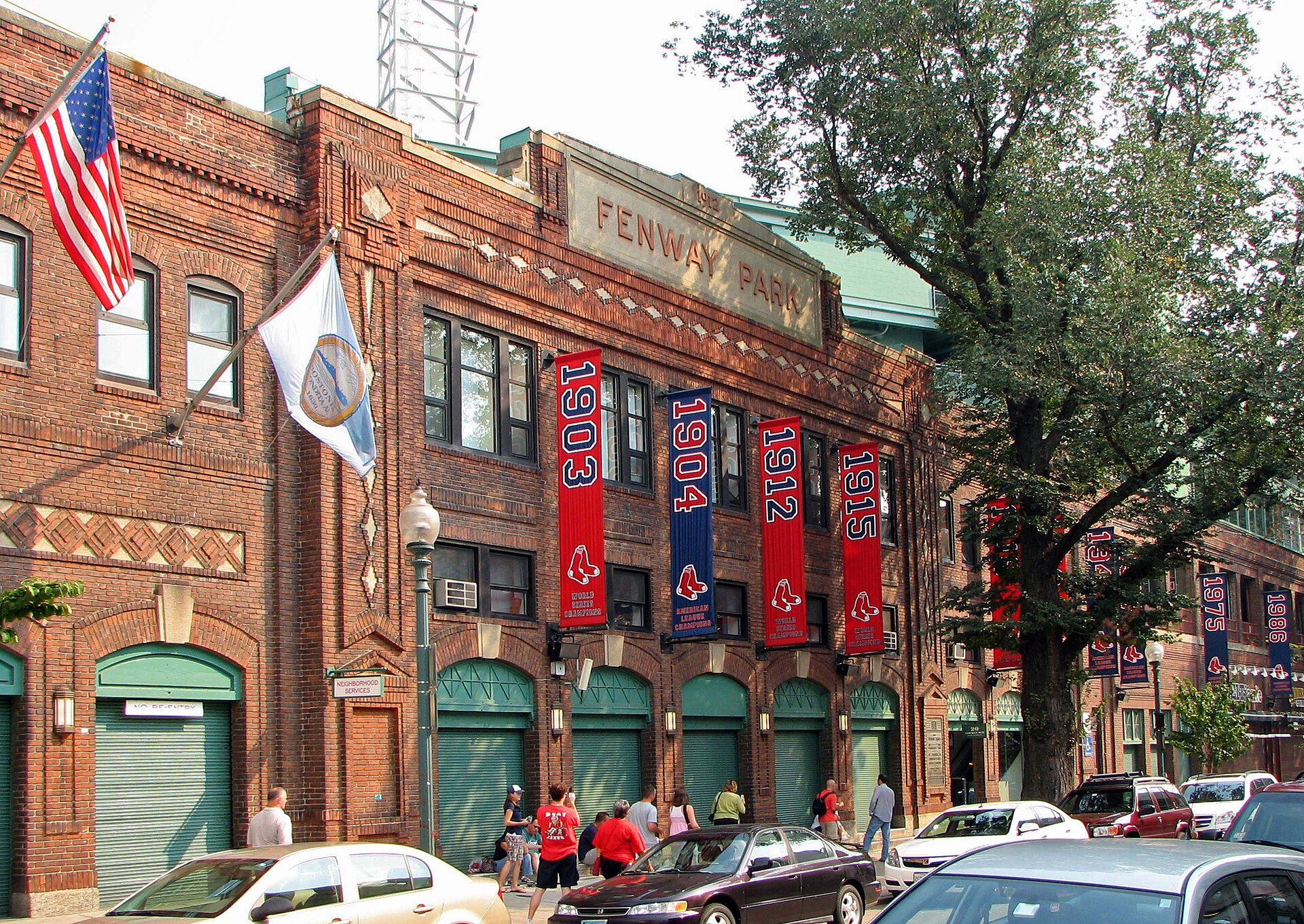
The replica-ballpark instinct did not stay in Vermont. Little Fenway West, at River Rock Ranch in the California Sierra Foothills, says it was directly inspired by the original Essex field and describes itself as a 1/4-scale replica of Fenway Park. It also says the pitcher’s mound, home plate, and all three bases are game-used from the real Fenway Park, a detail that makes the project feel less like a theme and more like a transfer of baseball memory.
Its stated purpose is just as specific. Little Fenway West says it was created to host children and families, with an emphasis on children in need because of illness. That mission gives the replica-field idea another layer: the park is not only a stage for competition, but also a setting where baseball’s symbols are tied to care, access, and community.
A tradition older than one field
The broader culture around wiffle ball has always leaned homemade. The Baseball Hall of Fame places the game in the 1950s backyard baseball tradition and includes it in its collection, a reminder that the sport grew from ordinary spaces before it acquired iconic replicas. Long before Little Fenway became a destination, classic wiffle-ball history already pointed to other miniature ballparks, including a smaller version of Ebbets Field.
That precedent matters because it shows replica parks are not a gimmick layered onto the sport. They are one of the sport’s native forms. Wiffle ball has always invited players to build a field that means something to them, and the most memorable ones borrow from the architecture fans already love.
Little Fenway made that impulse legible. Its 11-acre footprint, scaled dimensions, and skyline of Fenway landmarks turned a backyard game into a destination with a sense of place. The fields around it, from Little Wrigley to Little Fenway West, prove that wiffle ball’s identity is not just in the plastic ball or the whiff of the bat. It is in the field, the memory built into it, and the way a small-scale park can make every game feel like it belongs somewhere.
Sources
- [1]slamt1d.org
- [2]mlb.com
- [3]littlefenwaywest.com
- [4]mychamplainvalley.com
- [5]pro.gofundme.com
- [6]baseballhall.org
- [7]live959.com