LTA guide shows beginners how to build winning padel points
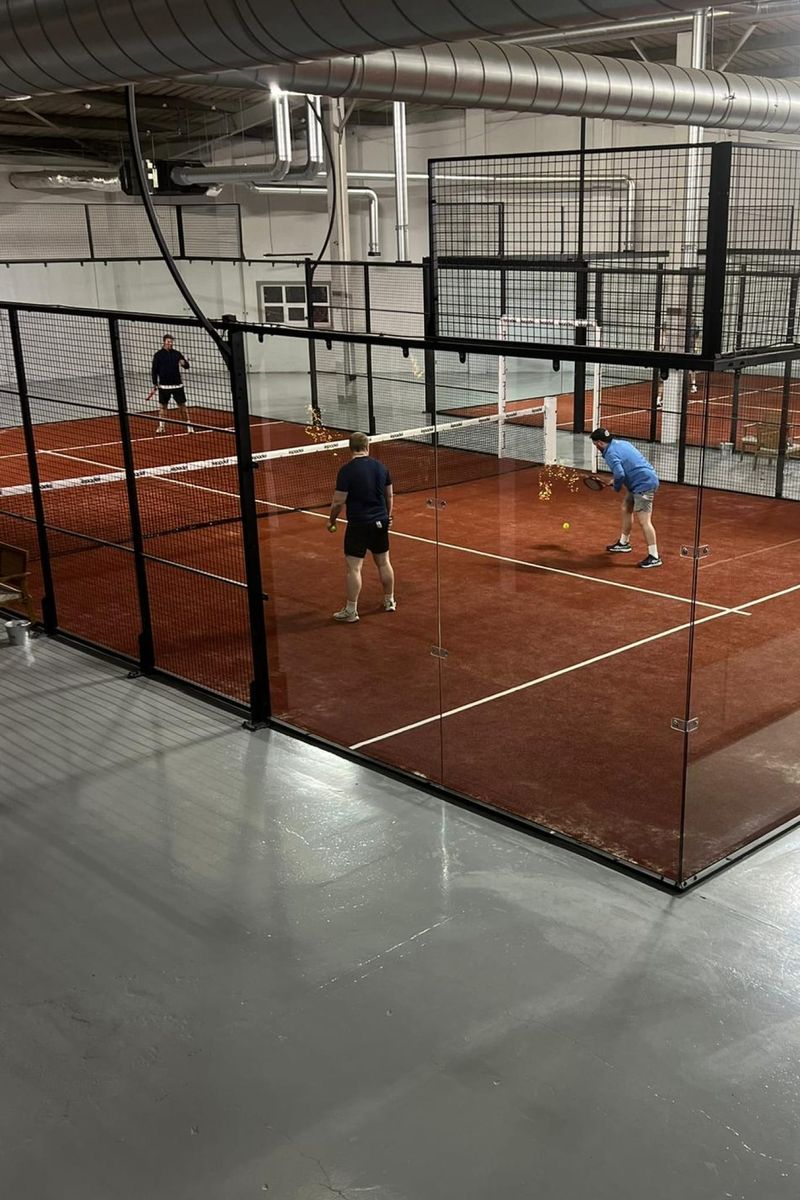
On a 20m by 10m enclosed court, your first five padel matches usually turn on four habits, not a bigger swing. Move to the net as a pair, protect the middle, let the glass buy you time, and stop chasing low-percentage winners when a safer ball keeps the rally alive.
Build the point from the serve, not around it
Padel is played in doubles and uses tennis scoring, but that does not mean the serve works like tennis. The serve must be underhand, struck below waist height, and it has to bounce once in the diagonal service box before the returner can play it. That first shot is there to start the rally and win position, not to blast an ace. If you serve deep and recover quickly with your partner, you give yourself the best chance to take the net before the returners settle in.
Picture the opening game of your first match. You serve deep, the return comes back cross-court and low risk, and now both pairs have a choice: rush forward and gamble, or build the point in order. The deeper return matters because it keeps the serving team from attacking immediately and forces them to hit up from farther behind the line. In padel, that small delay is often the difference between controlling the point and surviving it.
Move forward together or leave a gap the size of the court
Net control is the main attacking objective. You do not win padel by standing in different zip codes and hoping one of you finds a winner. You win by moving up together, covering the middle and making the other pair hit one more ball under pressure.
That is why the most common beginner mistake is a split pair, one player at the net, the other stuck in no-man’s land. If your partner closes in and you hang back, the returners can roll the ball into the seam between you or pass the exposed player with one tidy shot. Stay connected, decide early who takes the middle ball, and make the other pair hit into a wall of two instead of a gap of one.
Treat the glass like a teammate
The back wall is not a problem to panic about. It is one of the reasons padel has its own tactical logic, because the glass and welded mesh rebound walls change how rallies are built on the court. A padel court is an above-ground area with those rebound walls and a synthetic turf surface, and that setup is exactly why defensive patience matters more than in tennis.
When the ball comes off the back glass, your job is to let it come to you, keep the racket prepared early and reset the point with a high, safe reply. New players often try to stab at the ball before it drops, then wonder why the shot flies long or into the net. The better play is usually to absorb the rebound and give yourself time.

Use the lob as your reset button
The lob is the shot that keeps beginners in rallies longer than almost anything else. The LTA has a dedicated page for improving padel lobs. It is a major defensive and positional reset shot. When you are pinned back, a well-judged lob pushes opponents off the net and gives you time to recover your own position.
The key is knowing what the lob is for. It is not a panic ball you float up because you have run out of ideas, and it is not a showpiece winner. It is a reset that changes the court geometry, especially against a pair that has camped on top of the net. If the opponents are waiting for a short ball to finish, the lob makes them move back, turn, and defend, which is exactly the kind of disruption a beginner needs.
Stop hunting winners before the court is yours
This is where tennis instincts can get you into trouble. In padel, flat winners from bad positions are often the fastest way to donate points, because the enclosed court and the walls punish rushed decisions. A safer rally ball, a deeper return, or a lob that buys you one extra second usually creates a better chance than a half-baked attempt to end the point early.
Think of your first few matches as a test of patience, not aggression. If you are stretched wide, if your partner is out of position, or if the ball has just come off the glass, the winning shot is usually not the right shot. Keep the ball in play, recover the net as a pair, and wait for the opponent to miss or leave you a genuinely open court.
Know the shape of the game you are actually playing
The International Padel Federation’s rules document is set for application from 1 January 2026. The sport already has clear tactical pillars: doubles positioning, net control, walls, and the lob. The rules and court design reward compact movement and disciplined shot selection.
The LTA has built a beginner pathway with separate pages for how to get started, rules, skills for beginners, match tactics and lobs. The structure tells you what to learn first: how the serve works, how points are scored, how to move as a pair, and how to use the court rather than fight it.
Sources
- [1]ltapadel.org.uk
- [2]padelfip.com
- [3]lta.org.uk
- [4]tenaxpadel.com
- [5]thepadelschool.com
- [6]babolat.com