Lynn Adams' racquetball dominance defined an era of sustained excellence

Lynn Adams did not just win in racquetball. She stacked enough titles, honors and season-long consistency to define what dominance looked like in the women’s game when the pro tour was still building its identity. USA Racquetball’s Hall of Fame archive captures that case in blunt numbers: 325 victories in 369 professional matches, a .887 winning percentage, eight Player of the Year awards, six pro tour season titles and seven overall championships.
The standard Adams set
Those figures matter because they do not describe a short burst of brilliance. A .887 winning percentage across nearly 370 pro matches means Adams was beating elite opposition over and over again, not simply peaking for one tournament weekend. The sport’s historical record adds another layer: she was ranked No. 1 or No. 2 every pro season between 1980 and 1991, an unusually long run of top-tier relevance in a sport where form can swing quickly.
Her résumé also includes two rare firsts that separate her from a crowded field of champions. Adams was the first racquetball player, man or woman, to go undefeated in a pro tournament season, and the first player to win two triple-crown events. Put beside the Hall of Fame totals, those milestones show why her name still functions as a benchmark rather than just another entry in an archive.
What her prime looked like in real time
The numbers were matched by visibility. A United Press International archive item dated April 25, 1981, reported Adams advancing to the final round of the Women’s Professional Racquetball Tournament in Fishkill, New York, after defeating Shannon Wright in the semifinal. That is the sort of concrete result that turns a résumé into a storyline: one win to reach the final, one opponent named, one stage defined.
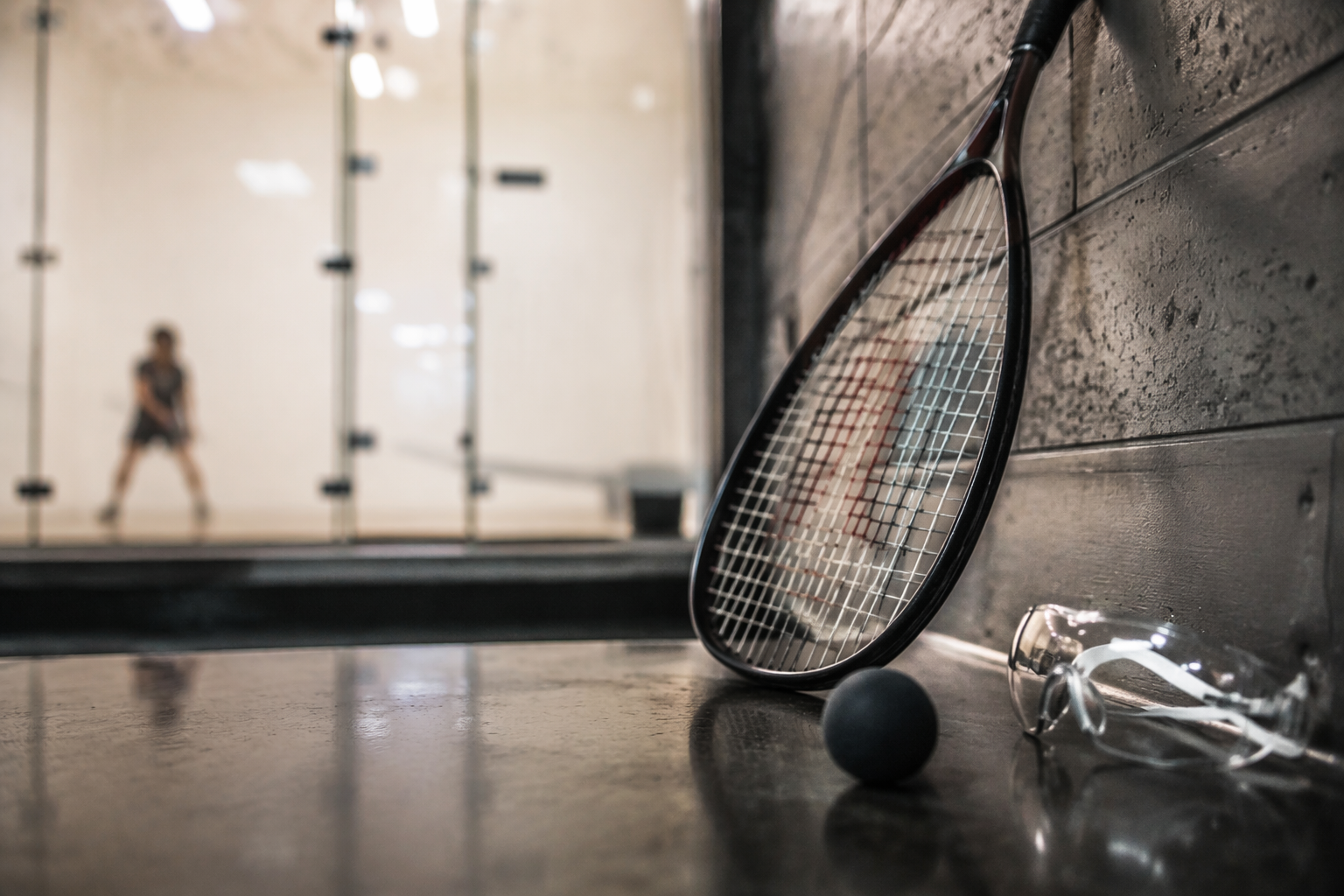
By 1987, Adams was already being framed as a proven headliner. A Los Angeles Times item from December 4 that year identified her as a five-time women’s professional racquetball champion as she promoted the Ektelon Christmas tournament at Los Caballeros Racquetball. Even the photographic record from December 1983 places her in the middle of that championship window, when her status was less about potential than repetition.
A 2001 Racquetball Magazine feature pushed the point even further, describing Adams as “one of the most dominant female players ever to step onto a court” and tracing her rise from “a 19-year-old college kid who caught the racquetball bug” to professional glory. That arc matters because it shows how quickly her reputation hardened into history: she arrived as a student, but she left a record that still reads like a standard-setting season after season.
Playing through pressure, pain and attention
Adams’ career also carries a physical story that gives the trophy case more weight. A Los Angeles Times profile from September 15, 1985, quoted her saying, “90% of racquetball is played from the neck up.” In the same profile, the paper noted that she had been diagnosed with rheumatoid arthritis at age 16. Her own line about the sport’s mental side lands differently when set beside that diagnosis: it frames her as a player whose edge was measured not just in hands and legs, but in discipline, problem-solving and resilience.
That thread has followed her for years. Other background on Adams notes that she had multiple sclerosis and that she later turned her life into a career despite the disease. The broader picture is clear even without adding drama: Adams’ story is as much about adaptation as it is about trophies, and that combination is part of why her name keeps resurfacing whenever racquetball’s greats are discussed.

Why her era still matters for the women’s game
Adams was inducted into the USA Racquetball Hall of Fame in 1997, and that placement matters because Hall of Fame pages in racquetball often double as historical shorthand for the sport itself. Her archive entry does more than memorialize a career. It marks an era when women’s professional racquetball could build star power around one athlete whose results were easy to track, hard to match and impossible to ignore.
That is the real benchmark Adams leaves behind for today’s players and promoters. To recreate that level of visibility, the tour would need a player or small group of players who could combine season-long dominance, repeated title runs, unmistakable marquee matchups and a public persona strong enough to carry the sport beyond the court. Adams had the wins, the rankings, the undefeated season, the triple-crown firsts and the media profile to make the women’s game legible to casual fans and insiders at the same time.
Her life outside the courts helps fill in the rest of the portrait. A search record places her at Orange Coast College, later in Libertyville, Illinois, and notes that she married her coach, Jim Carson, before later marrying Richard Clay in 1990. Those details are not the headline, but they round out the person behind the record: a Southern California player whose career began in school, matured into championships and ended up anchored in the Hall of Fame archive as one of the clearest examples of sustained excellence in racquetball history.
Sources
- [1]usaracquetball.com
- [2]en.wikipedia.org
- [3]lindamojer.com
- [4]upi.com
- [5]latimes.com
- [6]youtube.com
- [7]postbulletin.com
- [8]encyclopedia.com