Marbella Club, where padel became Europe’s social sport
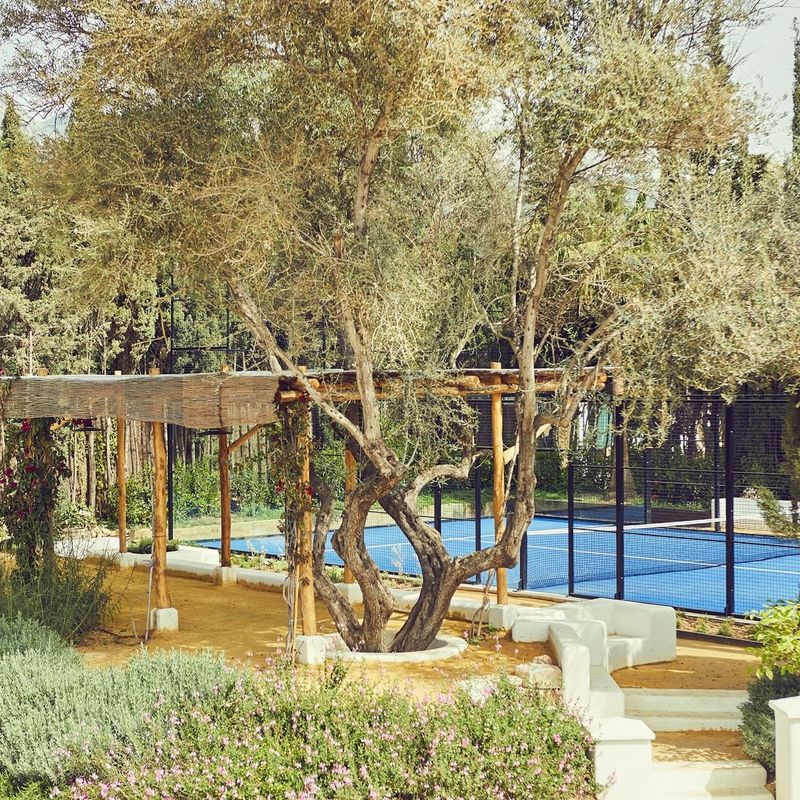
Padel’s European breakthrough did not happen in a civic sports complex or a municipal park. It happened at Marbella Club, where Prince Alfonso de Hohenlohe turned a game he had discovered in Acapulco into a prestige ritual on the Costa del Sol. That move gave padel something bigger than a court: it gave the sport a setting, a social code, and a look that helped it travel.
The court that changed the sport’s image
The story begins in Acapulco, where Enrique Corcuera built the first padel court in 1969. He did it because he did not have space for a full tennis court, so he settled on a smaller enclosed layout, 20 by 10 meters, that could fit into his property. Viviana Corcuera, his wife and a former Miss Argentina, drafted the first rules and gave them to him as a birthday gift. From the start, padel was a sport shaped by practical limitation, family improvisation, and a private setting.
Prince Alfonso encountered that game through summers spent at Corcuera’s home in Mexico, then brought it back to Spain in the early 1970s. At Marbella Club, he did more than build courts. He transplanted a pastime into a resort environment where leisure, status, and visibility already mattered. That is the key move in padel’s European history: the sport entered Spain through a luxury address, not a grassroots one.
Why Marbella Club mattered more than a venue
Marbella Club opened in 1954 as the von Hohenlohe family’s Mediterranean hideaway, and that matters as much as the court itself. A sport played there was automatically wrapped in the habits of a resort life built around guests, members, vacation schedules, and social visibility. Padel did not arrive in Spain as a neighborhood game; it arrived as something watched, hosted, and associated with high society.
That distinction shaped the sport’s early identity. The International Padel Federation says padel in Spain became linked with prestige and exclusivity, while in Argentina it developed as a more broadly social, club-driven culture. Marbella Club sits right at the center of that split. On the Costa del Sol, padel’s first European image was less about utility and more about belonging, the kind of sport that fit a hotel terrace, a dinner circuit, and a network of affluent visitors moving between Marbella, Andalusia, and the wider Mediterranean leisure economy.
Marbella Club still treats that inheritance as part of its identity. The resort describes its Príncipe Alfonso court as the birthplace of pádel in Europe and says the property became the epicenter of the sport in the 1970s. In practical terms, that means the court is not just preserved as a playing surface. It functions as a heritage object, a physical reminder that the sport’s European life started in a place where hospitality and elite recreation overlapped.

From private pastime to social currency
Padel spread in Spain partly because Marbella gave it a recognizable social frame. The court fit naturally into a world of vacation homes, clubs, and private leisure, where sport often doubled as networking. In that environment, padel became easy to explain and easy to imitate: compact, social, and visually distinct from tennis, with walls that made rallies longer and the action easier to follow from the sidelines.
That was especially important for a game with origins in a private estate. The smaller court and enclosed layout made padel look intimate rather than institutional. At Marbella Club, those features were amplified by the setting itself. The sport was not just played among elites, it was presented in an elite atmosphere, and that helped fix its image as stylish, social, and portable. A game that looked good on a resort court was a game other people wanted to copy.
The resort’s early role also helped padel absorb a distinctive European identity. Instead of being seen as a niche import, it became part of the leisure culture of the Costa del Sol, where hospitality, second homes, and international visitors all fed the sport’s visibility. That is why Marbella Club remains such a powerful reference point: it shows how the right venue can recast a game’s meaning before the first wave of mass participation ever begins.
The Spain-Argentina corridor that carried padel outward
Marbella’s influence did not stay in Spain. Around the same time, Julio Menditeguy, an Argentine member of Alfonso’s tennis club in Marbella, took padel back to Argentina. The International Padel Federation says the first Argentinian courts were built at Club Tortugas, Mar del Plata Ocean Club, and in other cities, creating a second center of gravity for the sport. That Spain-Argentina corridor became the early engine of padel’s growth.
The two countries gave padel different social profiles, but together they gave it momentum. In Argentina, the game took root in a club-driven culture that was broader and more participatory. In Spain, it remained tied to prestige and exclusivity, especially in places like Marbella. Those parallel identities helped padel spread efficiently: one version was aspirational, the other was communal, and both were easy to export.
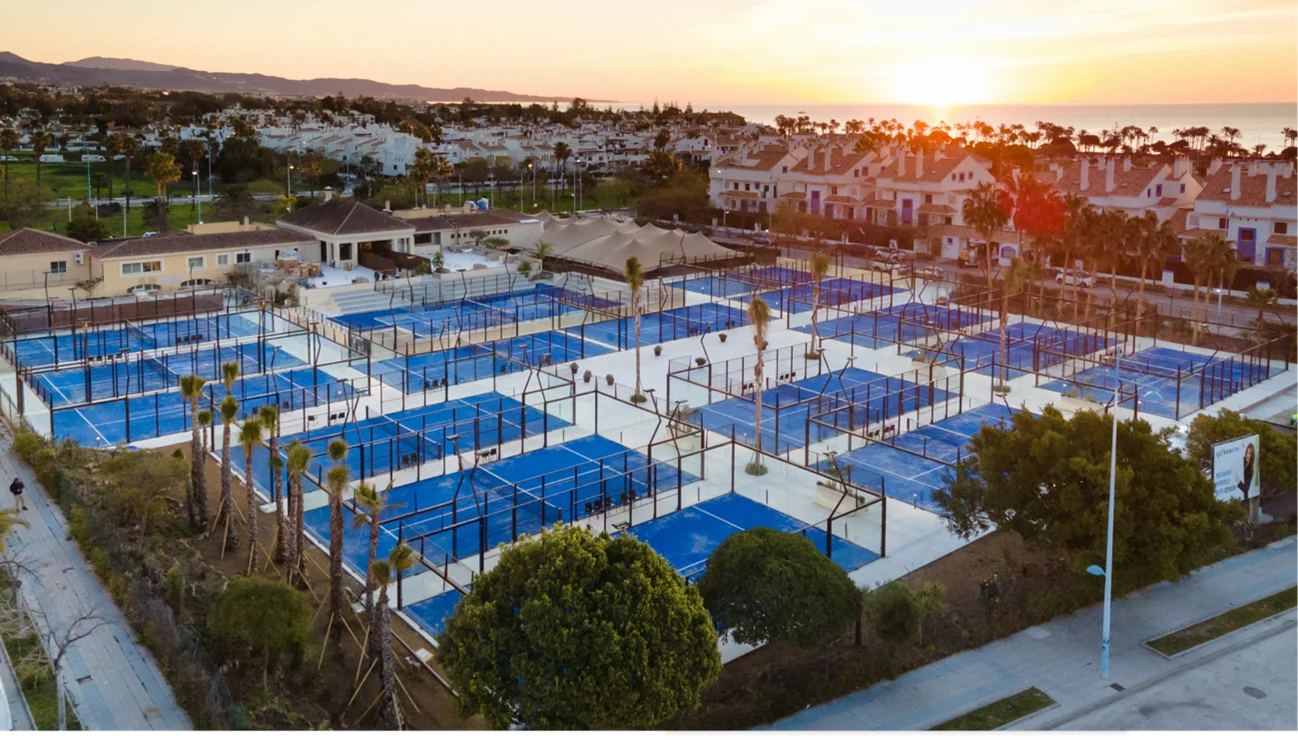
By the late 1980s and early 1990s, the sport had moved into Brazil, Uruguay, Chile, France, the United States, Canada, and Italy. That expansion did not erase its elite beginnings. Instead, it carried the Marbella image with it, the sense that padel was modern, sociable, and attached to a certain polished leisure culture.
Why the modern numbers matter
The scale today underlines how far that resort-origin sport has gone. The International Padel Federation’s 2025 World Padel Report puts the sport at 150 nations and 20 dependent territories, with 77,300 courts worldwide and more than 35 million players. The report also says 14,355 courts were built in 2025 alone, and the global facilities map shows club growth of 4,775 units.
Those numbers matter because they show padel’s transformation from a single enclosed court in Acapulco into a global network. But the early social code is still visible in the places that preserve its memory. Marbella Club keeps the Príncipe Alfonso court as a centerpiece of its story, and that continuity helps explain why the sport spread so fast in Europe. Padel was not only easy to play. In Marbella, it was easy to want.
Marbella’s long tail in padel culture
The city’s role did not end with Prince Alfonso. In 1996, Manolo Santana founded a tennis and padel club in Marbella, extending the city’s status as a prestige racquet-sport destination. That later chapter reinforces the same pattern set in the 1970s: Marbella has remained a place where padel is tied to image, hospitality, and elite access as much as competition.
That is the real legacy of Marbella Club. It was the place where padel stopped being only a private curiosity from Mexico and became a European social sport, one with the right setting, the right audience, and the right kind of cachet to keep moving far beyond the Costa del Sol.
Sources
- [1]marbellaclub.com
- [2]padelfip.com
- [3]manolosantana.es