Marty Hogan, racquetball's first superstar, revolutionized the pro tour
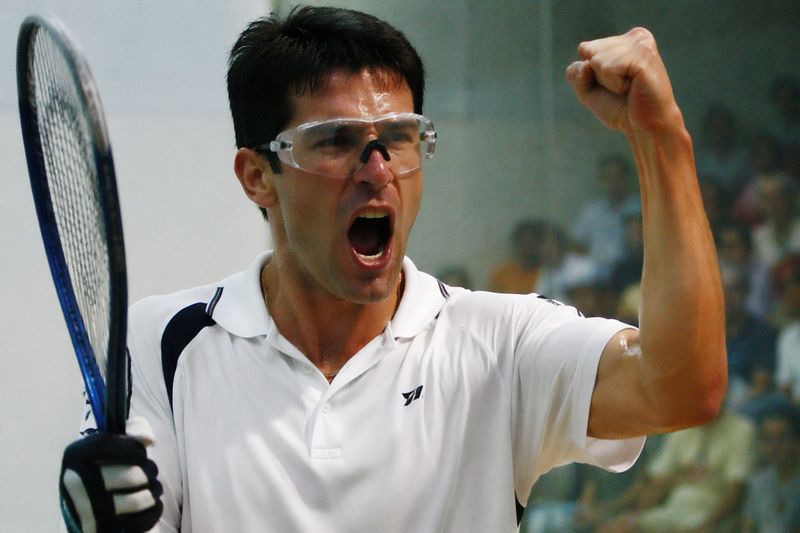
Marty Hogan did not just win matches, he changed what a racquetball player could be. USA Racquetball calls him the sport’s first superstar and its first million-dollar man, a label that fits the way he turned elite dominance into something promoters, fans, and the media could sell.
The player who made the tour bigger
Hogan’s rise began before the sport had a fully formed pro identity. The first National Racquetball magazine appeared in September 1973, and the first NRC Pro Stop followed in Houston that same month, with the Association of Racquetball Professionals forming on that same NRC tour. Hogan stepped into that structure and quickly became the face of it, first by winning his opening pro title in 1975 in Burlington, Vermont, at the NRC New England Pro-Am.
What separated him from the pack was the scale of his dominance. USA Racquetball says he owned the men’s professional tour from 1977 through 1982 and collected six national championship titles in that stretch. Another part of the record makes the peak even clearer: from September 1978 to November 1979, Hogan went undefeated while sweeping the Pro Nationals, Outdoor National, Paddleball Nationals, and the Pro Doubles Nationals with Steve Mondry.
A style that changed the sport’s image
Hogan’s game did more than win points. USA Racquetball describes him as the first superstar of racquetball and says he revolutionized the sport with an ultra-aggressive style. That mattered because racquetball was still building an audience, and Hogan gave it a face that fit the era of individual sports celebrities: forceful, confrontational, and impossible to ignore.
His image traveled well beyond the scoreline. The USA Racquetball Museum places Hogan and Charlie Brumfield together as iconic rivals in the sport’s visual history, which is part of why Hogan became easy to market. Rivalries give a sport a story, and Hogan’s style made the story easy to recognize in photos, magazines, and video.
There is also the myth-making layer that followed him. Museum material notes that some fans credit Hogan with inventing “power racquetball” in 1979 through a book and video project. Whether treated as lore or as shorthand for his influence, that idea captures how Hogan moved beyond being a champion and into being a brand.
The numbers behind the star power
The strongest argument for Hogan’s star power is the record itself. USA Racquetball says he was ranked No. 1 or No. 2 in the world from 1976 to 1990, and the World Outdoor Racquetball Hall of Fame page credits him with more than 150 combined pro tournament victories indoors and outdoors. That kind of longevity matters because it shows he was not a one-season burst, but a constant presence at the top of the sport for more than a decade.
His amateur bookends underline the same point. USA Racquetball lists his early and later amateur success from the 1975 Boys’ 18-and-under title to the 1994 Men’s 25-and-over national doubles championship. That span gives Hogan a rare arc: a teenage title winner who stayed relevant long enough to capture senior-level hardware almost 20 years later.
The Hall of Fame also places him in a larger historical frame, noting his 1997 induction. By then, the sport had already moved through multiple generations, but Hogan remained the standard that later players were measured against.
What his playbook looked like in practice
Hogan’s blueprint rested on three things that fed each other.
• Winning at a rate that turned into headlines and prize money • A hard-edged, ultra-aggressive style that made him visually distinctive • A personality and image that fit the sport’s growing media needs
That combination is what turned him into racquetball’s first million-dollar man. The money mattered because it signaled that the pro tour had begun to reward not just technical excellence, but draw power. In a niche sport, the athlete who could command attention became as valuable as the athlete who could win a title.
The timing also helped. Racquetball’s pro infrastructure was still young, with the first NRC Pro Stop in Houston in 1973 and the first players’ organization, the Association of Racquetball Professionals, emerging from that same tour. Hogan arrived when the sport was still defining its professional identity, which meant one player’s dominance could shape the way the whole tour was perceived.
What was unique to Hogan, and what the sport could not keep
Hogan was singular in how completely he blended performance and presence. The title run from 1977 to 1982, the undefeated stretch from late 1978 into late 1979, and the six national championships created the kind of aura that few players can generate. His aggressive style gave the sport an edge, and his image made racquetball feel larger than the court.
But some of the conditions around him were fragile. Racquetball’s early pro circuit was still developing its audience, its media habits, and its business model. That made it easier for one transcendent figure to dominate the conversation, but harder for the sport to sustain that level of broad celebrity once the first wave passed. Hogan’s era proved that racquetball could create a star; it did not prove the sport could build a permanent star system.
The players who carried the template forward
Hogan did not stay alone at the top of the sport’s mythology. Cliff Swain’s Hall of Fame entry shows the next phase of that blueprint, with more than 80 pro victories and six season-ending rankings titles by 2002. Sudsy Monchik took the model in a different direction, winning more than 40 pro titles, earning five consecutive season-ending No. 1 rankings, and taking four UnitedHealthcare US Open titles from 1996 through 2002.
Those careers matter because they show that Hogan’s formula was repeatable in part: elite results, season-long consistency, and enough personality to stand out. What was harder to repeat was the moment when the sport itself was new enough for one player to feel like a revelation. Hogan benefited from being first, and racquetball never quite recreated the combination of timing, dominance, and novelty that made him its defining star.
By the time Swain and Monchik extended the lineage, the template had already been set. Hogan had shown that racquetball could produce a figure with cash value, media value, and cultural value all at once. That is why his name still sits at the center of the sport’s history: he was not just the best player of his moment, he was the player who taught racquetball how to look like a major sport.