Middlebury students turned Quidditch into a national quadball sport
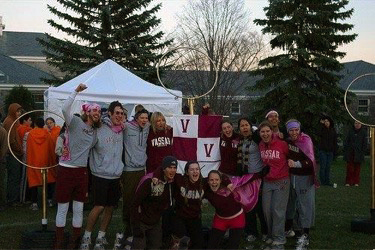
Quadball did not start with a league office or a polished rulebook. It started at Middlebury College in Vermont in 2005, when Xander Manshel and Alex Benepe decided to try playing quidditch instead of bocce. That choice gives the sport its earliest identity: improvised, student-run, and built by people who were willing to turn a joke into a contest with stakes.
Benepe later became the founder and first CEO of US Quidditch, now US Quadball, and the organization also describes him as the sport’s first commissioner. That matters because the game was never just a campus prank that got lucky. From the beginning, it had a builder attached to it, someone willing to organize the chaos into something other schools could actually play.
How a college experiment became a real competition
The first phase of growth was not glamorous. US Quadball says the sport spread by word of mouth, with Benepe and other Middlebury players traveling to campuses to recruit new teams. That is the opposite of how most sports scale today, through broadcast rights, branded launches, or top-down conferences. Quadball grew the hard way: one conversation, one campus, one curious group at a time.
That grassroots model still shapes the sport’s identity. It explains why quadball has always valued inclusion, improvisation, and participation over polish. US Quadball now identifies itself as one of the most gender-inclusive sports leagues in the country and says it supports thousands of athletes, coaches, and volunteers nationwide. The scale is larger now, but the mechanism is the same one that started at Middlebury: people persuading other people to pick up a broom and try something new.
Vassar turned the idea into an opponent
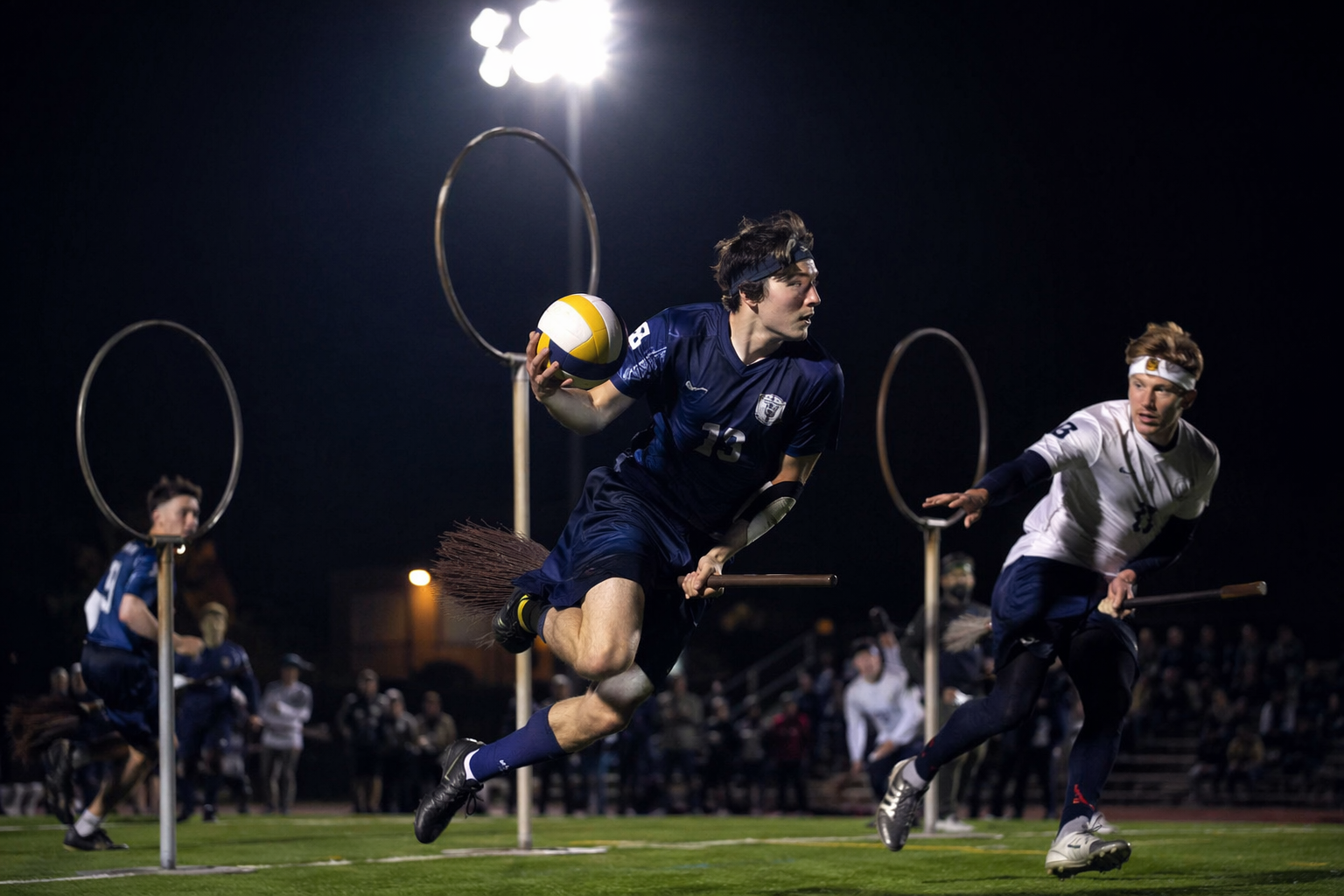
The clearest bridge from invention to competition came at Vassar College. On October 25, 2007, Woodrow Travers emailed the campus to recruit players for Vassar’s new quidditch team. Travers’s friends Manshel and Benepe had created the sport at Middlebury less than a year earlier, and they wanted Vassar to field a team so Middlebury would have a collegiate opponent.
That request transformed the sport from a one-school novelty into something that could claim a real rivalry. About 20 students showed up to Vassar’s first meeting in Josselyn House, where Travers explained the newly created rules. Those rules were still new enough to require instruction, which tells you everything about the sport’s early stage: the structure existed, but only just. The first practice was built from whatever campus life could spare, with dollar-store broomsticks, tables, chairs, and garbage cans pressed into service as equipment and goals.
That makes the first Vassar session more important than it sounds. Sports do not become sports because someone writes down a name. They become sports when enough people accept the same rules, use the same objects, and agree that the result counts. Vassar’s first practice created the conditions for that agreement.
World Cup I and the first real test
After only a month of practice, Vassar played Middlebury in November 2007 in the first intercollegiate match, World Cup I. The speed of that jump still stands out: the sport moved from invention in 2005 to a documented college matchup two years later. That is unusually fast for a new sport, and it tells you how strong the early buy-in was among the students who touched it first.
The name World Cup I also shows how quickly the founders understood the need for legitimacy. They were not just playing a pickup game between friends. They were creating a public marker, a first chapter that could be followed by others. That is one of the most important early decisions in quadball’s history: the sport had to look like a sport from the moment it crossed campus lines.

The rules, the travel, and the work of legitimacy
The early rules mattered because they gave the sport portability. Once Travers could explain them to Vassar students, the game no longer belonged only to Middlebury. Rules are what let a sport travel, and quadball’s first years were all about making sure it could survive that trip intact.
Benepe’s role in that process was central. US Quadball says he and other Middlebury players spent countless hours traveling to different colleges, and that kind of repetitive, manual effort is often what separates a local invention from a national competition. There was no shortcut. If a team was going to exist, somebody had to show up in person, sell the idea, and make sure the first players understood what they were actually signing up for.
That recruitment-first model still hangs over the sport today. Quadball’s culture is unusually open because it had to be. It could not rely on tradition to do the heavy lifting, so it built tradition out of onboarding, teaching, and inclusion.
Why the sport became Quadball
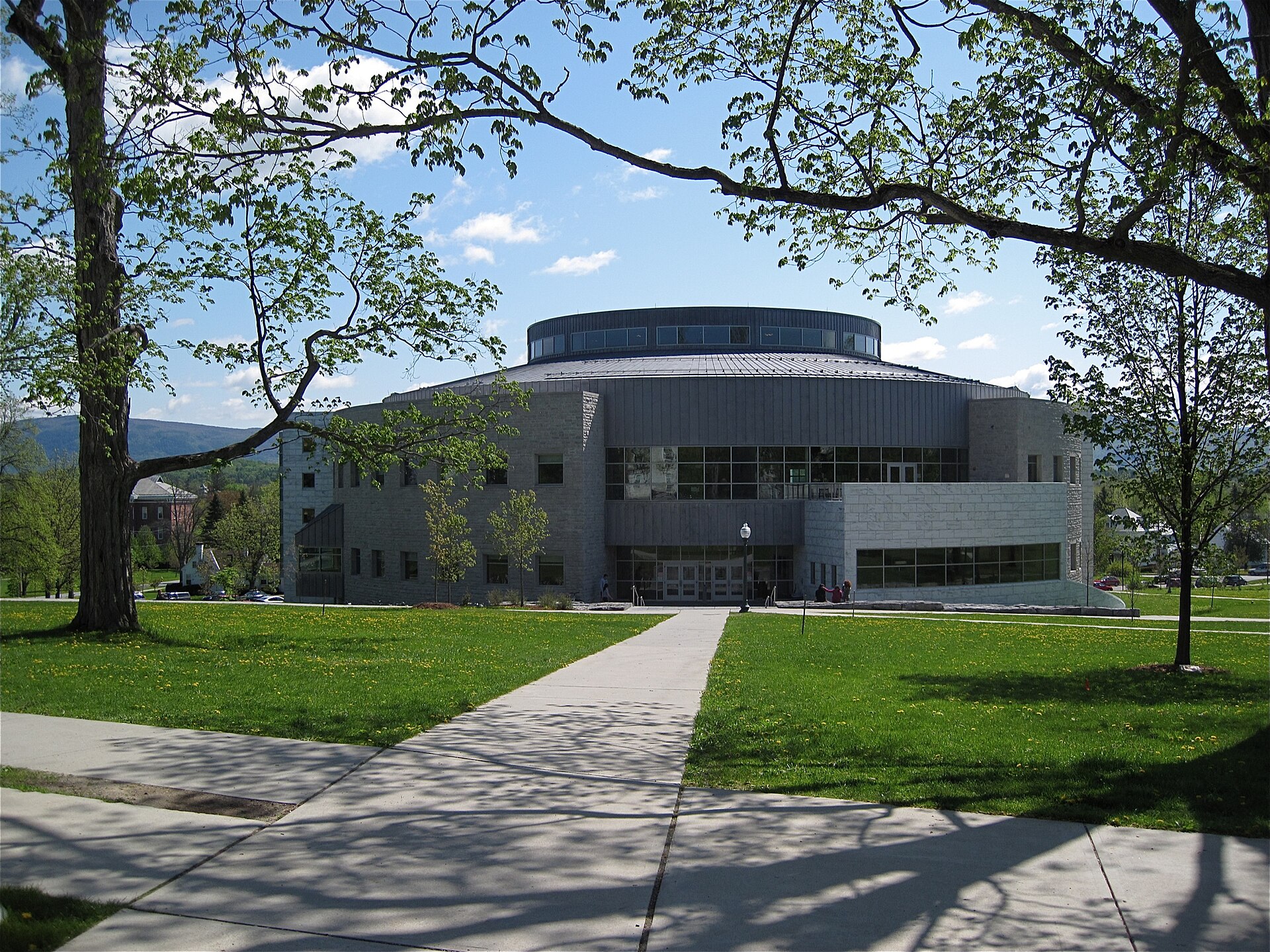
The name change from Quidditch to Quadball is part of the same evolution. In 2022, the International Quadball Association announced the shift after a name-change process that included worldwide surveys and a recommendation from a dedicated committee. The group also explained the new name as a nod to the sport’s structure: quadball refers both to the number of balls and the number of positions in the game.
That is more than a branding tweak. It is a sign that the sport had outgrown its original literary reference and needed a name that belonged to the game itself. By the time of the change, the sport was already being played by nearly 600 teams in 40 countries, a reach that would have been hard to imagine when two Middlebury students were improvising a version of quidditch in 2005.
What the origin story explains about the sport now
The Middlebury story still explains how quadball works in practice. It is a sport that values access because it was built through access, recruiting, and repetition rather than gatekeeping. It is also a sport with a strong legitimacy instinct, because its founders had to prove to other schools that a broom, a rule set, and a competitive schedule could become something real.
That is why the earliest details matter so much: the 2005 experiment by Manshel and Benepe, the October 25, 2007 recruitment email from Woodrow Travers, the first meeting in Josselyn House, the dollar-store broomsticks and makeshift goals, and the November 2007 World Cup I matchup. Those are not just origin anecdotes. They are the blueprint for how a campus game became a national sport and then a global one, without ever losing the do-it-yourself energy that made it possible in the first place.