Milan Iloski move highlights USL Championship as transfer pathway
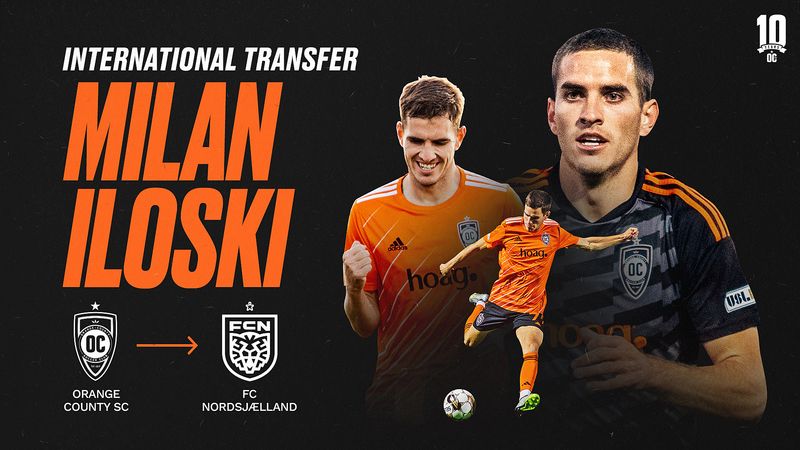
Milan Iloski’s January move to FC Nordsjaelland turned a Golden Boot season at Orange County SC into a clean example of what the USL Championship can produce: a scorer, a market, and a next step. His transfer did more than send one forward to Denmark’s Superliga; it showed how a strong role in the Championship can become export value.
Iloski as the proof point
The appeal of Iloski’s transfer starts with the numbers attached to his season. The USL identified him as the 2022 USL Championship Golden Boot winner, and Orange County SC described him as its all-time leading goal scorer when the move was announced. That combination matters because it signals repeatable production, not a one-week hot streak.
The timing also matters. USL announced that Iloski would join FC Nordsjaelland in January, while completing the season with Orange County first. That setup gave Orange County a chance to keep its attacker through the stretch run and gave Iloski the kind of uninterrupted playing time that has become one of the league’s clearest selling points.
USL’s own framing placed the move within a larger pattern, calling it the latest in a list of notable transfers to top-flight clubs over the previous six years. In other words, Iloski was not a one-off success story. He became the most visible current example of a pathway the league has been building into its identity.
Why the Championship turns production into mobility
The USL Championship works as a pathway because it offers something players cannot always get in larger systems: consistent minutes in a defined role against professional opposition. An attacker like Iloski does not need to wait for a reserve-league cameo or a short cup run to prove himself. He can stack starts, take responsibility, and build a season that scouts can evaluate from a distance and in person.
That visibility is amplified by the league’s scale. The USL says the Championship is one of the most successful professional soccer leagues in the world, reaching a population of more than 84 million. That footprint gives transfers out of the league a broader meaning than a single club moving on from a star. When a player leaves the Championship, the move lands in a league that already touches a huge audience and sits inside a larger professional soccer ecosystem.
Iloski’s jump also fits the modern reality of soccer development. The USL is no longer just a stop between youth soccer and a bigger domestic league. It is a functioning marketplace where clubs can identify talent early, give it defined responsibility, and then either keep building around it or move it on when the opportunity is right.
The MLS pipeline is already established
The pathway does not run only to Europe. The USL later said that since the start of the modern USL era in 2011, hundreds of players have moved from the USL Championship to Major League Soccer. That is a crucial number because it shows the league is not merely exporting a few headline names, it is consistently producing domestic moves at scale.
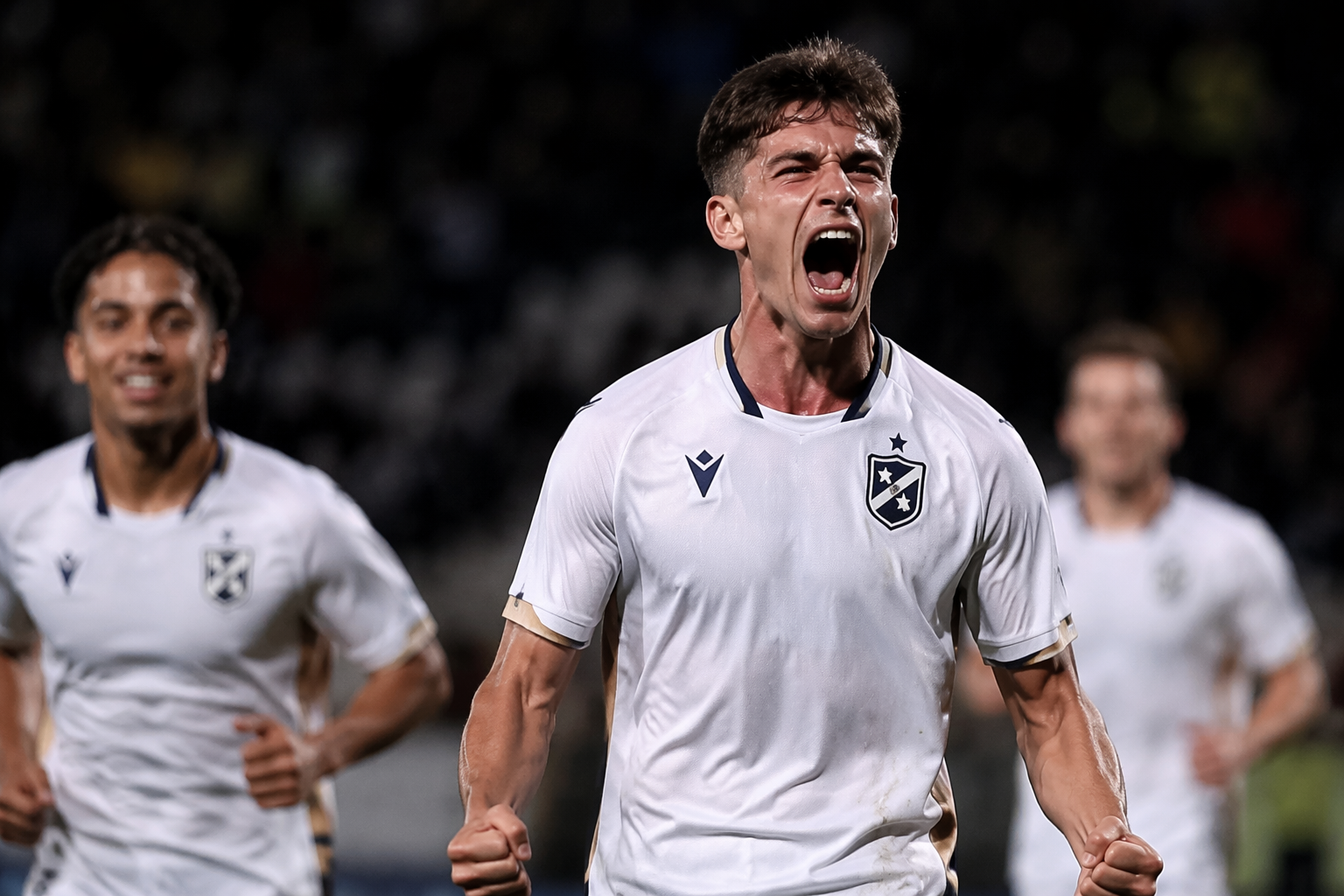
Elijah Wynder’s move from Louisville City to LA Galaxy sharpened that point even further. The USL described it as a record-setting domestic transfer, the kind of move that underlines how a player can turn Championship minutes into a jump to one of MLS’s biggest stages. Taken together, the Wynder move and the broader MLS history show that the Championship is a reliable launch point, not a dead end.
That matters to clubs as much as it matters to players. A team that develops talent into an MLS sale or an overseas move gains credibility in the market, and that credibility helps it attract the next wave of players looking for the same upward path.
What makes a player translatable upward
Iloski and Wynder point to the traits that most often travel well. Production is the first trait, but it is not just raw totals. A player needs the kind of repeatable output that comes from being trusted in a real role, whether that is leading the line, creating chances, or controlling a specific lane of the attack.
Environment matters too. Orange County SC’s handling of Iloski showed the value of a club that can develop a player without freezing him in place. By letting him finish the season before his January move, Orange County preserved competitive continuity while still cashing in on his upward trajectory. That balance, between winning now and preparing for the next transfer, is where a lot of USL success is built.
Scouting visibility is the final ingredient. A player who dominates in a league with national reach, a strong professional standard, and a growing transfer record is easier to project into a higher level. Backheeled called Iloski’s jump to FC Nordsjaelland groundbreaking and described him as one of the first USL stars to move to Europe in his prime. ESPN also noted that the league is showing young American players there is more than one route to Europe, and Iloski fits that shift perfectly.
Why departures are part of the league’s identity
For fans, losing a scorer like Iloski can feel like a setback. It is also proof that the league is doing one of the hardest things in pro sports: turning a club star into a player other markets want. That dual reality is why outbound transfers carry so much weight in the USL Championship. They are sporting losses, but they are also endorsements of the competition itself.
The lesson from Iloski’s move, from hundreds of MLS transfers, and from record-setting domestic deals like Wynder’s is straightforward. The Championship matters because it produces players who can leave it for better leagues, and it gives clubs a business model built on development as much as results. That is what makes the league more than a stop on the ladder, and why every strong season in the Championship now feels like the start of something bigger.