Morocco’s footgolf community grows as African interest accelerates
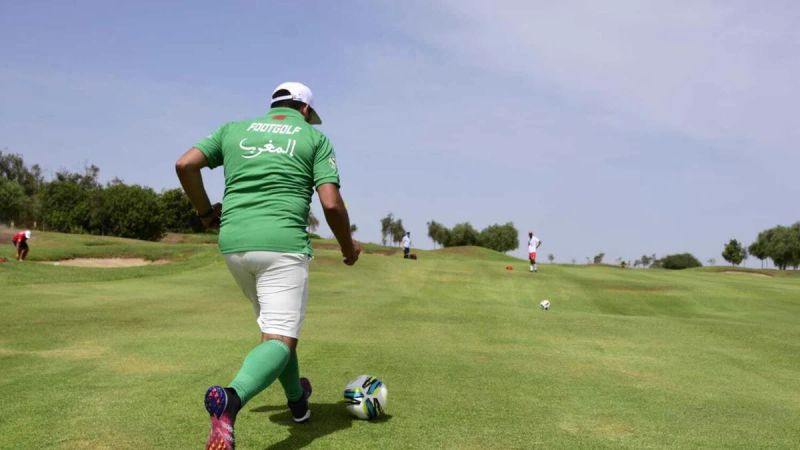
Morocco’s FootGolf rise is being powered less by pristine facilities than by football culture that keeps finding its way onto golf turf. Players, clubs, and fans are building a scene that stretches from informal local play to an international stage, even as dedicated courses and formal structures still lag behind demand.
Grassroots momentum is driving the Moroccan scene
The clearest sign of Morocco’s FootGolf growth is how naturally the sport fits a country already steeped in football passion. The Moroccan FootGolf Association exists to promote and develop FootGolf across the country, and that mission depends on the same kind of community energy that has long sustained grassroots football culture. Instead of waiting for a fully built system, players are adapting existing golf courses and creating opportunities wherever a fairway can be opened to foot-based play.
That model matters because FootGolf does not demand the heavy machinery of a traditional sports rollout. The Federation for International FootGolf says the game is played with minimal supervision and relies on player integrity and sportsmanship, which makes it unusually adaptable in places where formal infrastructure is thin. In Morocco, that flexibility is exactly what has allowed interest to outpace the physical setup, with the sport expanding from a niche curiosity into a recognizable community project.
Morocco’s place in FootGolf was formalized early
Morocco was not a late arrival to the sport’s international structure. FIFG approved Morocco as a member country on January 31, 2017, giving the country a formal place in the federation’s growing map. That recognition gave Moroccan players and organizers a clearer path to connect local activity with international standards, competition formats, and future development.

That membership also helped validate the work already being done on the ground. A national association with a defined mission, plus federation recognition, gave Morocco a foundation that many emerging FootGolf markets still lack. The result is a scene that feels local in spirit but international in ambition, with players building momentum before the infrastructure fully catches up.
Marrakech gave the sport a world-class showcase
The biggest proof of Morocco’s FootGolf capacity came with the 3rd FIFG FootGolf World Cup, held in Marrakech from December 9 to 16, 2018. The tournament was staged across Al Maaden Golf and Montgomerie Golf Course, two venues that gave the event a polished setting and showed that Morocco could host a major FootGolf competition on a serious scale.
The size of the field was widely reported in slightly different ways, but every account pointed to a substantial international gathering. One set of figures put the event at 33 nations and 503 or 520 players, while another described 36 teams and 400 players from five continents. However the totals are read, the message was the same: Marrakech had moved beyond being a host city in name only and become a legitimate FootGolf destination.
The 2018 World Cup also mattered because it followed earlier editions in Hungary and Argentina, placing Morocco inside the sport’s broader international expansion rather than on the margins of it. Hosting after those two countries showed that FootGolf’s center of gravity was widening, and that Morocco had already earned a place in the conversation about where the game could scale next.
Africa is building a more formal FootGolf pipeline
Morocco’s growth is part of a larger continental trend. The African FootGolf Association serves as FIFG’s Region 5 coordinating structure for Africa, and its focus on regional development, certification, and a regional tour points to a sport that is becoming more organized across the continent. That kind of structure is important because it turns scattered local interest into something that can support competition, coaching standards, and travel across borders.
For Morocco, the continental framework creates a stronger runway. A country with an active association and proven event-hosting ability can now connect to a wider African system that is still taking shape. That raises the stakes for Morocco’s own development, because the country is no longer just participating in a global niche sport, it is helping define how the African version of that sport will look.
Why Morocco could become a model for emerging FootGolf markets
Morocco’s broader golf ecosystem gives FootGolf an additional advantage. Royal Golf Dar Es Salam in Rabat has repeatedly hosted major international golf events, and that kind of visibility helps normalize golf-course spaces for hybrid sports like FootGolf. Even when dedicated FootGolf infrastructure is limited, existing golf sites create a bridge between the country’s established sporting identity and a newer, more accessible format.
That is what makes Morocco such a useful case study. The sport is being expanded by players and community builders before it is fully supported by formal infrastructure, and the country’s golf footprint gives them enough space to keep growing. If African FootGolf continues to accelerate, Morocco already looks like one of the places showing how the game can spread first through culture, then through structure, and finally through institutional support.
Sources
- [1]x.com
- [2]facebook.com
- [3]footgolfmorocco.com
- [4]footgolf.fr
- [5]latribunedemarrakech.com
- [6]footgolf.sport
- [7]africanfootgolf.org