Nationals breakouts spotlight the unsung stars who changed games
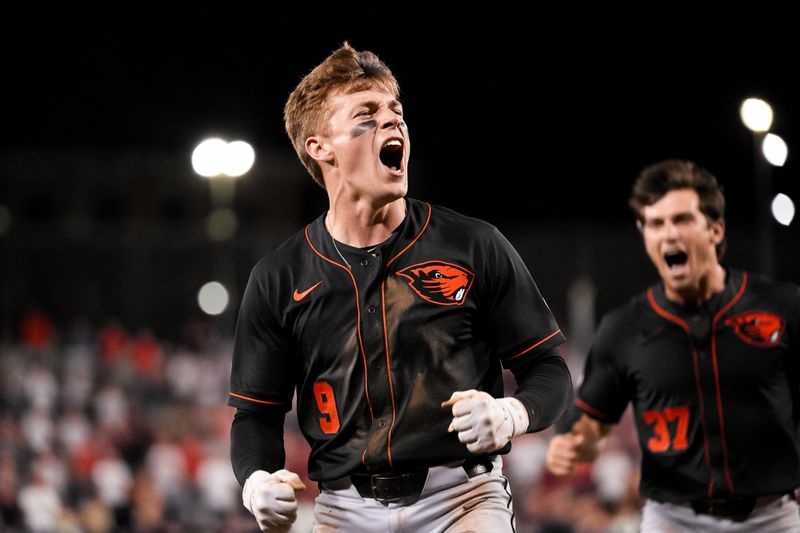
The loudest names at Nationals were not the only ones who mattered. The more revealing story came from the players who made you hit rewind, the ones who kept showing up in the possessions that decided games, even when they were not the headline acts. That is what made this seven-player frame feel sharper than a simple breakout list: it tracked the athletes who exceeded expectations and did their damage away from the brightest stage.
Nationals was a scouting event, not just a championship
The value of this lens is that it treats Nationals like a proving ground. Award-season consensus tends to favor the obvious stars, the names already attached to All-American conversations or the players who dominate the semifinal spotlight. This cut looked elsewhere, toward athletes who were fun to watch, often tucked into the edge of the field-pass view, and still managed to alter the course of games.
That distinction matters because college Ultimate is full of players whose best traits only become obvious when the pressure tightens. A clean label like breakout stars or non-All-Americans would have been convenient, but the better filter was simpler: who actually changed games when the bracket got serious. That is the kind of performance that travels, because it is built on repeatable habits rather than one hot shooting stretch.
Sam Anderson was the clearest case
Oregon State’s Sam Anderson was not the player most people would have circled first on a roster that also included Callahan Bosworth, Felix Moren and Ben Thoennes. He ended up being central to the Beavers’ best run of the tournament anyway, which is exactly why his performance deserves to sit at the center of any serious Nationals scouting report.
Anderson was key in Oregon State’s bracket-clinching pool-play win over Brown, then stayed influential in the prequarterfinal against Penn State. The biggest moment came on the double-game-point winner against Brown, a throw that did two things at once: it closed the game and delivered the program’s first bracket appearance. That is not empty-clutch mythology. It is a direct marker of a player trusted with the highest-leverage throw in the tournament.
The box score tells the same story in a cleaner language. Anderson led the Beavers with 12 goals, nearly doubling the next-highest total on the roster, and added five blocks. That combination says a lot more than raw scoring volume. It shows a player who was constantly around the disc in dangerous spaces, forcing pressure downfield while also disrupting opponents in deep space.
What the numbers say about how he played
A lot of breakout talk gets lazy fast. One big game becomes a week of inflated praise, and one highlight becomes a scouting report. Anderson’s run held up because the production was spread across multiple impact types. He did not just finish plays, he also created extra ones through blocks, which is usually the sign of a player whose value reaches beyond clean offensive sets.
The double-game-point winner against Brown is especially important because it reveals decision-making under stress. A throw in that moment is not just about arm talent. It is about seeing the field clearly when every possession has weight, controlling the point when legs are heavy, and trusting the right option rather than forcing a hero shot. Players who can do that at Nationals usually carry that trait into the next season, because pressure does not make them faster or stronger, it just exposes what already works.
The five blocks matter for the same reason. Defensive timing is one of the hardest skills to fake over a full tournament. When a player keeps showing up in throwing lanes, poaching lanes, and recovery moments, that usually reflects instincts rather than luck. Anderson’s stat line suggests he was not living off isolated hustle plays. He was consistently reading where possessions were going and arriving on time.
Why the off-stream names matter
This kind of breakout is easy to miss if you only follow the main broadcast window. The piece’s real point was that some of the most useful postseason scouting lives in the margins, in the athletes who are not on camera every point but still bend the game. That is where the college-to-club pipeline gets interesting, because the next wave of impact players often comes from exactly these kinds of performances: efficient, repeatable, and pressure-tested.
That is also why the seven-player frame works better than a conventional honors list. It is not trying to crown the season’s biggest names. It is identifying the players who revealed a new level when the tournament got hardest, and who did it in ways that should translate forward. If a player can anchor a bracket-clinching win, stay relevant in a prequarter, post a team-high 12 goals and add five blocks, that is not a fluke profile. That is a player who has shown a path to becoming a heavier lift for opponents next season.
What should carry over
The most portable traits from these Nationals breakouts are the ones that survive context. High-leverage throwing, defensive timing and the ability to stay involved without needing the whole offense built around you all point toward future value. Anderson’s case is the cleanest example because every piece of his tournament points in the same direction: he was not merely hot, he was difficult to ignore.
That is what separates a tournament flash from a real scouting note. Nationals did not just hand Oregon State a memorable result against Brown. It also surfaced a player whose habits show up in the kinds of possessions that tend to decide whether a program takes another step. Anderson’s breakthrough was not a side note to the championship. It was part of the championship picture, and that is the kind of performance that usually shows up again.