NCAA Gambling Scandal Sends Fresh Shockwaves Through College Basketball
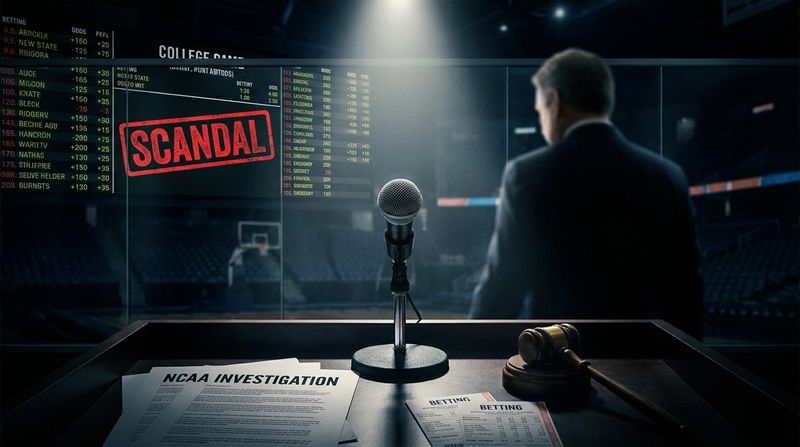
College basketball is once again under scrutiny as the NCAA faces its latest gambling scandal, sparking renewed concerns about the sport’s vulnerability to outside influences and the challenge of maintaining integrity in an era of expanding legal sports betting.
According to reporting from Busting Brackets, the incident serves as another stark warning sign for the NCAA. Recent years have seen a rapid rise in legal gambling accessibility across the United States, and college sports — with their passionate fan bases and high athlete turnover — have become a prime target for both legitimate and illicit betting interests.
While specific details of the latest scandal remain under wraps, the broader pattern is clear: the NCAA is struggling to adapt to a landscape where betting activity can quickly spiral into ethical and legal issues. The proliferation of mobile betting apps and state-level legalization efforts has made it easier than ever for individuals with inside information — including student-athletes and those close to programs — to become involved in gambling-related controversies.
- Legal sports betting is now available in more than 30 states, dramatically expanding access for college students and athletes.
- Multiple prior scandals in NCAA basketball have involved game-fixing or point-shaving, with devastating consequences for teams and reputations.
- The NCAA has increased educational efforts, but enforcement and detection remain significant challenges.
Busting Brackets highlights that this latest scandal is not an isolated incident, but part of a concerning trend. In recent years, several programs across Division I basketball have faced investigations or sanctions related to gambling activity among players or associates. Each new case further erodes public trust in the fairness of the sport and places additional pressure on the NCAA to strengthen its oversight mechanisms.
Experts and college athletics officials have repeatedly called for increased vigilance, more robust education for student-athletes, and clearer guidelines for reporting suspicious activity. However, the rapid evolution of the betting industry has often outpaced the NCAA’s ability to respond effectively.
As legal gambling continues to spread, the risks grow more complex. Some analysts point out that younger athletes, many of whom are under financial pressure and lack professional experience, may be particularly susceptible to outside approaches. The NCAA’s ability to monitor betting patterns — and to collaborate with law enforcement or regulatory bodies — will be tested as never before.
The latest scandal underscores the urgent need for a unified response from universities, conferences, and the NCAA itself. With the 2026-27 basketball season on the horizon, the spotlight on college basketball's integrity will only intensify. Stakeholders across the sport are left grappling with a crucial question: How can the NCAA protect the game’s reputation in a world where the temptation and opportunity to gamble are just a smartphone tap away?