NFL FLAG playbook reveals the formations shaping modern flag football
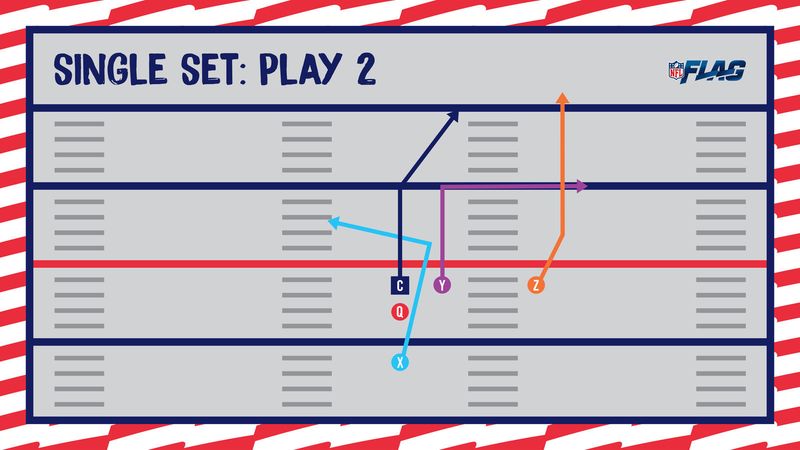
NFL FLAG’s 5-on-5 playbook is really a lesson in geometry: with five-a-side, no contact and only 4 downs to cross midfield before another 4 to score, every alignment is a space decision. The page is built for beginner coaches preparing for their first season and advanced coaches alike, and its formation families explain how modern flag football creates leverage before the rush gets home. As the sport moves onto the Olympic stage in Los Angeles, those same looks are becoming the tactical language of a global game.
Why formations matter in 5-on-5
NFL FLAG describes flag football as the non-contact version of American football, played 5-a-side with flag belts and a football, and that stripped-down structure changes everything about play design. Without the collisions that define tackle football, the offense is trying to win with width, timing and fast decisions, while the defense is forced to communicate in tight space with far fewer bodies to cover the field. That is why the playbook does not just list plays. It groups them into formation families that teach how to bend defenders, isolate matchups and open a throwing lane before the rush arrives.
The scoring and down structure makes that urgency even sharper. A touchdown is worth 6 points, and teams have 4 downs to cross midfield and then another 4 downs to score, so early-down spacing matters as much as red-zone execution. In that environment, a formation is never just an alignment. It is the first move in a chess match that begins before the snap.
Spread, Trips and the defense's first decision
Spread and Trips are the clearest examples of formations built to force a defensive answer. Spread widens the field, making help defenders travel farther and exposing whether the defense can keep its leverage without conceding easy throws to the edge. Trips overloads one side with three receivers, which pressures coverage rules, asks the defense to sort out who has the inside man, and often reveals whether defenders are matching by player or by zone.
These looks are especially useful in a game where quick passing beats slow, methodical drives. A coach calling Spread or Trips is usually trying to make the defense declare coverage early, create an isolated receiver on one side, or pull a safety out of the middle where space is most valuable. Readers watching a youth game should look for the defense shifting late, pointing, or bumping responsibilities after the alignment is set. That is the moment the offense has already done part of the work.
Bunch, Stack and the art of compression
Bunch and the stack families flip the logic of Spread. Instead of stretching the defense across width, they compress defenders’ reads by crowding receivers together at the line or slightly behind it, creating traffic and making it harder to identify who is releasing where. In flag football, that compression can be brutal on young defenses because it forces communication on the first step instead of after the route unfolds.
Trips Stack and Twins Stack add another layer by pairing overload with depth. The stack look helps a receiver avoid tight coverage at the line and gives the offense a cleaner release, while also making it harder for defenders to pass off routes without collision or confusion. What to watch for is simple: if defenders hesitate, trade assignments late or lose a route to the inside, the stack has already done its job.
Twins, Single Back and the value of balance
Twins and Single Back are the playbook’s balancing tools. Twins puts two receivers on each side or splits the field into mirrored threats, which simplifies route timing and makes the defense show whether it is leaning one direction or sitting in a true balanced shell. Single Back keeps the backfield simple and often makes the passing picture cleaner for younger players because the quarterback can read the field without too much backfield clutter.
Those formations matter because not every flag offense needs to live on deception. Sometimes the best answer is structure: balanced splits, clear release points and a formation that lets the quarterback identify where the weak spot is before the snap. In youth flag, that simplicity is a coaching advantage because it teaches spacing, timing and the habit of throwing on rhythm, not just on improvisation.
I Formation, Double Back Set and Single Set for heavier answers
The playbook also keeps classic football shapes in the mix. I Formation and Double Back Set bring more bodies into the backfield picture, which can help sell run action, protect the quarterback or create a cleaner set of assignments for a younger roster learning how to move together. Even in a non-contact game, heavier backfield looks still matter because they alter defensive alignment and can pull attention toward the middle before the ball is released outside.
Single Set is the most isolated of the group and can be used to spotlight one side of the field, especially when an offense wants a defined matchup or a clear passing lane. These older football shapes survive in flag because the sport still rewards the same core ideas: make defenders account for every threat, then attack the least protected space. USA Football’s development model places flag in the non-contact progression that introduces foundational skills, and these formations serve that role by teaching players how balance, leverage and spacing work together.
What the field is telling you
The best way to read a 5-on-5 flag game is to watch how the defense reacts before the snap. If a Spread or Trips look forces late pointing and shifting, the offense has already stressed the communication rules. If a Bunch or Stack alignment creates hesitation at the line, the offense has turned proximity into a release advantage, and if Twins or Single Back keeps the picture clean, the quarterback can get to the throw faster.
That approach is showing up at the youth and international levels at the same time. NFL FLAG said in its 2024 Year in Review that the sport was breaking participation records and growing across the board, while separate participation data put U.S. youth flag participation at 3,600,000 in 2024, a 12% increase from 2023. Project Play added another marker of where the sport is headed, noting that in 2022, 277,000 more children ages 6-12 played flag than tackle. The NFL also hosted 12 international youth flag football teams at the 2024 Pro Bowl Games in Orlando, a sign that the same formations teaching kids on local fields are now part of a wider international vocabulary.
From youth fields to LA28
The Olympic decision gives this language even more weight. The International Olympic Committee approved flag football for the Los Angeles 2028 Olympic Games, and the LA28 program will include both men’s and women’s flag football in two 20-minute halves. That format rewards the same things NFL FLAG’s playbook teaches at the youth level: quick spacing, clear reads and offense that can win fast without waste.
So when a coach lines up in Spread, when a receiver stacks behind a teammate, or when Twins shifts into a clean balance call, the play is not just about one snap. It is part of the same system that has taken flag football from first-season basics to the Olympic program, and it is why formation names now matter as much as scores.
Sources
- [1]nflflag.com
- [2]nfl.com
- [3]olympics.com
- [4]la28.org
- [5]projectplay.org
- [6]fdm.usafootball.com