NFL puts flag football on a bigger stage with Pro Bowl switch
The NFL did more than add a novelty wrinkle to the Pro Bowl. By putting flag football at the center of its all-star weekend, the league gave the sport a broadcast stage, a star-driven presentation, and a direct line into schools, youth leagues, and the Olympic conversation.
That matters because flag football grows differently from tackle football. It is easy to start, cheap to organize, and built on the same core skills that define the full game, but it needs visibility to feel like a major sport. The NFL’s strategy has been to supply that visibility, then build a ladder underneath it.
The Pro Bowl became flag football’s showcase
The biggest turn came in 2023, when the NFL converted the Pro Bowl into an AFC vs. NFC flag football game. The league posted video highlights of that finale on Feb. 5, 2023, making clear that the format was being packaged as a broadcast event, not as a sideline experiment.
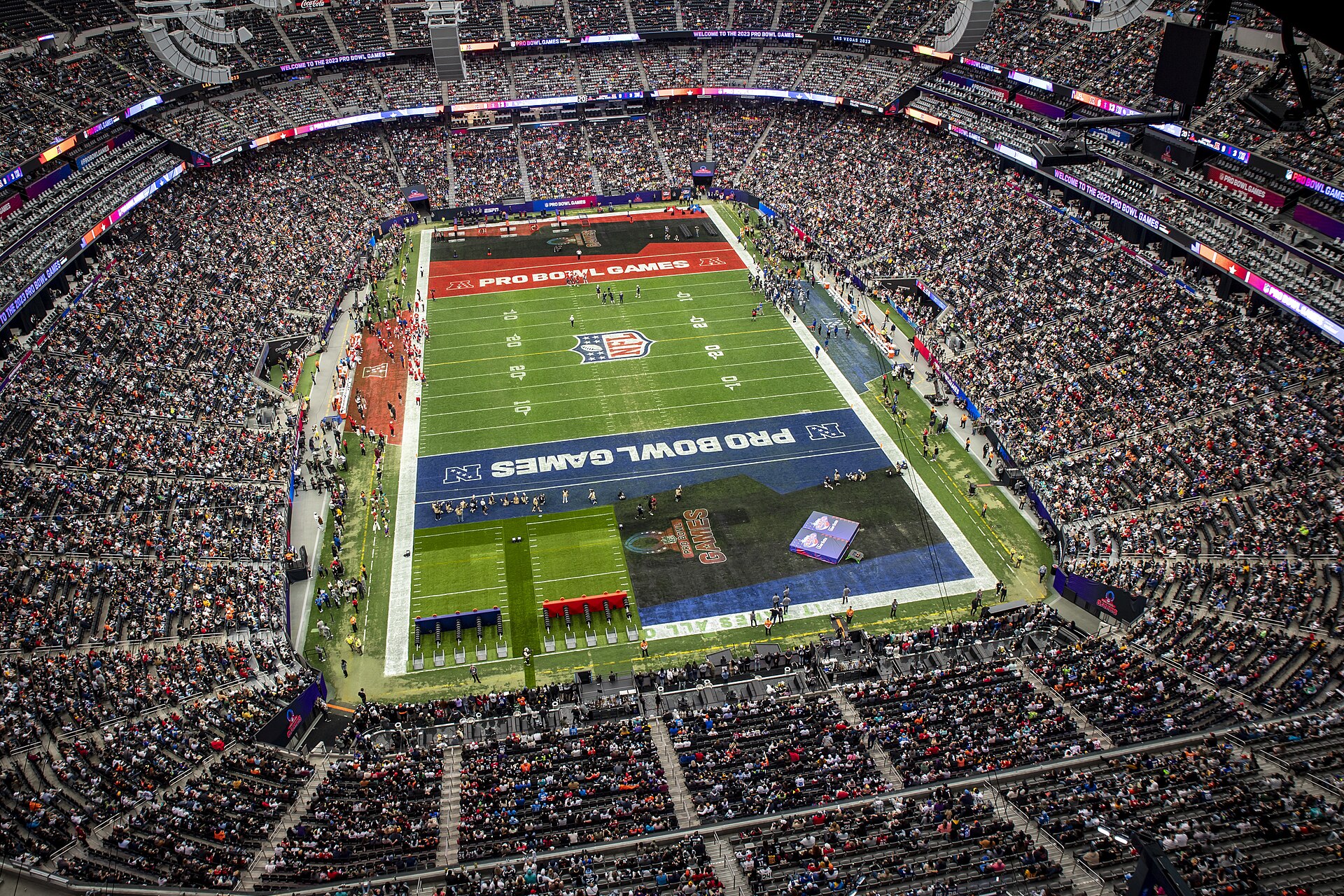
That choice changed the way the sport reads on television. When fans see elite NFL players running routes, creating spacing, and making throws in a flag format, the game stops looking like a backyard alternative and starts looking like a legitimate showcase. The league kept that momentum going by scheduling the 2026 Pro Bowl Games flag football game for Tuesday, Feb. 3 at 8 p.m. ET on ESPN, Disney XD and NFL+, putting the format back into a prime Super Bowl-week window.
The presentation matters as much as the action. Star power gives flag football a different kind of legitimacy, because it lets viewers imagine the game at its highest level rather than only as a youth activity. That is how a non-contact version of football begins to feel major-league.
Why the format is so easy to sell to new players
Britannica credits the NFL with three key moves in flag football’s rise: transforming the Pro Bowl into flag football, supporting the NFL FLAG Championships, and broadcasting the sport so wider audiences can actually see it. That combination has helped the league turn accessibility into a selling point.
Flag football strips away the barriers that keep many kids and communities out of tackle football. It requires fewer players, less equipment, and no tackling, which lowers both cost and complexity. At the same time, it preserves the football skills that matter most: spacing, timing, route running, passing, and route recognition.
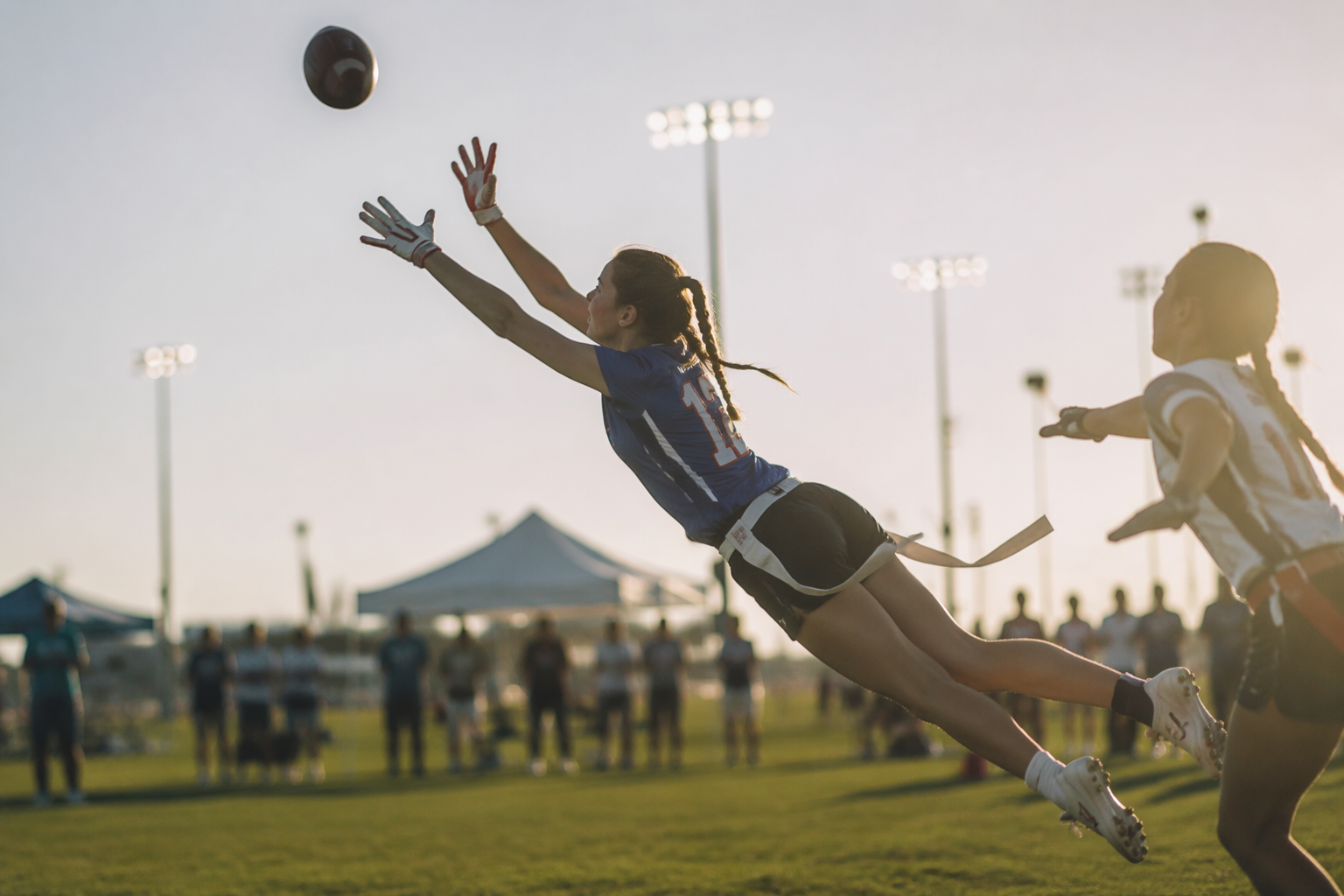
That blend is what makes the sport travel so well. It can be picked up in parks, gyms, schoolyards, and organized leagues without the heavy infrastructure of pads and contact. Once the NFL put it on television in a high-profile setting, the game became easier to follow, easier to teach, and easier for parents, schools, and youth programs to imagine as a real pathway.
The youth ladder now runs through NFL-run events
The NFL did not stop at one televised showcase. It built a formal youth pipeline around the sport, and the scale of that pipeline shows how serious the league is about shaping the game’s future.
NFL Play Football said the 2024 NFL FLAG Championships were held July 19-21 at Hall of Fame Village in Canton, Ohio, and featured more than 280 boys’ and girls’ teams representing all 32 NFL clubs. That made the event feel less like a clinic and more like a national championship with a clear club-by-club footprint.
The league also tied championship play to the Pro Bowl itself. On Jan. 24, 2024, the NFL said the NFL Flag Championships at the 2024 Pro Bowl Games in Orlando would include youth, adult and international teams, and that the tournament would showcase teams that had won the 2023 NFL Flag Regionals. USA Football added that more than 70 youth teams across 24 states were set to compete for the NFL Flag Championships in Orlando.
Those details matter because they show a progression, not just an event. Regional winners advance, age groups are layered into the system, and international teams are pulled into the same tent. That gives the sport a ladder that looks a lot more like a national development system than a one-off promotional push.
Participation is rising where the league has pushed the hardest
The downstream effect is visible in high school athletics. The National Federation of State High School Associations reported that high school sports participation reached 8,260,891 in 2024-25, including 3,536,984 girls. NFHS has also said girls flag football is expanding nationwide as the next emerging high school sport for girls.
That growth is especially important because it shows flag football is not just a boys’ feeder activity or a temporary alternative. The sport is expanding because schools and state associations can add it with far less equipment and contact risk than tackle football, while still offering the kind of competition that fits a varsity calendar.
The NFL’s approach has helped make that possible. A television showcase creates awareness, youth championships create structure, and school participation gives the game permanence. Together, those pieces turn flag football into something bigger than a campaign slogan.
The Olympic track changed the ceiling
The sport’s next leap came on the international stage. Britannica says the NFL worked with the International Federation of American Football to push for flag football’s inclusion in the Los Angeles 2028 Olympic Games. The league said on Aug. 5, 2024 that men’s and women’s flag football had been officially added to the LA28 sports program.
That gave the sport a global frame that most emerging disciplines never get. It also raised the stakes inside the NFL itself. On May 20, 2025, NFL club owners voted to allow NFL players to participate in flag football at the 2028 Olympic Games in Los Angeles, and the NFL Players Association said it looked forward to working with the league, IFAF, and Olympic authorities on the terms of play.
The Olympic path became even more formal on Feb. 1, 2026, when IFAF said the IOC Executive Board approved the Olympic Qualification System for flag football in LA28. That means the sport now has a recognized international roadmap, with qualification, national team competition, and Olympic exposure all in the same lane.
For sponsors, broadcasters, and youth organizers, that is the real shift. Flag football is no longer just a safer, cheaper version of football. It now has NFL inventory, school growth, and an Olympic endpoint, which gives it a broader business case and a stronger public identity.
The NFL did not simply popularize flag football. It helped reorganize the sport around visibility, youth development, and global ambition, and that has changed what the game can become.
Sources
- [1]britannica.com
- [2]nfl.com
- [3]playfootball.nfl.com
- [4]usafootball.com
- [5]americanfootball.sport
- [6]nflpa.com
- [7]nfhs.org
- [8]youtube.com