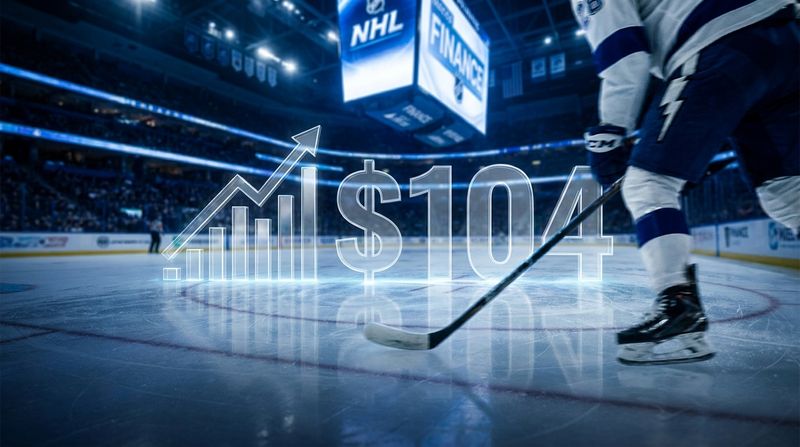
NHL Announces Record $104 Million Salary Cap for 2026-27, Ushering in New Financial Era
NHL · By Marcus Chen · May 6, 2026
NHL teams are set to experience unprecedented financial flexibility as the league announced an increase in the salary cap to $104 million for the 2026-27 season—an $8.5 million boost over the previous year. This historic rise, confirmed by both league officials and team communications, reflects escalating league revenues and a bullish outlook on the business of hockey.
NHL commissioner Gary Bettman stated that the cap expansion is a sign of the league's health and the appeal of the on-ice product, remarking,
"It's a really good time, and we don't even have the biggest markets. This is about how good the hockey is."
— Gary Bettman, ESPN
The salary cap will jump from $95.5 million to $104 million for 2026-27, marking the largest single-year increase in NHL history.
Teams were officially informed of the new cap and payroll range, providing clarity for upcoming roster decisions and contract negotiations.
The sharp cap increase is driven by surging league revenues, including lucrative broadcasting deals, strong ticket sales, and increased fan engagement. According to Sportsnet, teams were provided with the new payroll range parameters well ahead of free agency, giving front offices ample time to strategize for what is expected to be a highly active offseason.
For context, the previous cap of $95.5 million for the 2025-26 season was already a significant step up after several years of flat or modest increases. The $8.5 million jump represents a nearly 9% rise year-over-year, a figure rarely seen in modern North American professional sports.
This cap expansion is expected to have several immediate impacts:
Teams with expiring contracts will find new flexibility to retain or pursue high-profile players.
Mid-market clubs could be more aggressive in free agency, leveling the playing field with traditional big spenders.
Veteran players and agents anticipate a more robust market, potentially driving up salaries across the board.
The league's announcement comes as NHL popularity continues to grow in multiple markets, not just the traditional powerhouses. Bettman emphasized that the current health of the game is not solely reliant on its largest cities, but on the overall quality and competitiveness of the league.
Teams and fans alike will be closely watching how this financial windfall reshapes rosters, with the 2026-27 season shaping up to be a pivotal chapter in NHL business history. The increase also sets a new benchmark for future negotiations between the league and the NHL Players' Association as both sides prepare for evolving economic conditions and player movement trends.