NJCAA basketball traces roots to 1938 founding, first title in 1948
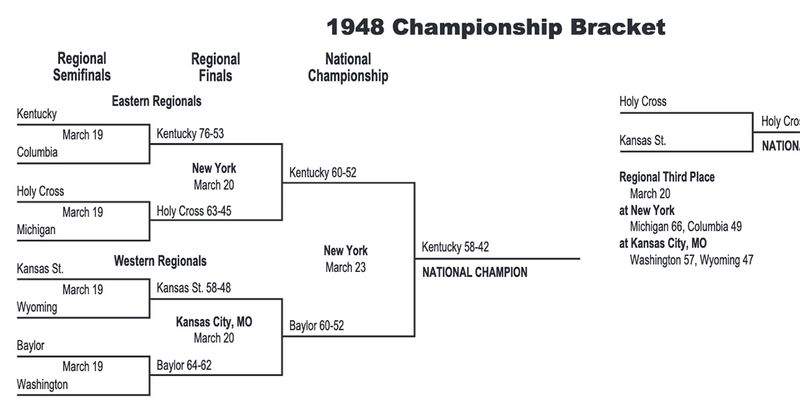
NJCAA basketball did not arrive as a ready-made national spectacle. It grew out of a two-city origin story, with Fresno providing the association’s institutional birth in 1938 and Springfield, Missouri, staging the first official men’s title game a decade later. Between those points, wartime disruption and a regional invitational circuit helped shape the bracket-and-championship model that still defines the sport.
Fresno gives the NJCAA its frame
The National Junior College Athletic Association took shape in Fresno after 13 two-year colleges reorganized around the idea of a national athletics program for junior and community colleges. On May 14, 1938, the first constitution of the NJCAA was accepted by its charter members, a formal step that turned a loose movement into a national governing body.
That matters because NJCAA basketball was never just an isolated tournament. The association says it held its first national championship event in May 1939, only a year after adopting its constitution, which shows how quickly the new organization moved from structure to competition. Today, the NJCAA describes itself as the governing body for junior college athletics and the second-largest national intercollegiate athletic organization in the United States, with more than 500 member colleges, nearly 70,000 student-athletes, and 28 sports under its umbrella.
War changes the route to a basketball crown
Basketball’s path to an official national championship was interrupted by World War II. In 1945, with NJCAA leaders not yet ready to renew full-scale national activities, member colleges were given permission to launch an invitational basketball tournament. That decision produced the Western States Basketball Tournament, which ran from 1945 through 1947 and drew some of the best two-year college teams from across the country.
The champions from that invitational era were Pasadena in 1945, Sacramento in 1946, and Compton in 1947. Those teams were not credited with official national titles, but the tournament gave the sport a competitive bridge between wartime uncertainty and a true championship format. The early California run also shows how concentrated the highest-level junior-college basketball was before the national bracket fully took hold.
Springfield hosts the first official title game
The first official NJCAA Men’s Basketball Championship was played in 1948 at the Southwest Missouri State Fieldhouse in Springfield, Missouri. By then, the association had already hosted its first National Basketball Championship Tournament in March 1948, with 16 schools drawn from eight newly formed regions across the country. The Springfield site gave the sport its first unmistakable championship setting, and the move into a formal national event gave junior-college basketball a title worth building around.
Springfield’s role is part of the reason the sport’s history reads like a two-city origin story rather than a single founding moment. Fresno gave the NJCAA its constitution and organizational identity; Springfield gave basketball its first official national crown. A year later, in 1949, the tournament moved to Hutchinson, Kansas, where it became closely associated with the sport’s long-term identity. That relocation helped lock in the tournament’s profile and gave the championship a home that became central to how fans understood NJCAA basketball.
How the modern bracket grew from the early model
The early invitational years did more than fill a wartime gap. NJCAA history says the success of the Western States Basketball Tournament laid the groundwork for the official regional and national championship structure that exists today. In practice, that means the sport’s biggest event was built from the bottom up, with regional competition feeding the national bracket instead of bypassing it.
That structure still shapes the way NJCAA basketball works. The association says its region system is the primary method used across sponsored sports to determine qualification for national championship tournaments, and in some sports regions are paired into districts for qualification. For basketball, that framework keeps the route to the national stage tied to geography, rivalry, and season-long regional performance. It is one reason NJCAA basketball feels both local and national at the same time: every team starts in a region, but the end goal is a title that belongs to the entire association.
Why this history still defines the sport
NJCAA basketball’s origin story is not just about dates on a calendar. It explains why the sport is organized the way it is, marketed the way it is, and understood by fans the way it is. Fresno established the national body in 1938, the association’s first championship event arrived in 1939, and basketball’s official crown followed in 1948 after the Western States Invitational had kept elite competition alive through the war years.
That sequence still echoes in the modern game. The NJCAA’s scale, more than 500 colleges and nearly 70,000 student-athletes across 28 sports, gives basketball a national platform built on regional access and competitive structure. The result is a sport with deep institutional roots, a championship tradition that was deliberately assembled, and a footprint that stretches from the California teams of the invitational era to the regions that now feed every national title chase.
Sources
- [1]njcaa.org