NJCAA basketball traces roots to 1945 Western States tournament
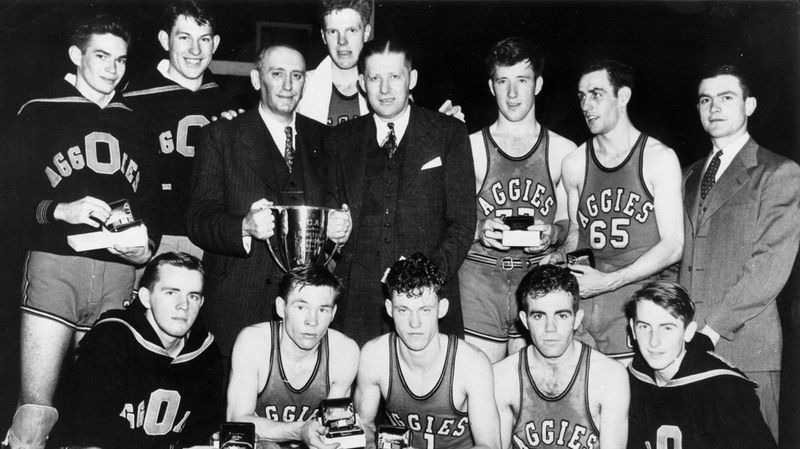
The NJCAA’s basketball story begins not with a league memo or a polished national launch, but with a tournament in California that brought real programs, real administrators, and real ambition together. The association’s own history places its beginning at the 1945 Western States College Championship Basketball Tournament, and that detail changes how the sport’s origin should be understood: junior-college basketball did not simply appear as a competition, it became an institution through competition.
That distinction matters because the early field was not an afterthought. The tournament drew nine participating schools that were already NJCAA members, which meant the event was already operating inside a shared organizational structure. From the start, the Western States event pointed beyond a one-off bracket and toward a national system with common rules, recognizable champions, and a clear place for two-year colleges in the broader basketball map.
The California hinge point
The Western States Basketball Tournament grew out of a partnership between the NJCAA and officials from the Western States Basketball leagues. It ran from 1945 to 1947, and the format itself tells the story: top teams from across the country convened in California to compete, testing whether junior-college basketball could support a national tournament identity. That was the real hinge moment, because it turned a regional invitational into a proving ground for a wider governing vision.
The NJCAA archive adds a precise 1945 marker by tying the event to Pasadena, California, with Compton also listed in connection with that first tournament. Those place names matter because they show where the association’s early identity took shape in practice. This was not a theoretical foundation laid on paper. It was built on courts in California, where the sport’s first national ambitions were refined in front of the teams that would make the system real.

From invitational to national structure
The archive also identifies the Western States Basketball Tournament as the predecessor to the national tournament, and it says the event featured some of the best two-year college teams from across the country from 1945 to 1947. That framing captures the transformation at the heart of NJCAA basketball: a competitive field became a national championship pathway. Once the tournament could assemble the best programs beyond one region, it could also support the idea of legitimate national recognition.
That is the difference between birth and institution. A competition can crown a winner once; an institution creates a ladder that future teams can climb, defend, and measure themselves against. The Western States tournament helped push junior-college basketball toward that larger structure by giving the NJCAA a recurring national stage, one that linked eligibility, postseason meaning, and historical continuity in a way the sport had not had before.
The modern importance of that origin is easier to see because the NJCAA now maintains a men’s basketball record book and championship archives across Division I, Division II and Division III. Those records do more than store names and results. They preserve the chain of championship history, giving the sport a documented memory that reaches back to the California invitational that started it all.
Why the origin story still defines the pathway
This origin story helps explain why NJCAA basketball became a legitimate pathway in the sport rather than a side note to four-year college basketball. The 1945 Western States tournament showed that two-year programs could organize at a national level, attract strong teams from across the country, and sustain meaningful postseason competition. That gave junior-college basketball credibility not just as an entry point, but as a complete competitive ecosystem with its own standards and its own historical arc.
The current men’s basketball hub reflects that evolution. NJCAA championship pages now organize the sport through Division I, Division II and Division III, which shows how the association has expanded from a single formative invitational into a multi-division structure with a national footprint. The archive culture is part of that identity now: championships are not only played, they are recorded, compared, and carried forward as part of the sport’s institutional memory.
What started in Pasadena and Compton in 1945 became the blueprint for how NJCAA basketball understands itself today. The tournament proved the sport could gather elite two-year programs under one roof; the institution made that gathering permanent.
Sources
- [1]njcaa.org
- [2]jucohoopscoop.com