NJCAA women’s basketball record book tracks championship history across divisions
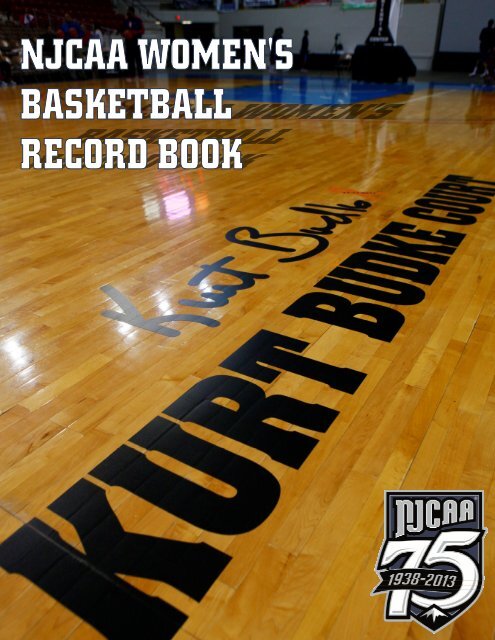
The NJCAA women’s basketball record book is the sport’s official memory, and its June 2026 update gives the championship trail in Division I, Division II, and Division III a cleaner, more durable shape. That matters in a sport where a title can be celebrated loudly in the moment and then disappear into school posts, local recaps, and highlight clips unless the record is preserved in one place.
The record book as institutional memory
The June 2026 record book update matters because it does more than list winners. It keeps all-time tournament results in one place across the NJCAA’s three women’s basketball divisions, turning scattered championship moments into a continuous history. The association’s archive also stretches the modern record back through the 2000-01 season, while the championship itself has been played since 1975, giving the document the weight of a long-running ledger rather than a simple stat sheet.
That kind of continuity helps the sport in concrete ways. Coaches can point to titles as part of a program’s lineage, administrators can measure institutional success against earlier eras, and recruits can see where a team sits in the larger championship map. In a junior-college landscape where roster turnover is constant, that official memory is what keeps a title from becoming a one-year story.
Division I: Eastern Arizona turns a breakthrough into a milestone
Eastern Arizona’s 2026 Division I championship is the kind of run the record book is built to protect. The program won its first national championship, a breakthrough that places the Gila Monsters in a different historical category from the teams that had already been on the board for decades. Angelica de Paulo was named Coach of the Tournament and Esmeralda Enriquez earned Tournament Most Valuable Player honors, giving the title run a clear leadership core as well as a finishing edge.
The path into the bracket makes the achievement sharper. Eastern Arizona entered the national tournament as the No. 2 overall seed after receiving an at-large bid, which shows how a team can grow from a strong regular season into a championship finish without needing the top seed to define it. The same season also ended with de Paulo being recognized as Division I Coach of the Year, a sign that the title was not a fluke but the culmination of a season-long climb.
That is exactly the kind of detail the record book has to capture. First titles matter differently from repeats because they redraw a program’s place in the sport. Eastern Arizona’s 2026 breakthrough now sits beside the established powers in a way the archive can preserve for future teams to measure against.
Division II: Johnson County adds another layer to its standard
Johnson County’s 2025 Division II championship was its third in the division, which is the sort of number that separates a strong season from a program identity. Layla Scott was named Tournament Most Valuable Player, and head coach Ben Conrad earned Coach of the Tournament recognition, underscoring that the title run belonged to a group already used to championship expectations.

That third crown matters because it shows how junior-college basketball history is built not only on firsts, but on repeat excellence. Johnson County Community College in Overland Park, Kansas has turned Division II success into a recognizable standard, and the record book makes sure that standard does not get flattened into a single highlight. In a sport where many teams cycle quickly through recruiting classes, a third championship is evidence of structure, not just talent.
The setting also adds context. The 2025 Division II championships were hosted in Joplin, Missouri, and the NJCAA had already announced Joplin as host for both the 2024 and 2025 DII women’s basketball championships. That continuity gives the event a steadier home base and reinforces the sense that the division’s championship history is being staged, recorded, and revisited with purpose.
Division III: Rochester and Minnesota West keep the title race active
Rochester’s 2025 Division III national championship carries extra historical weight because the NJCAA later described the program as the 2024 and 2025 DIII champion. That framing turns the run into a repeat title story, the kind of stretch that reveals how quickly a program can build a winning run even in a division known for turnover and rapid change. It also gives the archive a clean benchmark for the next wave of contenders.
Minnesota West then won the 2026 Division III national championship, and the NJCAA described the program as taking home its second national title in three years. That is a different kind of milestone from Eastern Arizona’s first crown, but it serves the same larger purpose in the record book: it shows how dominance can emerge, be challenged, and then move on. The title changed hands, but the historical thread stayed intact.
For readers who track the shape of the sport, Division III is where the archive becomes especially useful. A repeat champion like Rochester and a fast-rising program like Minnesota West both need the same kind of permanent record, because the division’s story is built on short cycles that can vanish if they are not preserved properly. The book gives those runs equal footing with the more established title lines in the other divisions.
Why the archive matters beyond the standings
The NJCAA’s championship archive is more than a reference page. It is the mechanism that keeps the women’s game visible across eras, which is especially important in a sport spread across multiple divisions and dozens of schools with different media footprints. Without a central record, Eastern Arizona’s first title, Johnson County’s third, and Rochester’s repeated success would all live in separate silos instead of forming a shared championship map.
That shared map is part of the sport’s credibility. It shows that the NJCAA is not just staging championships, but preserving them with enough precision that future teams can see where they fit. The 2026 update does that work by tying together first-time triumphs, repeat winners, and division-specific dynasties in one official place, which is how championship history stays alive instead of fading into memory.
Sources
- [1]sportscroll.com
- [2]njcaa.org