Nottingham’s Barrio Padel puts accessibility at the heart of design
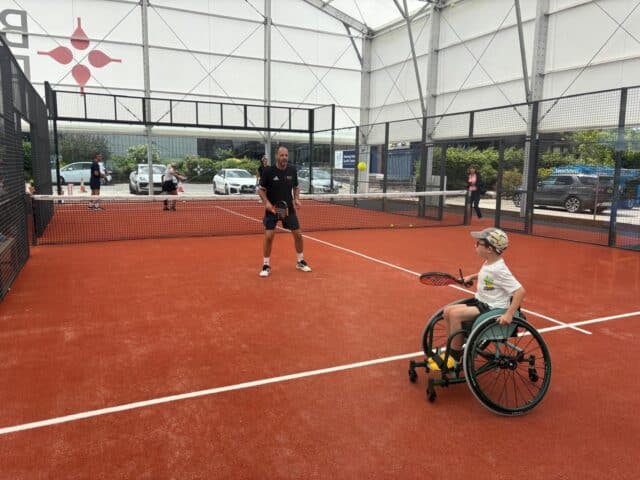
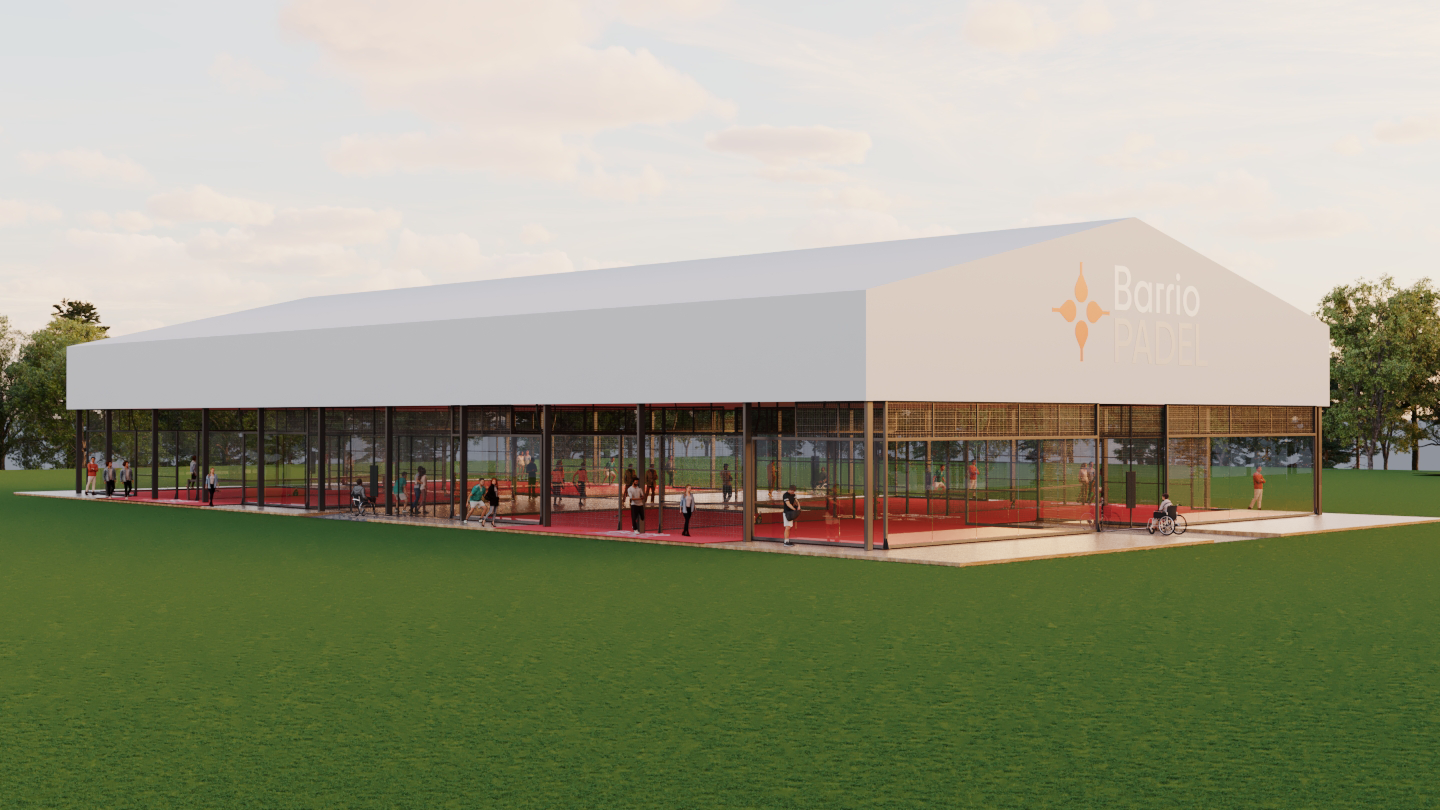
Barrio Padel has opened in Nottingham with a design brief that goes beyond adding another court block to the UK padel map. Its courts sit at Holme Pierrepont Country Park beside the National Water Sports Centre, and the layout was shaped around accessibility from the start, not patched in after the build.
Built around movement, not just margins
Co-founder Matt Bennett framed the project around an uncompromising player experience and removing barriers to participation, and the physical details back that up. Each court has three metres of run-off, while the roof height ranges from nine to thirteen metres, giving the space a more open feel than the compressed ceilings that can make some indoor venues feel restrictive.
The most telling adjustment is hidden at net level. The apertures beside the net were widened so a 120-centimetre sports wheelchair can pass through after opening a locked gate. That is a practical change, not a symbolic one, and it shows the venue was planned with adaptive padel in mind rather than relying on generic access claims.
Those choices matter because they affect how the game is actually experienced. A wide run-off changes how players recover from volleys and lobs, a higher roof changes sightlines and ball flight, and a wheelchair-friendly aperture changes whether an adaptive player can move through the court without breaking the rhythm of play.
Why Holme Pierrepont gives the club a different context
The site itself strengthens the idea that this is meant to be more than a standalone club launch. Holme Pierrepont Country Park is owned by Nottinghamshire County Council and managed by Serco on behalf of Holme Pierrepont Leisure Trust. It covers 270 acres and is already home to the National Water Sports Centre, a long-established training hub for many GB Paralympians.
That setting gives Barrio a ready-made disability-sport ecosystem around it. A venue placed next to an elite water-sports centre is operating in a part of Nottingham that already understands performance, accessibility and high-level adaptation, which makes the club’s design choices easier to measure against a real sporting standard rather than against a marketing pitch.

Sport England’s accessible and inclusive sports facilities guidance is aimed at helping designers, building owners and operators meet their design and operational obligations. Barrio’s layout sits squarely inside that framework: the run-off, roof height and wheelchair access are all the kinds of decisions that turn a venue from nominally open to genuinely usable.
The opening night showed who the club is for
The club’s opening event was not a narrow showcase for experienced padel players. It included a player who travelled from York to hit a ball for the first time after receiving an above-the-knee prosthetic, and an eight-year-old using a sports wheelchair. Those two examples capture the range Barrio is trying to serve, from first-timers finding a way into the sport to children needing a court that works with their equipment.
Bennett has said he wants Barrio to become a disability coaching centre, and he hopes the club will eventually host an Inclusive Padel Tour event. That ambition pushes the venue from access into pathway building: if the club can offer coaching, not just court time, then the design choices become the base layer for repeat participation rather than a one-off visit.
For a sport growing quickly through private investment, that is the real test. It is easy to open courts and sell memberships. It is harder to build a place where an adaptive player, a new starter with a prosthetic and a child in a sports wheelchair can all step onto the same surface and keep coming back.
A wider model already exists, and Barrio is trying to fit into it
Barrio’s ambitions line up with the Inclusive Padel Tour, which describes itself as the first padel circuit in the world where athletes with and without disabilities can play together in a team. The circuit says it began in 2021 after Alessandro Ossola concluded that adding one rebound for disabled players could make padel more inclusive, a reminder that small rule and design changes can open a sport to a wider group of players.
That tour has already reached the UK, staging a debut event at Padel Maidenhead in September 2025. The Padel Paper has also quoted GB adaptive player Andrew Simister describing what it meant to become the first British amputee on the tour, which underlines how quickly this side of the game is becoming more visible and more organized.
Barrio’s challenge is whether it can turn that visibility into something local venues can copy. The answer will depend on whether other clubs are willing to make the same kinds of decisions Barrio made early on: enough run-off to move safely, enough height to feel open, and access points that work for a sports wheelchair rather than only for able-bodied traffic.
What other UK venues can realistically copy
Not every club will sit beside a national training centre or have the same footprint as a 270-acre park. But the Barrio model does not depend on extraordinary geography so much as on disciplined choices at the planning stage. The parts that are easiest to copy are also the parts that matter most.
• Allow the space for three metres of run-off around a court where possible. • Build with a roof height that avoids a cramped playing environment. • Design access points so sports wheelchairs can move through the court without awkward detours. • Link the venue to coaching, not just casual bookings, so disabled players have a reason to return. • Use existing guidance, including Sport England’s, to make accessibility a design requirement rather than an afterthought.
That is what makes Barrio notable in padel rather than just in Nottingham. It shows how a club can use architecture, coaching intent and location to make accessibility part of the product itself, and it gives other UK venues a practical template that starts with court dimensions and ends with who feels able to play.