NWLA Tournament turns wiffle ball leagues into a national championship
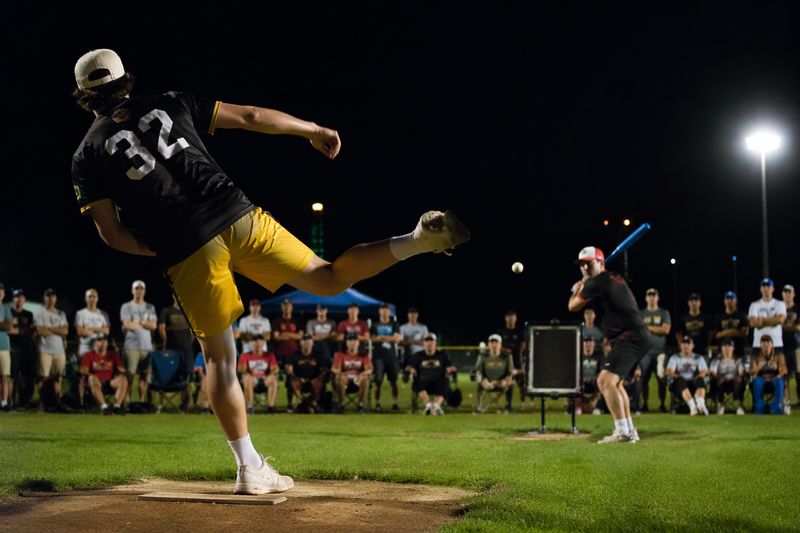
The NWLA Tournament works because it does not pretend wiffle ball is one uniform sport. It takes entire leagues, each with its own rules, habits, and regional swagger, and puts them on one national stage for a title that feels earned instead of manufactured. Since 2012, that structure has turned a patchwork of local scenes into a championship with real weight.
A national title built from leagues, not free agents
The cleanest way to understand NWLA is this: it is a national championship between leagues, not an open bracket built around whoever shows up. That matters because the field is not a collection of random teams searching for a weekend run. It is a gathering of complete league identities, which means every roster carries the reputation of a city, a club, or a regional circuit into every game.
That idea traces back to 2012, when founder and former commissioner Carl Coffee watched teams from the Potomac Wiffleball League and the Kalamazoo Wiffleball League play an exhibition at the 2011 London Slow-Pitch Tournament. NWLA says that matchup helped inspire the first championship, and the origin makes sense: the sport already had enough pockets of serious competition that someone only had to connect them. Once that happened, the tournament became less a novelty and more a proper title path.
Why the league-first format gives the trophy legitimacy
The tournament’s credibility comes from the fact that leagues do not all play the same version of wiffle ball. NWLA’s rules page says it plainly: wiffle ball leagues vary across the country, so the tournament uses a common rule set for its own competition. That is the hidden detail that makes the championship legible. Without a shared standard, a “national champion” would just be a team from one rules environment beating another team from another rules environment on a random weekend.
Instead, NWLA creates a common court of judgment. Leagues keep their local character, but the tournament establishes one baseline for competition, and that gives the title a real comparison point. It is the difference between a carnival bracket and a championship system. When a league wins here, it is not just surviving an open field. It is proving that its style travels.
The size of the ecosystem is the story
NWLA says the championship has involved more than 500 players from 50-plus leagues across 20 states. That is not a novelty field. That is an ecosystem, with enough depth to resemble a traveling amateur circuit more than a one-off rec league event. The public team pages show how broad the reach is, with names like Circle City Wiffle Ball, Home Run League, Kalamazoo Wiffle League, Minnesota Wiffle Association, and Verona Wiffleball League all feeding the national stage.
The historical record runs even deeper. NWLA’s materials reference leagues dating back to the late 1990s and 2000s, including Windy City Wiffle Ball League, Wiffle House, and Central Ohio Wiffleball League. That background matters because it shows the tournament did not invent the sport’s culture. It organized it. The national event gave long-running local leagues a place to measure themselves against one another without flattening what made them distinct in the first place.
How the tournament weekend is actually built
The 2024 event shows how formal NWLA has become. The tournament information sheet set the field in three pools of four teams, then seeded those teams into a double-elimination bracket. Every team was guaranteed five games, plus one game on Sunday, which is a strong sign this is not merely about one upset and a trophy photo. It is built to sort teams through repeated tests, the way a real championship should.
The setting also had the feel of a legitimate event calendar, not an ad hoc meetup. NWLA placed the 2024 tournament at Harmon Park in West St. Paul, Minnesota, with Friday-night venues in Eagan. The championship game aired on ESPN+, which pushes the event beyond the league niche and into the wider sports stream where a title game can stand on its own. NWLA also maintains merch, live coverage, stats tracking, hotel partners, and league support, the kind of infrastructure you only see when a property has grown into something with annual rhythm and operational memory.
What the 2024 tournament said about the level of play
The games themselves backed up the structure. Home Run League beat SWBL in front of what felt like a sellout Minnesota crowd, a line that tells you the atmosphere was loud enough to matter in a sport that usually lives in smaller spaces. NWA then edged newcomer Verona 1-0 in a game defined by baserunning defense and multiple immaculate peg plays. Those are the kinds of details that separate a competitive league championship from a backyard showcase: one run, one peg, one defensive mistake, and the whole bracket can tilt.
Circle City Wiffle Ball ultimately won the 2024 title, beating NWA 2-0. The championship game on ESPN+ turned on Brendan Dudas’ two-run home run in the top of the sixth inning, the sort of swing that gives a title game a clear hinge point. The score line was tight, but the context was not: this was not a random weekend crown. It was a league champion beating another league champion in a field designed to filter out noise.
A championship that keeps its regional accents
NWLA’s venue history shows how deliberately the tournament has moved around the map: Hilliard, Ohio in 2012; Dublin, Ohio from 2013 through 2016; Morenci, Michigan from 2017 through 2019; Washington County, Pennsylvania in 2020, 2023, and 2025; Indianapolis in 2021 and 2022; West Saint Paul, Minnesota in 2024; and O’Fallon, Missouri in 2026. That kind of rotation keeps the championship from belonging to one region. It also makes the event feel like a touring final, with each stop adding another local chapter to the same national story.
That independence is part of the point. NWLA says the tournament is not affiliated with, sponsored by, or endorsed by The Wiffle Ball, Inc., which makes it a grassroots governing structure rather than a corporate-sanctioned exhibition. For wiffle ball, that is not a weakness. It is the mechanism that lets local leagues keep their own identities while still competing for one credible national prize. The trophy means something because the tournament has built a way to compare the country’s best leagues without erasing what makes each one worth following.