Ohio girls flag football grows, but northwest programs still lag

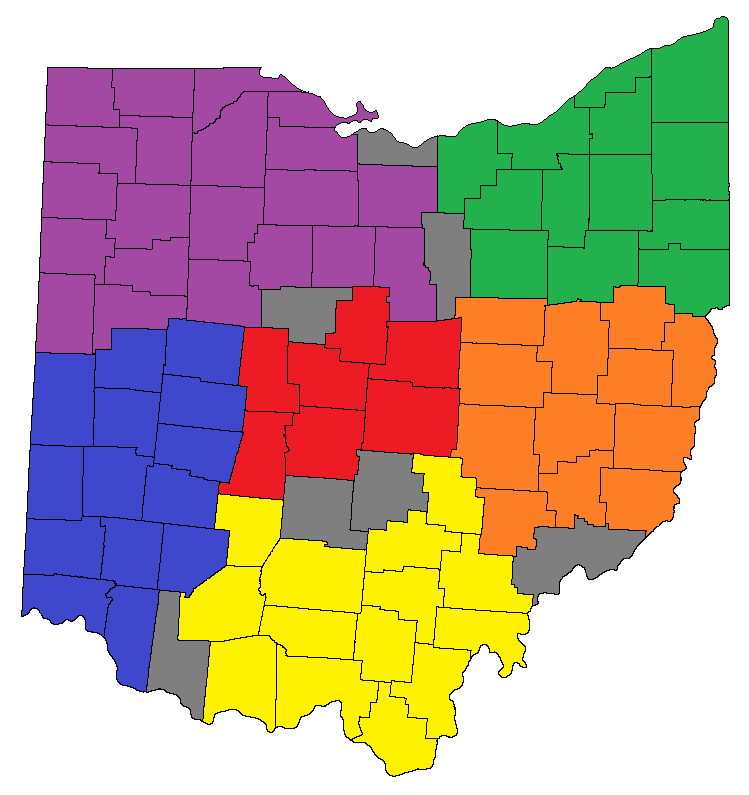
Girls flag football has clear traction in Ohio now, but the map is still uneven. The Ohio High School Athletic Association’s June 24 sanctioning gave the sport official standing for the 2026-27 school year, yet northwest Ohio and southeast Michigan still had no high school programs when Toledo-area coaches started pressing the issue.
A statewide surge that still leaves blank spots
The numbers show how fast the sport has moved. OHSAA made girls flag football its 29th recognized sport and its 15th girls sport after a unanimous vote by the board of directors, and then staged the inaugural state championship on May 16 at Tom Benson Hall of Fame Stadium in Canton. Eight schools made that first tournament, a sign that the competitive ladder is already taking shape even before every region has caught up.
The growth is not limited to one corner of the state. OHSAA said 162 Ohio high schools sponsored girls flag football in spring 2026, up from 20 schools three years earlier. In Northeast Ohio, the number climbed from six in 2021 to 120 by spring 2026, with more than 61 new high schools committed to play that season. Ohio became the 23rd state association to sanction the sport, and with 40 states now offering girls high school football in some form, the national momentum is no longer theoretical.
That momentum matters because flag football is headed for a bigger stage. It will debut at the 2028 Olympic Games in Los Angeles, giving the sport a visibility boost that changes how families, schools, and athletes view the pathway. In Ohio, the Cleveland Browns and Cincinnati Bengals have already helped build that pathway by hosting regional tournaments tied to the 2026 championship structure.
Why northwest Ohio is still waiting
The Toledo-area story is not about whether girls want to play. It is about whether the local school system is ready to support them. At the time of publication, there were still no high school girls flag football programs in northwest Ohio or southeast Michigan, even as the rest of the state accelerated. That gap has become the central frustration for coaches who see interest at the youth level and know the pipeline can grow if schools step in.
The practical barriers are the same ones that stall a lot of new sports: funding, staffing, school buy-in, and conference alignment. Coaches in the region are trying to move from informal enthusiasm to something durable enough for schools to schedule, staff, and sustain. Sanctioning removed one hurdle, but it did not instantly produce coaches, uniforms, practice time, or league structures in places that have not yet built them.

That is why the Toledo-area push reads less like a petition and more like a roadmap. The real task now is to turn recognition into rosters, and rosters into schedules. Without that step, sanctioned status remains a statewide achievement that still stops short of the northwest corner.
The youth pipeline is already doing the work
The strongest local proof of demand is at the youth level. Ben Kessler, who coaches the 12U and 14U Lady Eagles out of Oregon, says participation in his program has more than doubled over three years. One of his teams also qualified for the 2026 AAU Junior Olympic Games in Des Moines, Iowa, after winning a regional qualifier at the West Michigan Flag Championships. That is not just growth in numbers. It is competitive progress, and it shows that local players are already stacking wins against regional competition.
The Rossford Dome tells a similar story. WTOL reported that 232 girls signed up there this past spring, which is a meaningful number in a market that still lacks high school teams. The dome has already become a shared space for teams from multiple communities, and that kind of existing infrastructure is often what a new sport needs before schools are ready to commit. The player base is there; the next challenge is converting a spring sign-up wave into varsity schedules and coaching jobs.
This is where the region’s lag becomes more visible. If 232 girls can show up for one spring setting and Kessler’s participation can more than double in three years, the issue is not lack of interest. The bottleneck sits higher up, in school offices and district planning meetings, where administrators decide whether a sport gets the time, money, and personnel it needs.
A college pathway helps make the case
The sport’s future is easier to sell when players can see where it leads. Maycie Bassett, a women’s flag football player at Siena Heights University, gives the local conversation a college endpoint that matters. Siena Heights already has an established women’s flag football program, which means Ohio athletes do not have to look far to imagine playing beyond high school.
That college link matters for more than recruitment. It gives coaches a concrete answer when families ask whether the sport is worth the investment. Girls are being told too often that the game will not lead anywhere, even as programs spread and school support grows. A nearby college option changes that conversation from abstract promise to actual pathway.
It also strengthens the broader sports ecosystem in northwest Ohio and southeast Michigan. A youth player in Oregon, a family in Rossford, and a college roster at Siena Heights are part of the same chain. When one link is missing, the whole system weakens. When the links are connected, the region can keep athletes in the sport longer and push them toward higher levels of competition.
What has to happen next
The road forward is clear enough to map. Schools need funding lines, coaches need staffing support, and athletic departments need a way to fit girls flag football into existing conference structures. Those are administrative choices, not abstract debates, and the state’s early success gives local leaders a working model to follow.
The OHSAA has already shown what statewide rollout can look like: a unanimous sanctioning vote, a championship path, and regional tournaments that bring in partners such as the Browns and Bengals. The remaining work belongs to local districts in places like Toledo, Rossford, Oregon, and the surrounding communities. If they want their athletes to join the state’s growth curve, they have to build the teams that let girls stay together, keep competing, and move through the pipeline that already exists elsewhere.
The sport is no longer fighting for legitimacy in Ohio. In northwest Ohio, it is fighting for implementation.
Sources
- [1]wtol.com
- [2]ohsaa.org
- [3]clevelandbrowns.com
- [4]olympics.com
- [5]shusaints.com