Old News, Ripe lead balanced Masters Women’s bracket at WMUCC

Old News and Ripe have turned Masters Women’s into a clean test of whether the bracket still belongs to two U.S. powers or whether the field is finally compressing around them. At WMUCC 2026 in Nottingham, the first layer of results says the gap remains at the top, but the next layer says it is narrowing fast, with Canada, Japan, Singapore and Germany all forcing real decisions before the knockouts even fully settle.
A world championship built for pressure
WMUCC 2026 is running from June 28 to July 4 at Highfields Sports Complex in Beeston, Nottingham, and it sits inside WFDF’s “Summer of Flying Disc” push. WFDF also described the opening ceremony as the largest gathering of Ultimate players ever assembled, a fitting backdrop for a tournament that brings together 150 teams, 3,396 athletes and 668 games across nine divisions.
That scale matters in Masters Women’s because the bracket is not simply large, it is crowded with teams that know how to survive short-turnaround tournaments. Direct advancement gives little room to recover from a flat performance, and every early result can reshape the title path long before the medal games arrive.
Old News and Ripe set the early standard
Old News opened by looking every bit like the division’s benchmark. The U.S. side went 3-0 with a 45-13 goal differential, beating Sour 15-4, Samsui 15-2 and Dregs 15-7 before moving into power-pool play against Big Tendinitis and Ripe. That kind of margin does more than pad a record. It tells the rest of the field that Old News can create separation quickly and keep opponents chasing for entire games.
Ripe matched that pace in Pool C, also finishing 3-0 at 45-20. It handled Big Tendinitis 15-7, Vintage 15-10 and Seagulls Hamburg 15-3, a run that showed the same broad control even if the defensive margin was not as severe as Old News’s. Together, the two U.S. teams have defined the front edge of the bracket, and nothing in the early pool stage has displaced them.
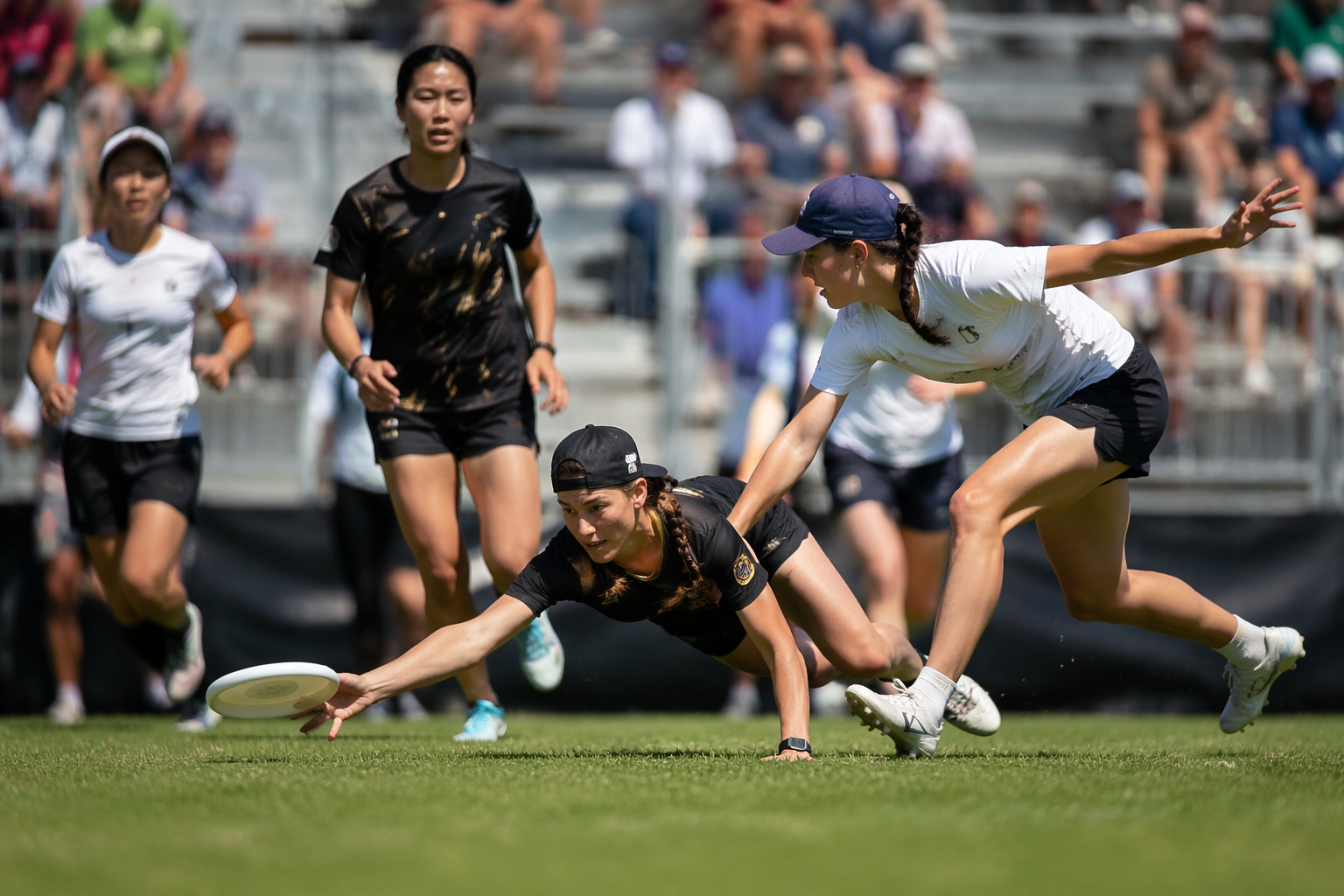
The key point is not that they are identical. It is that both have already shown they can win without needing a close finish, which is the strongest argument for a true two-team tier. In a division with a short runway into elimination, that matters as much as raw seeding.
Canada is close enough to matter
The clearest challenger to that U.S. pairing is StellO, the Canadian side that entered the bracket as the second seed in the Master Women’s division on the WMUCC results site. StellO’s pool results show both vulnerability and recovery: it opened with a 12-15 loss to Japan’s N!KE, then rebounded with a 15-8 win over Luv Me Gently and a 15-9 win over Soar! *sore.
That sequence says a lot about where the gap stands. StellO is not being overmatched, and it is not being blown out. But the loss to N!KE also shows that the Canadian threat is real rather than theoretical, because one clean international opponent can still put StellO behind the very top line. If the bracket remains a two-team race, StellO is the team most likely to turn it into a three-team conversation.
Barrel Aged adds another U.S. title threat and complicates the picture further. It beat Pumas 14-9 and LMU 15-7 before a 6-15 setback against Sage, leaving it at 2-1 with a 35-31 goal differential. That is not the profile of a runaway favorite, but it is the profile of a team that can beat enough quality opposition to change the shape of the bracket. In a division this balanced, that kind of volatility can become an advantage if the team times its best run for elimination.
International teams are forcing the hierarchy to answer questions
The Canadian layer is only part of the pressure. Japan’s N!KE has already delivered one of the most telling results of the division by defeating StellO 15-12, and its roster also brings recognizable production from Maiko Hara and Yuki Nakayama. That matters because it shows the tournament is not simply U.S.-centered with one Canadian spoiler nearby. Japan can win a direct game against a seeded contender and still stay in the conversation.
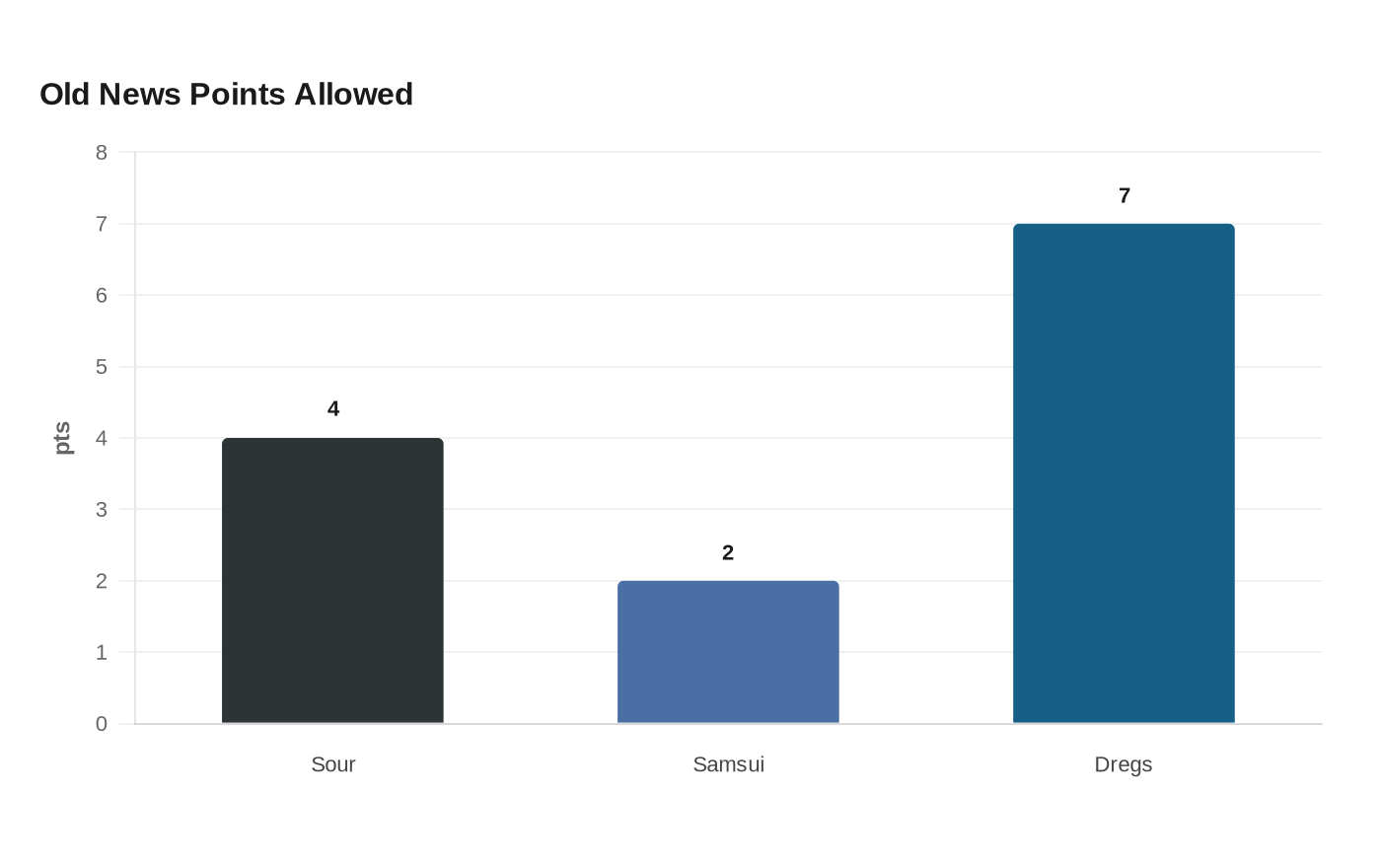
Singapore’s Samsui, Germany’s Seagulls Hamburg, and other international entries have also made the bracket less predictable. Old News handled Samsui 15-2 and Dregs 15-7, while Ripe beat Seagulls Hamburg 15-3, but those results only reinforce the point that the top teams have been tested against a broader field than the title picture usually allows. The difference between a comfortable pool stage and a dangerous elimination draw is shrinking.
The current player production reflects that spread. Tulsa Douglas has stood out for Old News, Rachel Stockdale and Carolyn Vlach have been key for Barrel Aged, Melissa Dunbar and Alisha Zhao have driven StellO, Savannah Erwin and Chelsea Zhu have helped Ripe, and Maiko Hara and Yuki Nakayama have given N!KE a high-end international spine. Those names matter because the division is not being carried by one or two stars alone. It is being shaped by multiple lineups that can generate offense from different hands.
Why the Round of 16 is the first real fault line
The Round of 16 schedule made the bracket’s balance impossible to miss. Old News drew Luv Me Gently, Barrel Aged faced Sour, Ripe met Pumas, Sage took on Vintage, StellO played Seagulls Hamburg, N!KE drew Samsui, Big Tendinitis met LMU, and Dregs faced Soar! *sore. Each pairing carries a different kind of pressure, but the structure itself is the story: there are enough teams with real credentials that several games can swing on depth, defensive timing and composure rather than reputation.
The featured free-to-air matchup, Barrel Aged versus Sour, fit that pattern especially well. It is the kind of game where seeding matters less than whether the line can keep making clean decisions under knockout pressure. That is exactly what makes Masters Women’s feel balanced without yet feeling wide open.
Old News and Ripe still look like the poles of the division, and the path to the final still runs through them. But StellO, Barrel Aged and N!KE have already done enough to show that the top of Masters Women’s is no longer a closed room, and the next round will decide whether the pressure becomes a genuine shift or just a sharper challenge to the old order.
Sources
- [1]wmucc.wfdf.sport
- [2]wfdf.sport
- [3]results.wfdf.sport