Oregon State’s Cami Potter thrives in ultimate while managing narcolepsy
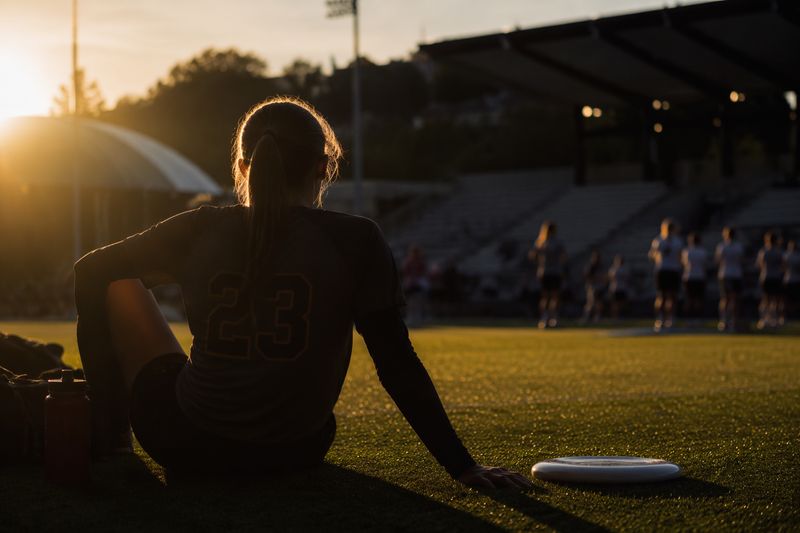
Cami Potter’s first season with Oregon State has been shaped as much by support systems as by throws, cuts, and defensive effort. Her narcolepsy can make sleep, energy, and daily routine unpredictable, yet she has kept playing ultimate at a high level because the people around her have adapted with her, not around her.
How Potter’s season changes the conversation
Laura Osterlund’s profile makes clear that Potter is not framed as a feel-good exception. She is an athlete trying to remain reliable in a sport that asks for early starts, long tournament days, travel fatigue, and constant emotional swings, all of which can hit harder when sleep is unstable. That combination turns her experience into a performance story, because the challenge is not simply staying motivated, but staying functional enough to contribute to a team.
Ultimate rewards players who can handle repeated bursts of speed, decision-making under pressure, and the grind of multi-game weekends. For Potter, the issue is how to keep that output steady when narcolepsy can interrupt the ordinary rhythm that most athletes rely on to recover, study, and show up again the next day. The significance of her season is that she has remained connected to the sport while managing those realities instead of stepping away from them.
The Dinos built a team environment that can absorb differences
Oregon State’s women’s ultimate club is commonly known as the Dinos, and Corvallis Ultimate describes the team as one that plays competitively against college programs in the region, travels to tournaments hosted by neighboring schools, and hosts hat tournaments to stay active in the local ultimate community. That mix matters because it shows a program built on constant participation rather than a narrow win-loss definition of value.
The team’s listed captains are Emily Eagen and Carrie Latimer, and that kind of leadership is central to Potter’s story. In a team environment like this, adaptation is not abstract. It means teammates understanding when a player may need a different pace, a different expectation, or a different kind of communication so she can still stay involved and useful on the field.
Potter’s case also pushes against the idea that support is a soft add-on. In this setting, support is part of roster design. If a player’s condition can affect energy and routine, then teammates and leaders have to build habits that keep her connected without lowering the standard of play.
Why ultimate’s culture makes this story bigger than one roster
Oregon State University Recreational Sports describes ultimate as a Spirit of the Game sport, with competitive play encouraged but never at the expense of mutual respect among competitors. That principle gives Potter’s experience a wider meaning. A sport built on respect is also a sport that can make room for honesty about health, communication about limits, and trust within a team.
That matters in college ultimate because the sport often celebrates grit without always examining the hidden conditions behind it. Potter’s profile shows what the sport looks like when grit is paired with accommodation. The result is not reduced competitiveness. It is a fuller version of it, one where players can still push hard while recognizing that not every teammate arrives with the same physical baseline.
The culture around the Dinos reinforces that point. A team that travels to neighboring schools, hosts hat tournaments, and stays active in the local ultimate scene is already practicing a model built on inclusion and continuity. Potter fits into that model because her presence depends on more than individual toughness. It depends on the group making space for her to participate on terms that still allow her to perform.
The support infrastructure behind student-athlete success
The broader college-sports lesson reaches beyond the sidelines. Oregon State’s Academic for Student-Athletes office says it provides individualized academic support throughout student-athletes’ academic journeys, including help selecting majors and courses and managing weekly workload. That kind of structure matters for a player like Potter because performance in college is never only about practice and game day.
For an athlete managing narcolepsy, academic scheduling, sleep patterns, and travel demands can collide quickly. When a university offers support that helps with course selection and weekly workload, it reduces the chance that sport and school will pull in opposite directions. That does not solve the medical challenge, but it gives an athlete more room to keep playing while staying enrolled and engaged.
Potter’s story lands because it shows how college ultimate actually works at its best: not as a test of who can suffer the most, but as a system built around communication, trust, and shared responsibility. Oregon State’s Dinos, their captains, the Spirit of the Game framework, and the academic support around student-athletes all point to the same conclusion. In ultimate, talent matters, but the environment around the player can decide whether that talent stays on the field.