Outdoor racquetball rules create a different game, USA Racquetball says
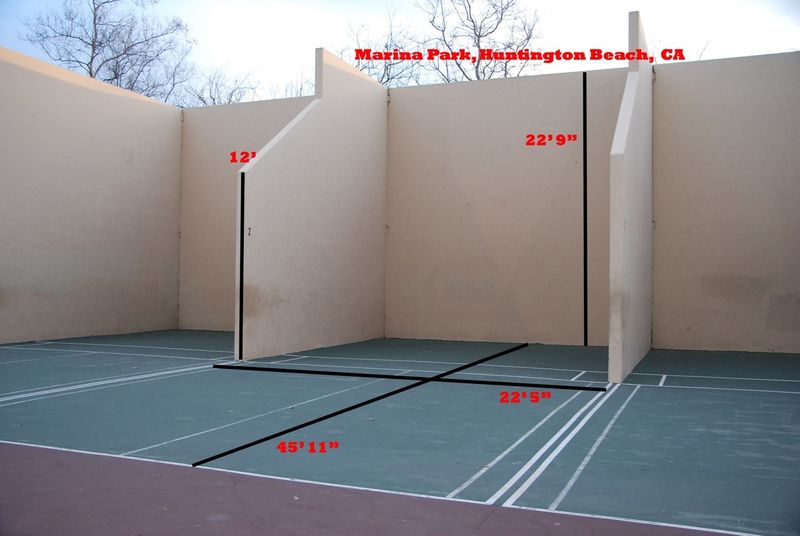
Outdoor racquetball does not ask indoor players to make small adjustments. It forces a new read on space, pace, and risk, because the game is built around courts that often have no ceiling, often no back wall, and no official standard size under World Outdoor Racquetball rules. That means the most reliable indoor habits, waiting for a second serve, leaning on predictable rebounds, and defending against tight glass angles, can turn into liabilities the moment the match moves outside.
The court geometry rewrites the shot chart
Under WOR rules, outdoor racquetball is generally played on one-wall or three-wall courts, with side walls that may taper toward the back court. The standard markings usually still apply, but the indoor receiving line is not used outdoors, which changes how players measure depth and positioning. Some courts add singles service lines to reduce the server’s edge, but those lines matter only on the serve and do not apply to doubles, a detail that rewards players who can shift gears fast between formats.
That layout creates fewer guaranteed rebounds and far more open space. Indoors, players can build patterns around back-wall bounces, ceiling plays, and second-chance recovery. Outdoors, the ball can disappear into space if the shot is not placed with precision, so the smartest attacks are often the ones that favor geometry over power, using the venue rather than fighting it.
The serve becomes a first-strike weapon
WOR divisions are one-serve only, and that single rule changes the entire psychology of the match. There is no indoor safety net, no bailout serve to reset the point, and that raises the value of a compact, repeatable first delivery that can start offense immediately. The receiver also cannot break the plane of the short line on the return of serve; if they do, the point goes to the server, so footwork and discipline matter as much as hand speed.
Outdoors, the ball is treated differently when it touches the lines: a first bounce on the sideline or back line is in. That makes serving and returning more nuanced than simply hitting hard, because players must read line contact as a live scoring variable rather than a dead-ball mistake. On some long-wall courts, local rules can even make certain over-the-side-wall shots out, which is why tournament directors are told to put every local exception in writing before play begins.
For indoor players, that means a straight tactical translation: serve with intent, return with spacing, and treat every venue as its own rulebook. In outdoor racquetball, waiting for the rally to settle is often the wrong instinct.
Conditioning and attitude matter in a different way
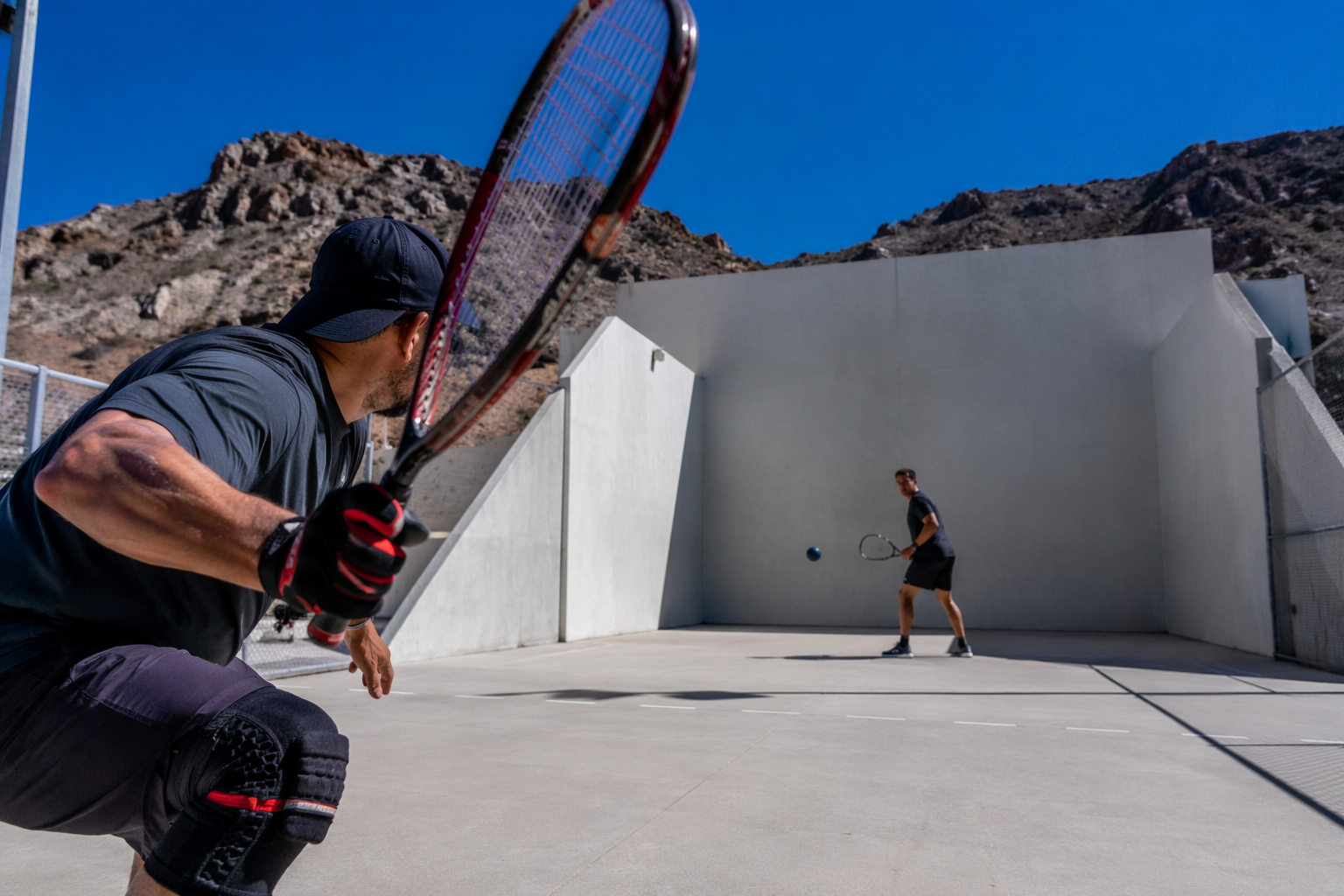
USA Racquetball describes WOR as a parallel universe to the traditional sport, using the same racquets and ball but a different attitude and action. That is more than branding. Outdoors, players deal with open-air conditions, variable court shapes, and the possibility that a match will hinge on who adapts faster to the local setup rather than who owns the most polished indoor script.
Even the dress code reflects the difference. Shirts are not required outdoors, a small detail that signals how far the outdoor game moved from club tradition and into its own culture. The result is a version of racquetball that feels looser on the surface but is actually stricter in execution, because every lapse in positioning, pacing, or communication is magnified by the space and the rules.
A real history, not a side note
Outdoor racquetball is not a fringe offshoot. USA Racquetball says World Outdoor Racquetball was founded by Hank Marcus, with support from Scott Winters and Ektelon, and that it grew from California to include 17 states with outdoor courts. Another USA Racquetball history page places outdoor racquetball’s founding in 1971/1972, which underscores how long the outdoor game has had its own identity and community.
That lineage matters because it explains why outdoor racquetball still carries a strong regional culture. The outdoor scene grew around specific courts and traditions, including the OCC courts, and it developed its own competitive hierarchy long before the current generation of indoor stars began crossing over. It is a separate ecosystem with its own memory, its own marquee events, and its own standards for what good play looks like.
The marquee event still anchors the calendar
Outdoor Nationals remains the sport’s signature stage. USA Racquetball’s 2024 preview marked the event as its 50th anniversary, and USA Racquetball’s June 2026 coverage says it returns to Marina Park in Huntington Beach, California, on July 10-12, 2026, now in its 52nd year. The event has long been treated as “The Granddaddy” of outdoor tournaments, and that label still fits a competition that has helped define the outdoor branch of the sport.
The historical arc of that event shows how the outdoor game has evolved from specialist territory into a venue where major names still show up. USA Racquetball says the 1980s belonged to outdoor specialists such as Mark Harding, Paul Olsen, Martha McDonald, Diane Heims, Dave Trent, Dan Southern, and Steve Fey, while Brian Hawkes began a run of Outdoor Nationals singles titles in 1981 that eventually reached 20. That record is a reminder that outdoor racquetball has always valued players who can control pace, manage variance, and read conditions as much as raw athletic talent.
The modern draw is broader. USA Racquetball’s 2024 Outdoor Nationals preview listed pro and open winners including Rocky Carson, Kane Waselenchuk, Carla Muñoz, Brenda Laime, Chris McDonald, Michelle Key, and Eduardo Portillo, showing that today’s outdoor fields can blend long-time specialists with major indoor names. That crossover strengthens the profile of the event and broadens the sport’s market appeal, especially for fans who want to see whether elite indoor skills survive the outdoor transition.
How indoor players translate the game
The best indoor-to-outdoor adjustments are practical, not philosophical:
• Reduce your dependence on second-serve recovery. WOR gives you one serve only, so the first swing has to carry the point structure.
• Play for placement, not just pace. With no official outdoor court size and no ceiling on many courts, the ball has more room to drift into bad territory.
• Learn each venue before you trust your patterns. Local rule exceptions can override the base outdoor code, and tournament directors are required to write those exceptions down.
• Respect the short line on the return. The outdoor receiver’s footwork is a scoring issue, not just a style choice.
• Treat line bounces as live offense. Sideline and back-line contacts can stay in, so the margins are different from indoor instincts.
That is why outdoor racquetball keeps its own calendar, its own history, and its own rules culture. It is still racquetball, but the player who wins outside is usually the one who understands that the court itself is part of the opponent.