Padel began in a backyard in Acapulco, and spread worldwide
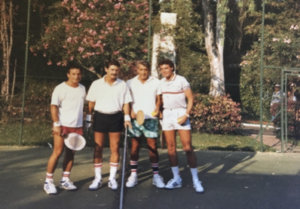
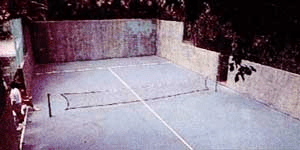
Enrique Corcuera did not set out to invent a new racket sport. He set out to solve a practical problem at Las Brisas in Acapulco: there was not enough room for a full tennis court in his backyard. The fix he built in 1969, a smaller 20 x 10 metre court with 3-metre walls and a tennis net in the middle, became the template for everything padel is now.
That original layout still explains the sport better than any marketing slogan ever could. Padel is built around compact space, wall rebounds and doubles play, so the court itself shapes the tactics. Players cannot just overpower the other side with court coverage the way they might in tennis, and they do not rely on pure wall play the way squash players do. The result is a game that feels familiar at first glance and completely different once a rally starts to stretch.
The backyard design that became the sport’s identity
The court at Las Brisas was not a grand engineering project. It was a tailored answer to a space constraint, and that matters because padel’s modern identity still comes from that constraint. The smaller playing area forces more exchanges at the net, more use of the glass-like walls and more reliance on positioning than on raw reach. That is why the sport has kept its doubles format and its enclosed court, instead of drifting toward a more open, tennis-like model.
Viviana Corcuera adds one of the clearest family details in the game’s origin story: the first set of rules was reportedly drafted by her and given to Enrique as a birthday gift. That detail is more than charming trivia. It shows padel beginning as a household invention, with the court and the rulebook emerging together from the same tight domestic space.
How padel left Acapulco
Padel did not go global because of a single federation announcement or a slick launch campaign. It moved because specific people carried it to specific places. Prince Alfonso of Hohenlohe introduced the sport to Spain after visiting Corcuera in Acapulco, then built courts at the Marbella Club Hotel in Andalusia. Around the same time, Julio Menditeguy brought the game to Argentina, which helped establish the two countries that would matter most in padel’s early growth.
That path tells you why padel took hold so quickly in those markets. Spain and Argentina were not starting from zero; they were introduced through elite social and sporting circles, then spread into wider club culture. Once courts existed in Marbella and Argentina, the game had a base from which to grow, and padel’s compact footprint made it easier to install than a full tennis facility.
From novelty to institution
The sport’s formal structure arrived later, but it arrived fast. Argentina formed the first national association in 1988, a sign that the game had already moved beyond one-off private courts and into organized competition. The International Padel Federation was created in Madrid on July 12, 1991, by representatives of the Argentine, Spanish and Uruguayan padel associations, and Julio Alegría Artiach of Spain was chosen as its first president.
That federation gave the sport a common international frame just as the player base was expanding. The first World Padel Championships were held in Spain in 1992, and some historical summaries say the finals were played at Expo ’92 in Seville. The early field was international from the start, with Argentina, Spain, the UK and France among the first participants. In other words, padel did not spend decades as a local curiosity before becoming a formal sport. It moved from backyard invention to international championship in little more than two decades.
Why Spain became the center of gravity
Spain’s role is not an accident of geography. Industry data consistently describes it as the sport’s biggest market and one of the places where padel is most embedded culturally. That makes sense when you trace the chain of influence: Acapulco to Marbella, then into the Spanish club system, then into a national sporting culture that embraced the format’s shorter court, faster setup and social doubles structure.
Spain also gave padel a visible stage. Once the Marbella Club Hotel courts existed and the country hosted the first world championship, the sport had both prestige and institutional legitimacy. That combination helped padel move from fashionable import to everyday habit, especially in a market where club sport has deep roots.
The scale now looks nothing like a backyard experiment
The numbers from the International Padel Federation show how far that original court has traveled. The 2024 FIP World Padel Report estimated nearly 30 million amateur players worldwide, and more than half of them were playing at least once a week. Later FIP reporting around the 2025 World Padel Report pushed the total above 35 million amateur players and noted continued growth in both clubs and courts, with a 16.1% rise in clubs and a 15.2% increase in courts.
That growth matters because it explains why padel’s odd-looking court design has proven so durable. The walls that once solved a backyard problem now help define the sport’s rhythm. The smaller footprint lowers the barrier to installation, the doubles format keeps the game social and fast, and the rebound game creates the kind of rallies that hook new players quickly. Padel did not become global by accident; it became global because its origin solved a space problem so neatly that the solution turned into the sport’s core identity.