Padel court dimensions explained, why 20 by 10 metres matters
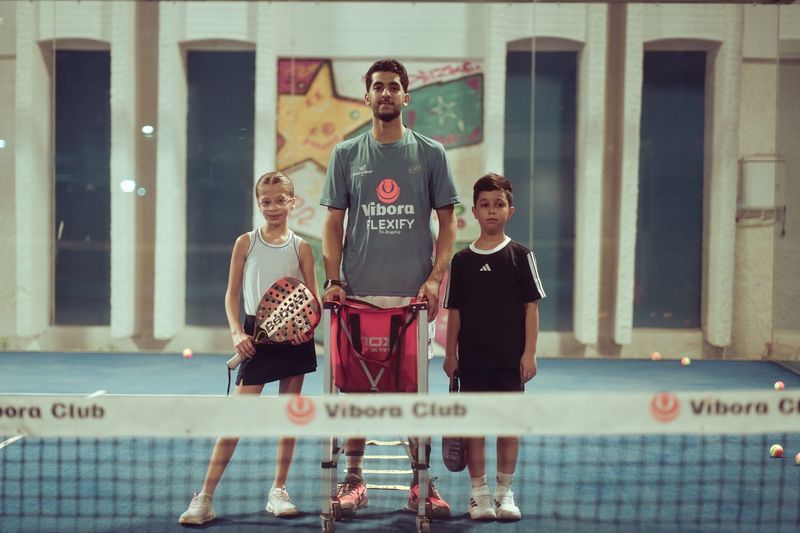
A padel court looks simple from a distance, but the 20 metres by 10 metres footprint is the reason the sport feels so distinct the moment a rally starts. That fixed rectangle keeps play compact, makes the walls part of the action and pushes the game toward fast doubles exchanges rather than open-court tennis patterns.
Why 20 by 10 metres defines the sport
Padel’s shape is tied to where it began. The International Padel Federation says the sport was invented in 1969 at Las Brisas, in the Acapulco home of Enrique Corcuera, which helps explain why it developed around a smaller enclosed space instead of a traditional open tennis court. In Great Britain, the Lawn Tennis Association describes padel as easy to play, fun and extremely sociable, mainly played in doubles and about a third the size of a tennis court. That scale is not just a nice comparison, it is the sport’s identity.
The regulation size matters because it keeps the experience consistent wherever the court is built. A player stepping onto a court in a club in the United Kingdom, a resort in Acapulco or a venue anywhere else in the padel ecosystem should feel the same enclosure, the same distances and the same need to react quickly. The fixed dimensions are what make padel instantly recognisable, from the first serve to the last volley.
The court is built to be played off, not just played on
The LTA’s padel court data sheet defines the court as an above-ground enclosure measuring 20 metres long and 10 metres wide, with glass and weld-mesh rebound wall and fence panels, steel posts fixed to a concrete foundation and a synthetic turf play surface. Those are not cosmetic design choices. They are the architecture of the sport itself.
The glass and mesh are part of the playing area because rebounds are legal and strategic. A ball that comes off the back or side walls can stay in play, which changes shot selection, timing and court positioning from the first exchange. The net splits the rectangle into two equal halves, but the walls extend the tactical map, giving players an extra layer of space to read and use.

That built-in rebound system is what separates padel from tennis. In tennis, a long, open court rewards depth and baseline power. In padel, the court’s enclosed shell turns pressure into longer, more intricate exchanges, especially when the ball is forced off glass and players have to decide whether to let it drop, take it early or use the wall themselves.
How the footprint changes rallies and movement
A 20 by 10 metre court compresses time as much as space. Because the playing area is smaller than a tennis court, reaction windows shorten and players cover less ground before the next shot arrives. The result is a game that often rewards positioning, anticipation and teamwork more than raw hitting distance.
The doubles format matters here. The LTA says padel is played mainly in doubles, and that structure fits the dimensions perfectly. Two players on each side can defend and attack the enclosure without turning the court into a scramble, and the smaller footprint keeps both partners close enough to communicate constantly. That is one reason the sport suits mixed ages and abilities, and why the LTA frames it as highly sociable rather than solitary.
Walls also change movement patterns. A player does not only move toward the net or back to the baseline. Movement includes reading the rebound off glass, adjusting to angles created by mesh fencing and recovering after a shot that has been sent off the wall rather than directly past an opponent. The court is compact, but the tactical space is bigger than the painted rectangle suggests.
Why construction and planning are part of the game

The exact dimensions are also a facilities issue. The LTA says building a padel court on a greenfield site or over an existing tennis court constitutes development, which makes the 20 by 10 metre standard a planning matter as well as a sporting one. A court is not just marked out on the ground and left there. It needs a concrete foundation, structural posts, wall panels and a synthetic surface, all of which affect how a venue approaches land use and approvals.
That is why the construction side of padel has become more formal. SAPCA’s Code of Practice for the Construction of Padel Courts was published in November 2023 as a second edition, and the LTA’s newer guidance tells venues to use SAPCA’s codes of practice for the latest technical detail. The message is clear: padel growth is now tied to construction standards, not just demand for court time.
The International Padel Federation’s 2026 Rules of Padel underline that point. The rules include dedicated sections on the court, dimensions, net, enclosures, ground surface, access, safety area and out-of-court play, illumination and orientation. That level of detail shows how tightly codified the sport is. Even lighting and the way a court sits on a site matter, because visibility, safety and playability all depend on them.
Why the standard stays fixed
Padel’s growth depends on the court looking and playing the same way from venue to venue. The 20 by 10 metre footprint, the enclosed walls, the synthetic turf and the fixed net divide create a shared language that players recognise immediately. Change the size too much and the sport stops feeling like padel, because the rebounds, spacing and doubles patterns no longer line up with the rules.
That is why the dimensions are more than a measurement. They are the blueprint for how the rallies unfold, how clubs build, how planners assess development and how the sport preserves its character while expanding into new sites. The rectangle is small by design, and everything that makes padel different starts there.
Sources
- [1]lta.org.uk
- [2]padelfip.com
- [3]sapca.org.uk