Padel points last longer, smashes show the sport's tactical edge
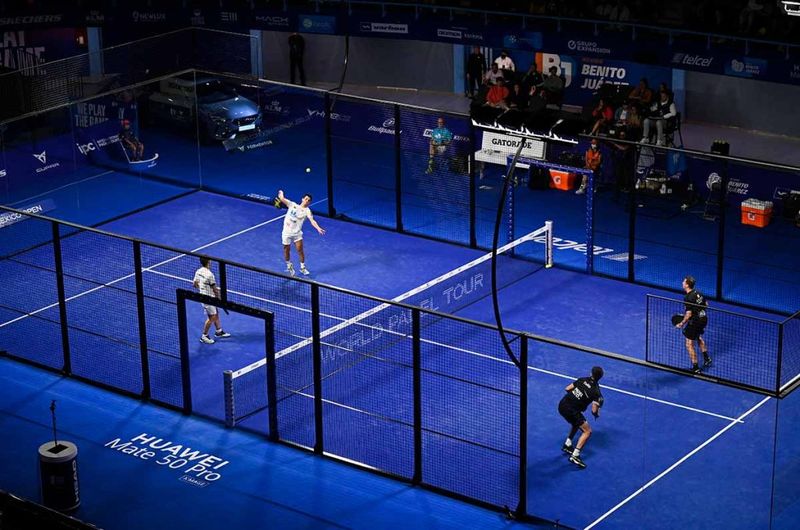
Elite men’s points in a 2024 Sports analysis lasted 13.5 to 14.8 seconds, packed in 10 to 11 hits, and moved at about 0.80 shots per second. That rhythm turns padel into a tactical chess match at high speed, with the best pairs building pressure before trying to finish the point.
Longer points, not just harder hits
The most useful thing club players can borrow from the elite game is tempo, not power. In that Sports study, researchers broke down 35,145 hits across 3,239 points from 20 matches at the quarterfinal, semifinal and final stages of the World Padel Tour 2020 season. Those rallies were long enough to reward positioning, patience and repetition, and they fit a wider pattern already visible in the sport’s performance literature: padel is being studied as a modern doubles racket sport with a rapidly expanding scientific footprint.
If a rally typically contains 10 or 11 hits before it ends, the winning pair is rarely the one trying to blast through every exchange. It is usually the pair that keeps the ball low, holds the net, and waits for a clearer opening instead of forcing an early finish from a poor court position.
The tray is the shot that keeps the door open
An IJERPH study analyzed 1,015 smashes from eight professional finals and split them into four categories: tray, flat, topspin and off-the-wall. The tray was the most used overhead, and it produced a point-continuity rate of almost 90 percent. That challenges the common amateur belief that overheads are mainly about ending the point on the spot.
The flat and topspin smashes were the most decisive when they worked, with winning-point rates near 60 percent, but their value depended heavily on where the hitter was standing. Their effectiveness fell as players moved farther from the net, especially on the flat smash. In practice, that means the overhead is not a single skill but a choice tree: the tray protects the rally, while the flatter finishing swings are reserved for the moments when balance, court position and timing are all in your favor.
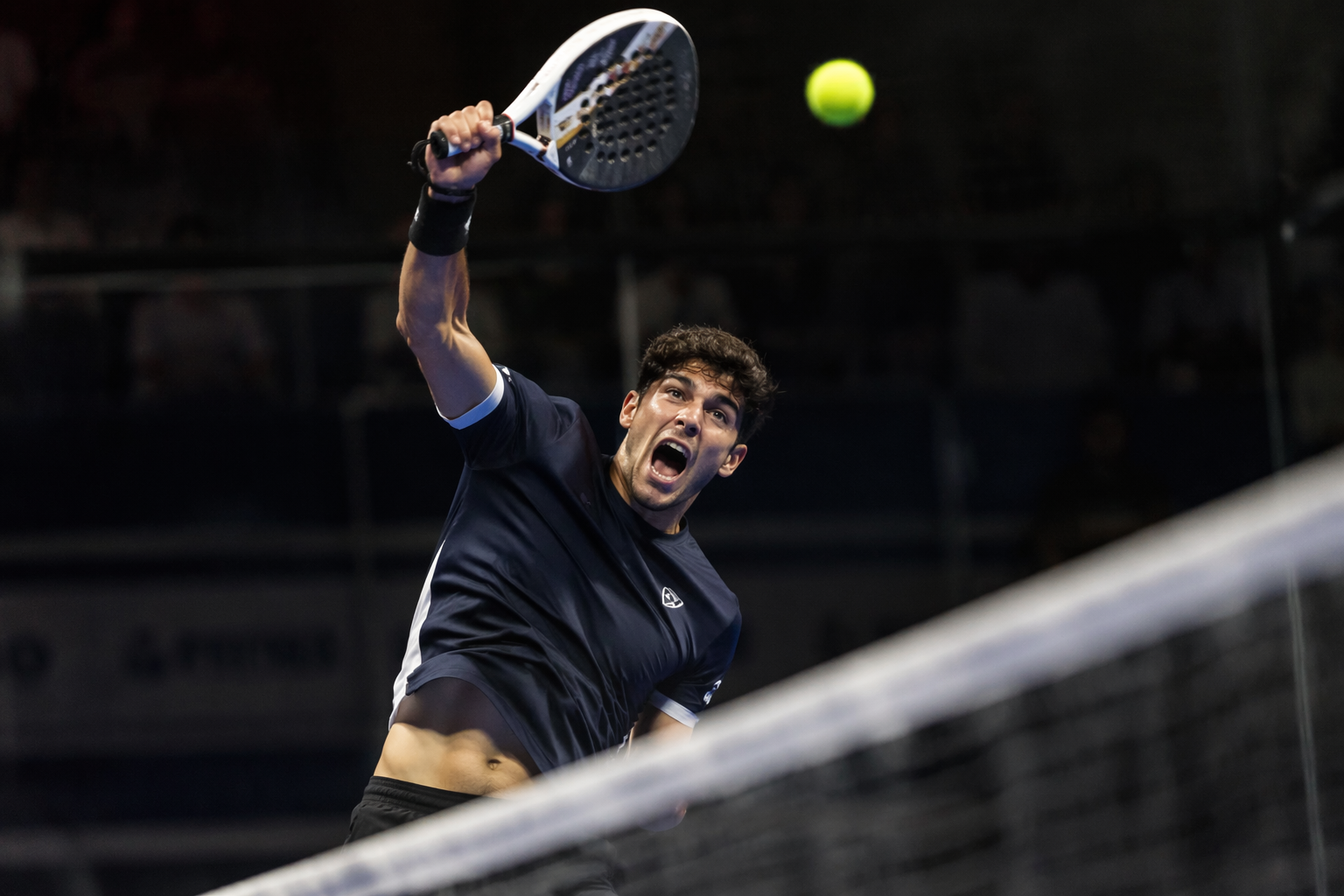
The gender split in that study also reveals how the sport’s tactics vary without changing the basic logic. Men generated a higher percentage of winning smashes, especially with the flat smash, while women used more cross-court topspin smashes. The message for club players is not that one style is better than another, but that elite pairs adapt their overheads to the spacing in front of them rather than treating every lob as a green light to swing out.
What coaches should teach from the data
A coach or analyst looking at those numbers would build point construction around control first and finishing second. The tray is not a passive shot in elite padel; it is a holding pattern that preserves net position and prevents the exchange from flipping against you. Flat and topspin smashes become high-value only when the hitter is close enough to strike from a stable base and turn a defensive lob into a controlled attack.
Three practical lessons follow immediately:
• Treat the tray as a tactical reset, not a compromise. If the pair is stretched or slightly out of balance, the tray keeps the rally on your terms and avoids the low-percentage gamble of forcing pace.
• Finish only from strong spacing. The smash study shows that distance from the net changes the outcome, especially for the flat smash, so the goal is to earn the finishing ball, not to chase it.
• Build points in patterns. Since elite rallies often run 10 to 11 hits, the pair that repeats pressure, recovers the net, and waits for a shorter ball is more likely to earn a real finishing chance than the pair that tries to win the first chance it sees.
Why the sport’s growth makes the tactical lesson bigger
The International Padel Federation was founded in Madrid on 12 July 1991 by the Argentine, Spanish and Uruguayan padel associations, and it established the World Padel Championships as a biennial event, with the first edition held in Spain in 1992. The sport’s rules were still varying by country in the 1990s before greater institutionalization tightened the game into something more standardized and more measurable.
FIP’s 2024 report put padel in 130 countries, with almost 20,000 clubs and more than 63,000 courts worldwide, while its 2025 report put those totals at 150 nations and 20 dependent territories, with 24,600-plus clubs and 77,300 courts. The 2024 report drew in part on the FIP National Federation Survey 2024.
Competition volume has risen alongside that spread. In the first six months of 2024, FIP logged 158 tournaments across five continents and 2,301 players in CUPRA FIP Tour and Premier Padel events, with Spain and Italy each hosting 26 tournaments. In the first half of 2025, FIP counted 2,419 players in those two circuits from 65 countries.
The pace of elite play is the real clue
Another elite match-analysis paper, focused on a Menorca 2020 World Padel Tour Master Final men’s event, examined 980 points and placed earlier top-level work at roughly 43 strokes per minute and about 50 minutes of total match duration.
Sources
- [1]mdpi.com
- [2]padelfip.com