Padel shot vocabulary explained, bandeja, vibora and globo tactics
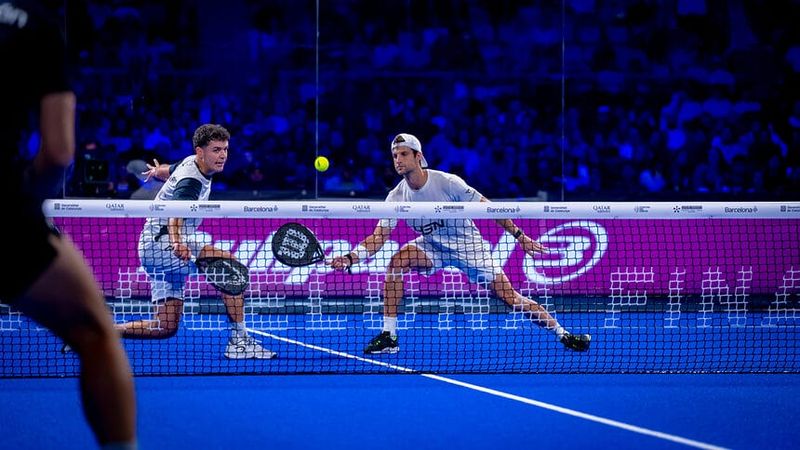
A player who understands when to float a globo, when to hold with a bandeja, and when to whip a vibora is reading the rally in real time, not just swinging at the ball.
Why padel’s vocabulary matters
Padel has become a global game, but its core language is still deeply Spanish and deeply tactical. The International Padel Federation was founded in Madrid on 12 July 1991 by the Argentine, Spanish and Uruguayan padel associations, and the first FIP World Padel Championships were held in Spain in 1992. Those shot names traveled with the game and became the code players use to describe position, pressure and recovery across countries, clubs and circuits.
The FIP’s 2024 World Padel Report put the sport in 130 countries with almost 20,000 clubs and more than 63,000 courts worldwide. Its 2025 report preview lifted that to more than 35 million players, 24,600-plus clubs and 77,300 courts across 150 nations and 20 dependent territories, with the facilities map growing by 4,775 clubs and 14,355 courts in 2025 alone. At the 35th FIP General Assembly in Acapulco, Mexico, on 28 November 2025, FIP president Luigi Carraro presented the new report and pointed to the sport’s Olympic pathway.
Bandeja: the overhead that keeps you in charge
The bandeja is a sliced overhead transition shot, not a full-power finisher. Bullpadel coach Nito Brea calls it a “neutral” shot, which is the best way to understand it: you use it to keep your net position while sending the ball deep with control, usually after an opponent’s lob has put you under pressure but not forced you back. Its job is to stabilize the attack, not to end the point.

A good bandeja buys time for your partner to recover, keeps your team near the net, and forces the opponents to hit from deeper behind the baseline or off awkward bounces. The common amateur mistake is trying to crush it like a tennis overhead, which often sends the ball too hard, too flat, or straight into the opponent’s strike zone.
Vibora: the same family, but with more sting
The vibora is the bandeja’s more aggressive cousin. It is hit with more pace and more spin so the rebound comes off awkwardly, which makes it harder for the defending pair to control. If the bandeja says, “I am staying here,” the vibora says, “I am staying here and making your next shot miserable.”
Use it when you already control the net and want to turn a manageable lob or high ball into a sharper problem for the opponents. The risk is obvious: the harder you try to bend and bite the shot, the more timing and balance it demands. The most common amateur error is flattening it out, which strips away the spin that makes the shot useful, or overcooking it from an off-balance stance and giving away the point with a miss.
Globo: the reset that changes the whole point
The globo is the high defensive lob, and it is the most important escape hatch in padel. When a pair is pinned at the back or trapped under net pressure, the globo pushes the opponents back and buys time to recover position. It is not a luxury shot. It is often the shot that saves the rally and resets the geometry of the court.

A deep, high globo can force the net pair to retreat, giving the defenders a chance to come forward and fight for the next net exchange. The risk is that a short globo is basically an invitation to be punished, especially by players who are strong overheads. The most common amateur mistake is hitting it too low or too flat, which leaves the opponents enough height to attack immediately and keeps your own team stuck in survival mode.
Chiquita: the small ball that steals the net
The chiquita is one of padel’s most deceptive weapons. It is a soft, low ball played to the net player’s feet, forcing an upward reply and often helping the baseline pair win the net. The shot is small in pace but big in consequence because it attacks the one place net players hate most: the awkward, low-contact zone.
Use it when the opponents are crowding the net and you want to break their control without gambling on a full-blooded winner. The reward is a weak volley or a floating reply that lets you move forward and take over the point. The most common amateur mistake is making it too obvious, either by telegraphing the target or by adding too much lift and pace. A good one forces the net player to shovel the ball upward and surrender initiative.
Bajada: turning a bounce off the glass into attack

The bajada is the attacking shot after the ball comes off the back glass, and it is one of the clearest examples of padel’s defensive and offensive layers colliding. Instead of simply surviving a bounce, the player steps in and turns that rebound into pressure on the opponents.
The reward is immediate pressure, because a well-struck bajada can pin the opponents, force a weak block, or open the court for the next ball. The risk is timing: if you wait too long, the ball drops too low, and if you rush too early, you lose balance and contact quality. The most common amateur mistake is retreating instead of stepping forward after the glass, which turns a potential attack into another defensive exchange.
How the shots work together
The cleanest way to understand padel vocabulary is to see it as a chain. The globo often resets the rally. The bandeja stabilizes the attack. The vibora raises the pressure. The chiquita flips court position. The bajada punishes a short or high rebound from the back wall. That sequence is why coaches group bandeja, vibora and smashes together, then drill direction, depth and fast net recovery after the overhead.
For recreational players, that sequence is the real translation guide. If you hear a player call for a globo, you are probably watching a pair trying to escape pressure and rebuild. If the next ball is a bandeja, the net pair is holding position rather than forcing a winner. If a vibora follows, the attack is getting sharper. If a chiquita appears, the baseline pair is trying to win the front of the court without overhitting. And if a bajada comes off the back glass, the defending side has chosen to turn the rebound into attack.
Sources
- [1]actu-padel.com
- [2]padelfip.com
- [3]bullpadel.com