Padel’s first two shots reveal the sport’s tactical identity
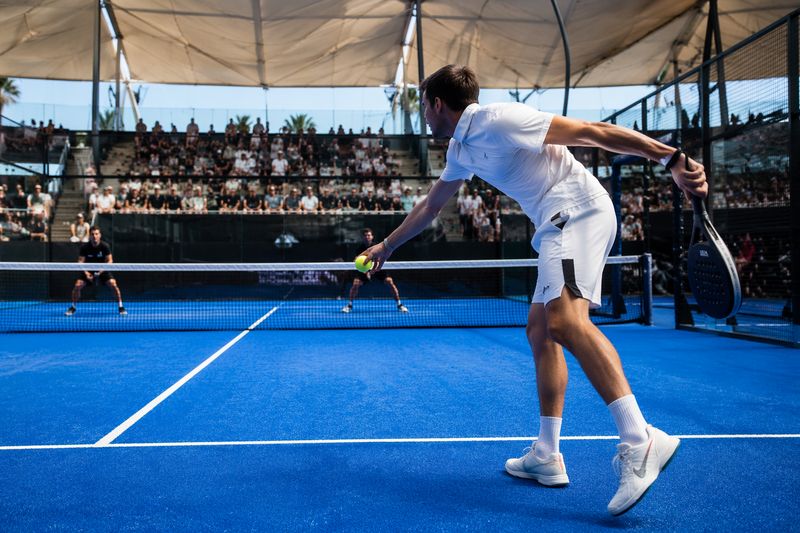
Padel’s identity is written in the first two shots of every rally. The serve starts from a relatively neutral place, underarm and below the waist after a bounce, and the return immediately turns into a fight over position, not a hunt for winners. That is why padel feels closer to a tactical negotiation than a power contest: the point is usually won by building to the net, not by blasting past it.
The serve sets the terms, not the scoreboard
The basic mechanics matter because they shape the whole sport. In padel, play is doubles, scoring follows tennis, and the server stands behind the service line before hitting the ball underarm at or below waist height after a bounce. The serve must land in the diagonally opposite service box, and if it hits the cage after the first bounce it is a fault. If the ball contacts the glass wall after the bounce, though, the rally stays alive.
That last detail is the tell. In tennis, a big first serve can steal the point before the returner even settles. In padel, the serve is mainly a placement shot, a way to start a conversation about court control. The game is built so the server cannot simply win free points through speed alone, which is why the first ball is less about dominance than about forcing a readable response.
The International Padel Federation writes the official Rules of Padel and keeps the authority to recommend changes through its General Meeting. The sport’s rulebook is not a loose set of club habits, but a governed code that protects the game’s distinct identity. That structure is what keeps the first two shots so important: the rules push both teams into a pattern where position matters more than raw pace.
The return is the pressure shot
The return in padel is not a luxury shot. It is the first real stress test of the rally, because the receiving team must get the ball back before it bounces twice, whether that happens before or after the ball hits the glass wall. That leaves almost no time to process spin, rebound angle, or pace, and it explains why the return is often more about survival than flash.
The Padel School’s return guidance captures the practical side of that pressure. Their starting position sits a little behind the service line, with the body ready for serves aimed either into the glass or toward the middle T. That is not an accident of coaching style. It reflects the fact that the returner is reading two very different threats at once: a ball that may kick off the side glass, or a flatter serve that dives down the middle and forces a quicker decision.
The tactical split is simple. If the serve is drifting toward the side glass, the returner can take it before the rebound or wait for the glass to do part of the work. If the serve is strong down the T, the safer answer is often a lob, because the point is not to admire the return but to buy time and recover the net. When the serve is softer and more central, the returner has room to step in and even attack the server’s feet. That is the real geometry of padel: every serve is a setup for the next move, and every return is a bid to either stabilize or seize the front court.
Why the sport was built this way
Padel’s tactical DNA starts with its origin story. The sport was invented in 1969 in Acapulco, Mexico, by Enrique Corcuera at Las Brisas, where he built the first court because he did not have enough room for a full tennis court. The official history says that first court measured 20 x 10 metres and used 3-metre walls, which tells you everything about the sport’s logic before a ball is struck: the enclosure is not decoration, it is the point.
That enclosed design changed the meaning of the first two shots. A serve in padel was never meant to mimic the tennis cannonball. The walls, the bounce, and the smaller court push players into a more compact, more positional game where the serve starts the rally and the return decides whether the serving team gets pinned back or the receiving team can fight its way forward.
The sport has scaled far beyond that first court. The International Padel Federation says padel is now played in more than 150 countries and has about 35 million amateur players worldwide. That growth has not changed the core pattern of play. If anything, it has made the serve-return sequence more valuable, because the same tactical truth repeats from local club matches to elite events: the team that handles the first two shots better usually gets the better net looks.
Britain’s expansion shows how quickly the game has moved
Great Britain’s growth underlines how quickly padel has moved from niche to mainstream. The LTA, which says it was recognised as the national governing body for padel in Great Britain in 2020, has tied its strategy to facilities, coaching, and participation. It says Britain had 50 padel courts in 2019 and 350 by 2024, while annual participation reached 129,000 players in 2023.
Those numbers matter because they show the sport’s base is being built at the same time its tactical language is spreading. The LTA’s 2024-29 strategy sets targets of 400,000 annual players and 1,000 courts by 2029, a clear signal that the governing body sees padel as a mass-participation sport, not a passing trend. The LTA also said in May 2025 that participation in Britain more than trebled in the previous year, and later reported that 860,000 adults and juniors played padel at least once in 2025.
That scale feeds back into how the game is taught. When a sport grows this fast, the cleanest way to explain it is through the rally sequence every player recognizes. The serve is the first test of placement and nerve. The return is the first test of reading, timing, and recovery. In padel, those two shots do not just start the point. They reveal the sport’s entire tactical identity.
Sources
- [1]clubspark.lta.org.uk
- [2]padelfip.com
- [3]lta.org.uk
- [4]ltapadel.org.uk
- [5]thepadelschool.com