Patented Nitelite Wiffle Ball lets games continue after dark
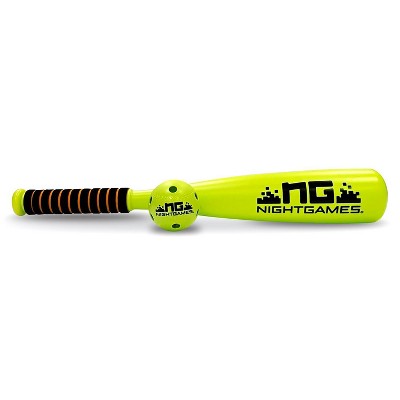
The smartest thing about the NITELITE WIFFLE BALL is what it refuses to sacrifice. U.S. Patent 4,930,776 takes the classic backyard ball and gives it a night game solution: a translucent plastic shell with a circular chemiluminescent ring tucked inside the cavity. The point is obvious once you read the claims closely. This was not built to reinvent Wiffle Ball, but to keep the same feel alive after the sun goes down.
The problem night baseball created
Wiffle Ball has always lived in the gap between formal baseball and whatever a backyard can support. When the light fades, the game’s biggest strength turns into its biggest weakness, because the ball’s movement is only useful if everybody can actually track it. The night-play patent answers that very specific problem with one of the cleanest design choices you can make: illuminate the ball from within without turning it into a different object.
That matters because the Wiffle Ball experience is built on physics, not polish. The familiar plastic shell and perforations create the movement, and any fix that gets too heavy, too bright, or too bulky risks ruining the thing people are trying to preserve. The NITELITE design treats visibility as the issue and keeps the rest of the ball intact, which is why it reads like engineering rather than novelty merch.
What the patent actually changed
Patent 4,930,776 replaces the standard white look with a translucent ball and places a circular light ring inside the cavity. The light source is identified as a Cyalume-type chemiluminescent stick, shaped into a ring so it can sit neatly inside the ball. Just as important, the patent says the ring can be inserted without special attachments or further modifications.
That small detail is the heart of the invention. There is no add-on harness, no heavy battery pack, and no mechanical overhaul of the ball’s structure. The design keeps the ball simple to manufacture and simple to use, which is exactly the kind of move that makes sense for a product born from backyard improvisation.
The patent also gives the ball a practical runtime. The light ring produced ample visible light for about 4 to 6 hours, which is enough to turn a late-afternoon pickup game into a full evening session. In other words, the invention does not merely glow for effect. It clears the main obstacle to after-dark play and keeps the game going long after the shadows have swallowed a standard ball.
Why the curve still mattered
The most important line in the patent is not about the light at all. Under field testing, the modified NITELITE WIFFLE BALL baseball performed like a traditional white plastic WIFFLE BALL baseball and retained its ability to curve during flight. That is the line that separates a useful invention from a gimmick.
Wiffle Ball lives and dies on movement. If the ball loses its curve, the pitcher loses the whole vocabulary of the game, and the hitter loses the challenge that makes a plastic ball feel like real baseball chess. The patent’s testing says the night version kept that signature behavior, which means the redesign did its job without breaking the core physics.

That balance is what makes the NITELITE patent interesting to anyone who actually watches the game. Plenty of products can be made visible in the dark. Very few can do it while preserving the weird, darting flight path that turns a backyard into a strikeout lane.
A backyard invention with a long memory
The night-ball patent makes more sense when you put it next to the original Wiffle Ball story. The Baseball Hall of Fame traces the game’s roots to Fairfield, Connecticut, in 1953, when two boys improvised with a perforated plastic golf ball and a broomstick handle. The company’s own history tells the same family origin story, centering the invention on 12-year-old David A. Mullany and the backyard experiment that followed.
The original patent, U.S. Patent 2,776,139, was filed on February 18, 1954 and issued on January 1, 1957. Its design language already points to what made Wiffle Ball last: a non-injurious ball with structural strength that would follow a curving path in flight. The night-play patent is part of that same lineage, not a departure from it. It takes the same backyard logic and applies it to a different problem, which is why it feels like a natural extension of the brand rather than a detour.
The Wiffle Ball, Inc. history also reinforces that continuity. The company presents the sport as a family-built product that grew out of Fairfield backyard play, and the NITELITE idea fits that tradition of practical tinkering. This is a product line that has always been shaped by ordinary players trying to squeeze a little more use out of a simple object.
Not the only glow-up in sports hardware
Wiffle Ball was not the only sport to chase the dark. Other patents later explored glow-in-the-dark or light-emitting balls, including golf balls and playballs, and the golf-ball example shows the same basic logic: light lets play continue when visibility would normally end it. A glow-in-the-dark golf ball patent, for example, was designed for easier tracking in the dark.
What sets the NITELITE WIFFLE BALL apart is the priority order. The invention does not start with illumination and then ask what shape can hold it. It starts with the familiar Wiffle Ball flight profile and then finds the smallest possible change that extends the game’s usable hours. That is a better engineering instinct than most people give toy-sport patents credit for.
The result is a rare kind of backyard product: one that solves a real, everyday problem without flattening the thing that made the game special in the first place. For Wiffle Ball, that means the strike zone stays tricky, the curve stays nasty, and the game gets one more inning after dark.
Sources
- [1]patents.google.com
- [2]baseballhall.org
- [3]wiffle.co