Perkins adapts kickball with ramps, audio cues and inclusive gear
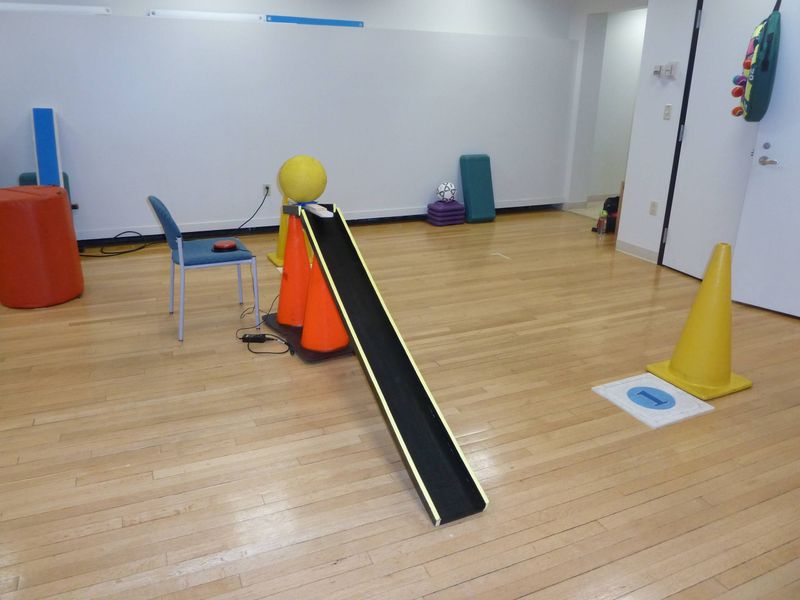
At Perkins School for the Blind, a TriWall ball ramp can replace the kick. Modified Kickball keeps students with no vision, wheelchair users and players with limited movement in the same inning and on the same field.
What the adapted game changes
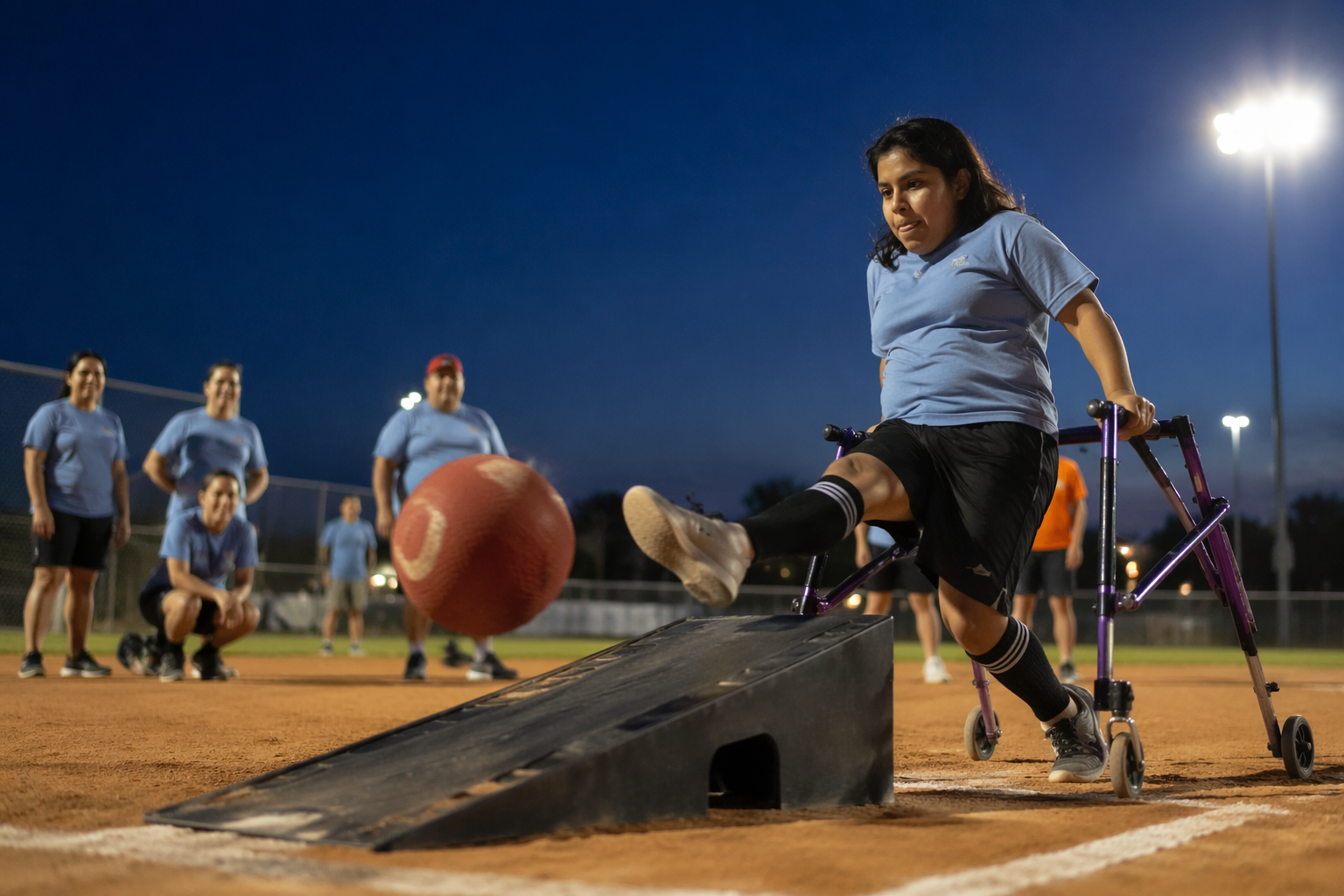
The biggest shift is the launch. Instead of demanding a clean, fast kick and a perfect chase sequence, Perkins uses a ball ramp made from TriWall or similar cardboard, and can also swap in an electric ball launcher with an activation switch. It gives players control over contact and timing, reducing the gap between students with different motor, mobility or visual needs while keeping the core kickball rhythm intact.
Perkins also builds the field around clearer sensory access. A playground ball in a high-contrast color helps players track the action, and a sound source at the bases gives no-vision players a way to orient themselves as they run. For students who need even more support, the game can use a kicking tee or beanbags on cones, and a ball can be held above a fielder’s head for no-vision play. The basic logic of kickball stays intact: a kicked ball still leads to base running, fielding and innings.
Why the format still feels like kickball
Modified Kickball remains recognizable. Perkins uses four bases plus large cones, which keeps the diamond structure and the pressure of moving from station to station. The larger, more visible markers help players understand where to go and when to stop, preserving the competitive shape of the sport.
Perkins says the activity fits the National Association for Sport and Physical Education standards, the school’s adapted physical education curriculum and components of the Expanded Core Curriculum. In practice, that means the game is doing double duty: it teaches sport skills while reinforcing mobility, spatial awareness and coordination in a format students can actually join.
How access is built into the teaching
Perkins’ broader adapted physical education approach relies on tactile or audio cues and modified equipment so students of all abilities can access physical education. The modification covers instruction, pacing and equipment at once, not just one object swapped for another.
The school’s Expanded Core Curriculum was not formally defined until 1996 even though Perkins has been teaching these concepts since its founding in 1829. The curriculum is meant to bridge the gap between standard academics and the skills students who are blind or visually impaired may miss without visual access. Modified Kickball gives students a way to practice turn-taking, directional cues, body awareness and group play inside a familiar game structure.
The wider value of adaptive kickball
STAR Center’s adaptive kickball program is designed for people with intellectual and developmental disabilities age 12 and older, and it uses sport skills, drills and games to build gross motor control and coordination. The program works as both recreation and instruction, with room to teach kicking, catching, throwing, player positions, balance, endurance, coordination and teamwork without losing the sport’s tempo.
Perkins’ recreation-and-leisure curriculum treats sports as potentially intimidating for kids who are visually impaired or have other disabilities, and a modified game can change the tone of participation.

Kansas City shows the model can scale
Kansas City’s tournaments began in 2018, and participation in 2024 was up 61% from 2023, with 28 children signed up that year, the most the program had seen to that point. The city’s network includes the Children’s Center for the Visually Impaired, Alphapointe, The Whole Person and the Kansas State School for the Blind.
That growth also traces back to Judy Byrd, who created Beep Kickball in 2010 after volunteering with an Atlanta beep baseball team. She saw that most players there were older teens or adults and wanted a game younger visually impaired children could learn more easily.
Family access and continuity
The Children’s Center for the Visually Impaired’s Beep Kickball youth league in Kansas City serves ages 3 to 17 and charges no cost to participants. It also requires one parent or guardian to stay for each game, which turns the league into a family-supported entry point rather than a drop-off activity. The structure reduces the social pressure that can come with trying a new sport and gives younger players a steady on-site support system.
East Carolina University’s Design for Disability initiative used kickball as a kickoff event in Greenville, North Carolina, as a public-facing introduction to adaptive sport.
Sources
- [1]perkins.org
- [2]starcenterlacrosse.org
- [3]kcur.org
- [4]news.ecu.edu
- [5]ccvi.org