Physics explains why Wiffle Ball curves so wildly
A perforated plastic ball and a broomstick handle in Fairfield, Connecticut, in 1953 set the stage for a pitch that can change break in mid-flight. Spin matters, but a Wiffle Ball’s real trick is that its perforations, drag, and trapped airflow fight each other on every pitch.
How a backyard toy became a physics problem
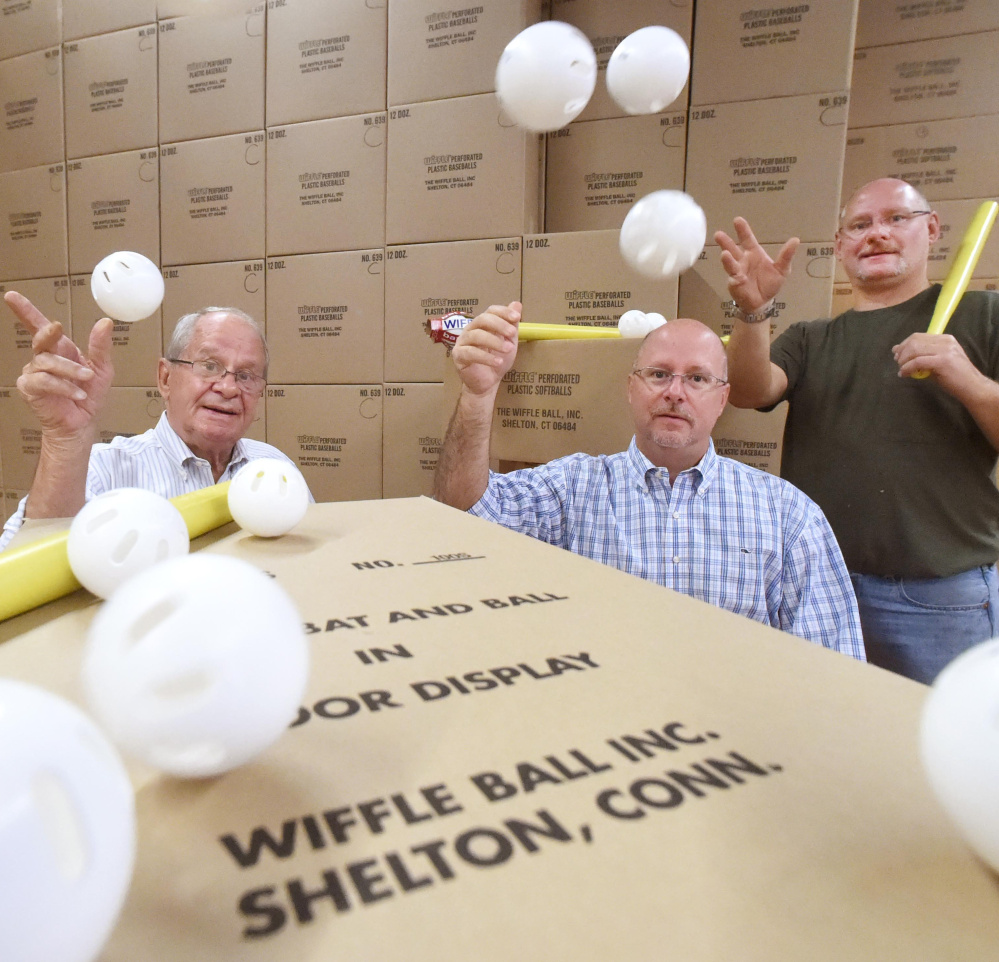
David A. Mullany was 12 when he and a friend were playing with a perforated plastic golf ball in Fairfield, Connecticut. The idea was simple: build a ball that could curve without the damage of a full baseball, and then let kids throw it hard enough to matter. The company later settled on the familiar design with eight oblong holes on one side, Wiffle Ball, Inc. was formed in 1954, and David N. Mullany received a patent for the game ball in 1957.
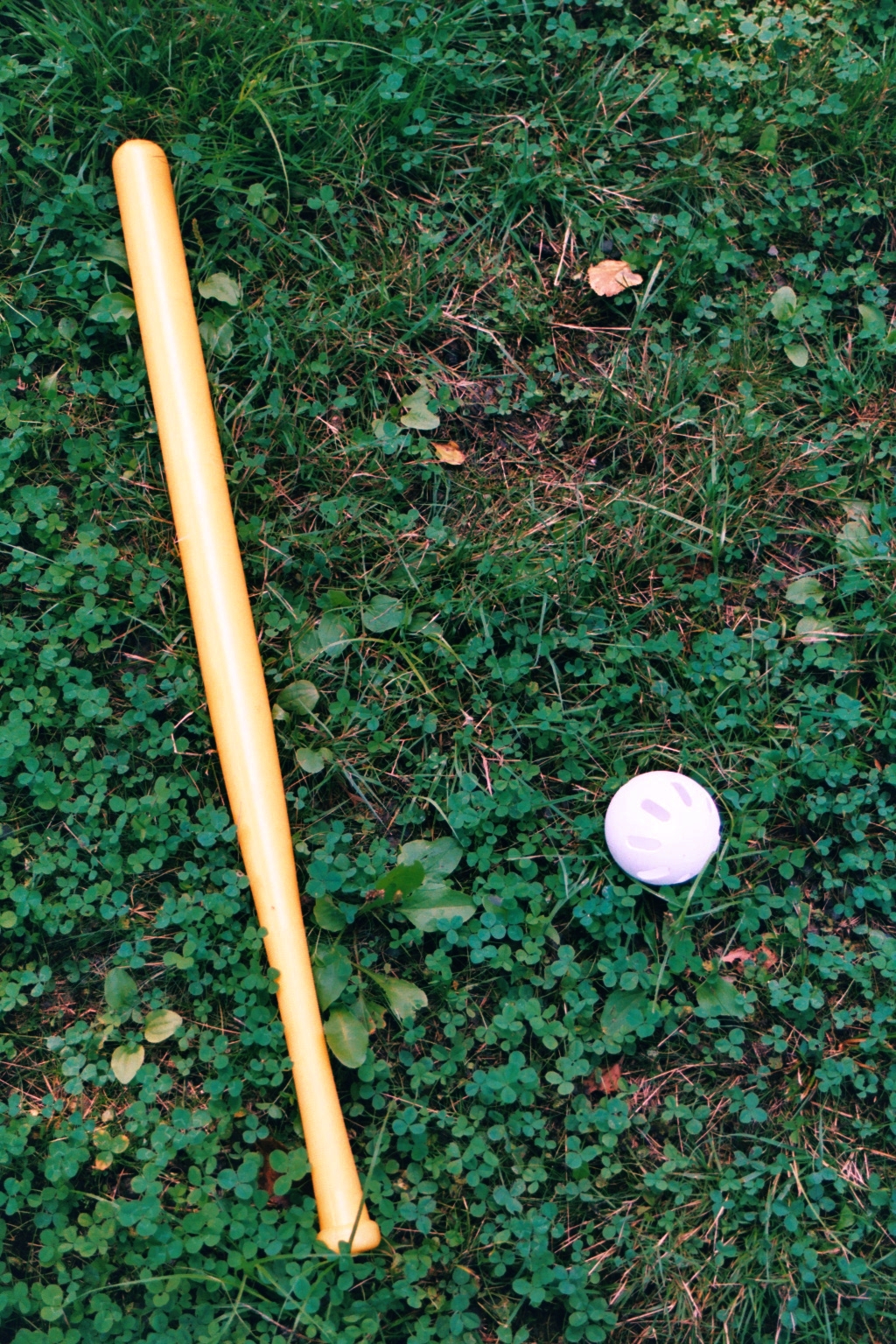
A baseball is built to behave more or less symmetrically. A Wiffle Ball is not. One side is open, one side is smooth, and the ball’s orientation in the air can change the net force on it from pitch to pitch.
Why the holes matter more than the wrist flick
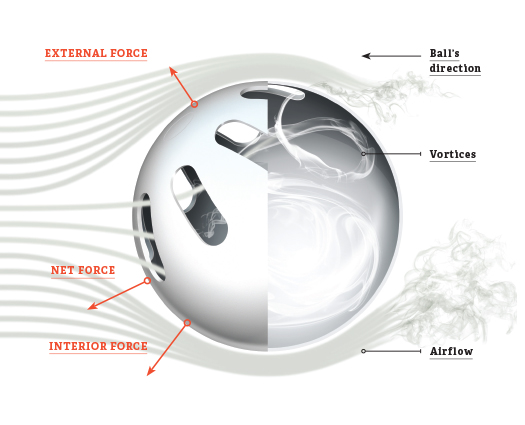
The best explanation for the break comes from the airflow itself. In the Lafayette College study published in the American Journal of Physics, researchers measured aerodynamic forces as a function of Reynolds number and ball orientation and found that the curve is produced by both the flow outside the ball and the flow inside it.

On the outside, the holes disrupt the air on one side of the ball and reduce drag there. That creates a pressure imbalance, which acts a lot like lift. On the inside, air rushes through the openings and forms vortices, and those spinning flows can redirect the ball’s path again. The result is a combination of asymmetrical drag and internal turbulence.
The ball is an accessible way to show boundary layer separation and the transition to turbulence.
What pitchers can actually control
Wiffle Ball pitching comes down to three things: orientation, velocity, and surface condition. The Lafayette work shows that the aerodynamic force changes with ball orientation and Reynolds number, which means the same ball can behave very differently depending on how it is released and how fast it is moving.
A classic no-spin knuckleball style is still the cleanest weapon. Throw it gently with the holes facing the batter at release, and the balance between the air outside and the air inside becomes unstable. That instability is what makes the pitch veer late.
Speed changes the equation too. On faster pitches, the internal force can overpower the external force, which helps explain why some throws seem to dart harder than others. The airflow can shift from one dominant force to another.
There are also tricks that alter the ball after it leaves the hand. Scuffing the smooth side can increase turbulence and strengthen the curve. Enlarging or smoothing the holes changes how much the internal airflow matters. Covering select holes can create even more dramatic break. They change the pressure balance that decides where the ball ends up.
Why hitters misread it
Hitters are trained to read baseballs. Wiffle Balls punish that habit. A baseball’s movement is tied to familiar spin profiles and more stable aerodynamic behavior. A Wiffle Ball can break toward or away from the holes, and that uncertainty is exactly what makes it so hard to track.
That question, whether the ball curves toward or away from the perforated side, has long been contested. Robert Adair argued that the holes accelerate the transition to turbulence on the hole side, which would help explain one kind of break. Peter Brancazio countered that roughening the smooth side could reverse the pressure asymmetry and change the direction of the curve. Small changes to the surface can flip the result.
For hitters, that means the usual visual clues are unreliable. The ball does not behave like a baseball with exaggerated movement. It behaves like a small, asymmetric airfoil with an unstable center of pressure. If the release is clean and the ball is positioned just right, the pitch can look hittable for a split second and then leave the barrel path entirely.
Why this still works as real science, not just playground lore
Jenn Stroud Rossmann, a mechanical engineer at Lafayette College, discussed the ball’s boundary layers, turbulence, and vortices on NPR’s Short Wave on March 31, 2022.
The design is simple: eight holes on one side, smooth plastic on the other, and a throw that can be controlled by angle and speed. Those details create a flight path that is far more complex than a baseball’s.