Premier League Urges IFAB to Revisit Temporary Concussion Substitutes Amid Player Safety Debate
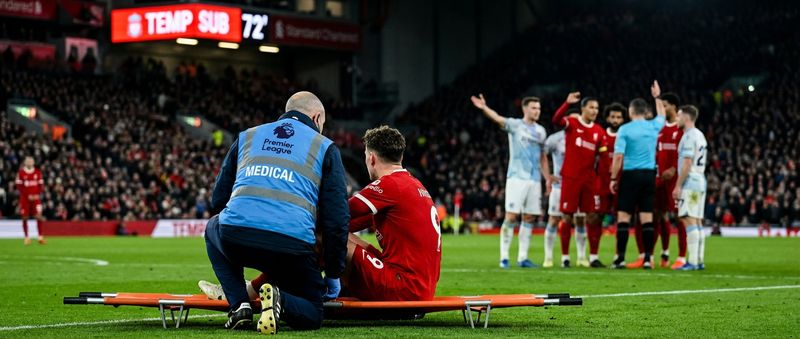
Premier League officials are intensifying calls for the introduction of temporary concussion substitutes, urging lawmakers to prioritize player safety at the forthcoming International Football Association Board (IFAB) meeting. This renewed push aims to spark robust debate over how soccer responds to suspected head injuries on the field.
Currently, the global football rulebook allows only permanent concussion substitutes—a player diagnosed with a suspected concussion is immediately substituted out for the remainder of the match. However, concerns have mounted within the Premier League and other competitions that this policy may inadvertently pressure medical staff to make split-second decisions under intense scrutiny, sometimes with limited information.
Temporary concussion substitutes would permit a player with a suspected head injury to be temporarily replaced while undergoing off-field assessment. If cleared, the player could re-enter the match; if not, the substitution would become permanent. This system is already in use in rugby and American football, where player welfare protocols are considered more robust for head injuries.
- The Premier League has repeatedly advocated for this change, citing the need to give medical teams more time for thorough evaluation.
- Player unions and health experts have argued that the current system does not provide a sufficient buffer for accurate concussion assessment.
- Other stakeholders, including FIFA, have historically been reluctant to alter the established laws, voicing concerns about potential gamesmanship and disruption to the flow of play.
The IFAB meeting, set to gather football’s lawmakers from around the world, will include the Premier League’s formal proposal on its agenda. Advocates argue that soccer lags behind other sports in safeguarding players’ long-term neurological health, particularly as research continues to link repeated head trauma to chronic brain conditions.
While the Premier League’s push reflects a growing consensus among clubs and medical staff, the path to implementation remains uncertain. IFAB’s decisions require broad agreement among its member associations, and previous proposals for temporary concussion substitutes have met resistance. Nonetheless, the issue is gaining urgency, as high-profile head injuries in recent seasons have fueled public and professional concern.
With the Premier League’s renewed advocacy, the upcoming IFAB meeting will serve as a critical juncture in shaping the future of head injury protocols in top-flight soccer. The outcome could set a new standard for leagues worldwide—or signal continued debate over how best to balance player safety with the integrity of the game.