Premier Padel plans 2027 ranking changes, fewer events and more points

Premier Padel is tilting its ranking system toward the sport’s biggest stages, cutting the number of tournaments that count toward the official FIP Ranking from 22 to 21 in 2027 while raising the value of early rounds in Majors, P1s and P2s. The move was unveiled in Rome during the BNL Italy Major at the Foro Italico, and it sharpens the divide between players who thrive on the biggest courts and those who have built their seasons on volume.
The reforms came out of steering committee meetings that brought together 20 representatives from 11 stakeholder groups, part of the governance structure Premier Padel and the International Padel Federation created in 2025 to widen input from across the professional game. The federation said most stakeholders wanted more ranking events, not fewer, arguing that padel still needs more activity to build awareness in many markets and to support its Olympic pathway. Instead, the sport chose a tighter model that also aims to address player welfare and the financial pressure on promoters.

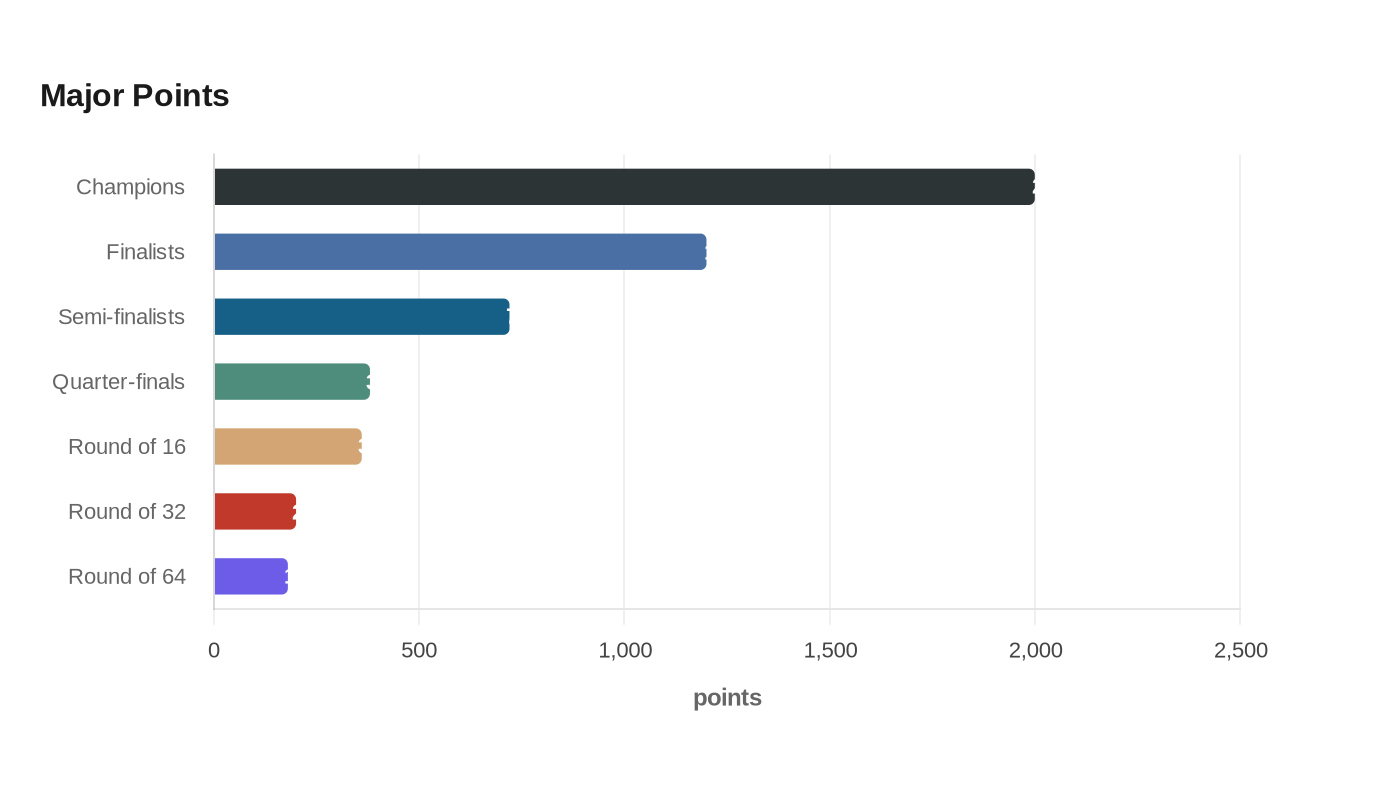
The new points table makes the biggest tournaments even more valuable from the opening rounds. In Majors, champions will still earn 2,000 points, with 1,200 for finalists, 720 for semi-finalists, 380 for quarter-finalists, 360 for the Round of 16, 200 for the Round of 32 and 180 for the Round of 64, plus bonus points. The same general structure will also be revised for P1 and P2 events, with 1,000 points for P1 winners and 600 for P2 winners. That is a clear win for top players who can go deep in the marquee draws, and for pairs who can convert one big run into a larger ranking payoff than before.
The losers are the week-to-week grinders outside the elite tier, especially players who rely on a long calendar to protect their ranking position or climb into bigger events. With fewer counting tournaments and new participation regulations coming to the CUPRA FIP Tour, the pathway to points becomes narrower and more selective. If those rules limit the presence of top names in lower-tier events, emerging pairs may find more room to win, but established players lose fallback chances to add points away from the sport’s highest-profile stages.

The 2027 changes also harmonise men’s qualifying draw sizes with women’s qualifying draw sizes across Premier Padel events, another sign that the tour is trying to standardise a rapidly expanding circuit. The structure is more meritocratic at the top, where major results matter more, but it is also more closed, because the sport is concentrating ranking value and access into fewer, richer events.
That trade-off sits inside a broader commercial push. Premier Padel and FIP said their 2025 renewal announcements included a 30% rise in global Premier Padel broadcast viewership, multiyear extensions for the Italy, Roland-Garros and Qatar Majors, and Octagon Spain’s mandate to manage all Premier Padel tournaments in Spain through 2032. The ranking overhaul now turns that growth into a harder-edged ladder, one that rewards the best performers, but leaves less room for everyone else.
Sources
- [1]x.com
- [2]premierpadel.com
- [3]padelfip.com