Protoball maps kickball as part of a wider base-running game family
Kickball looks simple until you place it next to the games Protoball groups around it. In that frame, it is not a stray schoolyard invention but one branch of a larger safe-haven tradition built on running among bases, pitching, two distinct teams, and no batting. Protoball currently lists 23 games in that family, which turns kickball from a novelty into a recognizable pattern that has resurfaced in schools, parks, and regional traditions for more than a century.
What makes kickball part of the family
The cleanest way to understand kickball is to strip it down to its shared structure. The important parts are not the ball shape or the local slang, but the sequence of play: a pitched ball, runners trying to advance through bases, and fielders trying to make outs before the runners are safe. That is the same safe-haven logic that shapes baseball and rounders, only kickball removes the bat and puts the emphasis on kicking, spacing, and base-running judgment.
Protoball treats that structure as part of a broader research project into ancestral and descendant ballgames, not as a casual list of playground variants. That matters because the family-tree approach explains why kickball feels instantly familiar even when the rules change from one gym class or rec league to the next. The game survives because its core is stable: two teams, a pitcher, bases, and the tension between moving forward and being tagged out.
The older relatives that make the tree real
Protoball’s family page gets concrete through the games it places alongside kickball. Ball and Bases, dated to about 1902, is described as a school-time running game in which a player propels a tossed ball with the hand, runs the bases while the pitcher retrieves it, and can be out on a caught fly or by failing to reach third before the pitcher touches home with the ball in hand. That is not a playground coincidence. It is the same safe-haven logic in a different costume.
Ball and Bases
Ball and Bases shows how old the base-running idea is. The pitcher is not a passive feeder; the fielding side is active enough to force timing decisions, and the runner has to beat the ball, not just circle the bases at leisure. That timing element is one of the clearest inheritance lines between kickball and the older games Protoball tracks.
Balle au Camp and Balyagu
Protoball also lists Balle au Camp, a longball-type game with four bases set in a line. It even notes that a 1855 translation of a French poem rendered the name as rounders, which is a useful clue to how these games moved across languages and borders while keeping the same safe-haven backbone. Balyagu, by contrast, is identified as “foot-baseball” in South Korea and described as a staple in elementary-school physical education classes. That gives kickball a modern, institutional home: it is not just folklore, it is part of the PE curriculum in a different national setting.
Beezy and local identity
Beezy, a Dundee, Scotland game from around 1900, is another reminder that kickball-like games kept appearing independently in different places. The names change, the local rules change, and the equipment changes, but the same architecture keeps showing up. That is the point of the family tree: kickball is one expression of a recurring sporting idea, not the only one that ever existed.
Why the origin story keeps shifting
The familiar invention tale credits Nicholas C. Seuss around 1917, but that attribution does not hold up cleanly under the historical record. The World Kickball Association disputes Seuss as the inventor and points instead to Emmett D. Angell’s documented 1910 rules in Play: Comprising Games for the Kindergarten Playground, Schoolroom and College. That earlier date fits the rest of the evidence better than a neat post-World War I origin story ever did.
The paper trail pushes the game back even farther. A January 29, 1907 Dayton Herald report referred to a new kickball-type game in Cincinnati, and an April 25, 1904 Minneapolis Journal report said Angell’s “kicking baseball” had already been tried in Wisconsin and Michigan. Put those together and the sport starts to look less like a single invention and more like an idea that spread, mutated, and picked up new names as it traveled through schools and local recreation systems.
Why kickball survived when so many playground games did not
The answer is in the logistics. The CDC says recess is a regularly scheduled school-day period for physical activity and play, and it recommends recess for K-12 students. It also says children and adolescents ages 6 to 17 should get 60 minutes or more of physical activity each day. Games like kickball fit that environment because they are easy to stage, easy to explain, and easy to reset after every inning.
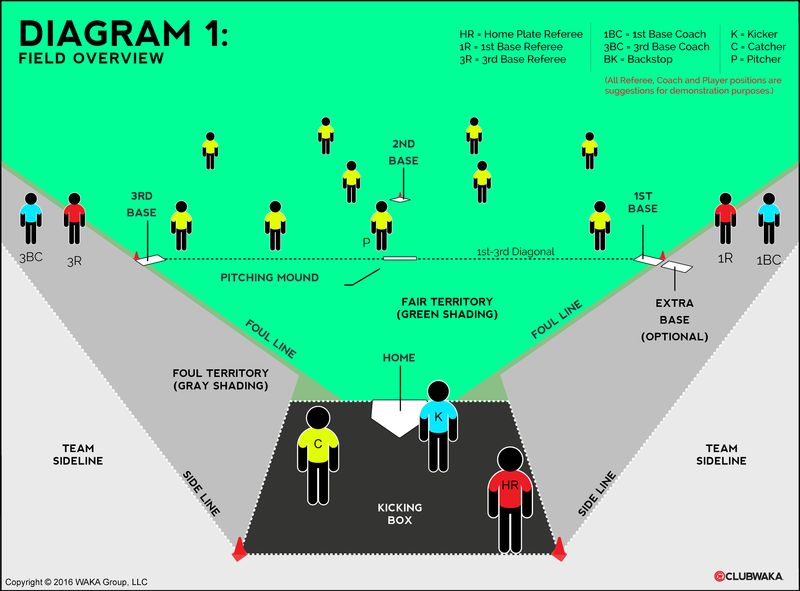
That simplicity carries over into adult play. The World Kickball Association’s basic rules use 10 fielders and seven innings if time allows, and play begins when the pitcher rolls the ball to the kicker. Those details matter because they show kickball has moved beyond informal recess rules into a standardized format that can support organized leagues without losing the original feel of the game.
Kickball endures because it sits in the sweet spot between history and convenience. It keeps the safe-haven drama of base-running games, drops the need for a bat, and stays flexible enough to work in a schoolyard, a park, or an adult league. That is not a side note in sports history. It is the reason the game still looks familiar every time somebody rolls out a ball and sends the runners racing for first.
Sources
- [1]protoball.org
- [2]sabr.org
- [3]kickball.com
- [4]cdc.gov
- [5]shapeamerica.org