Quadball injury study finds rates comparable to other contact sports
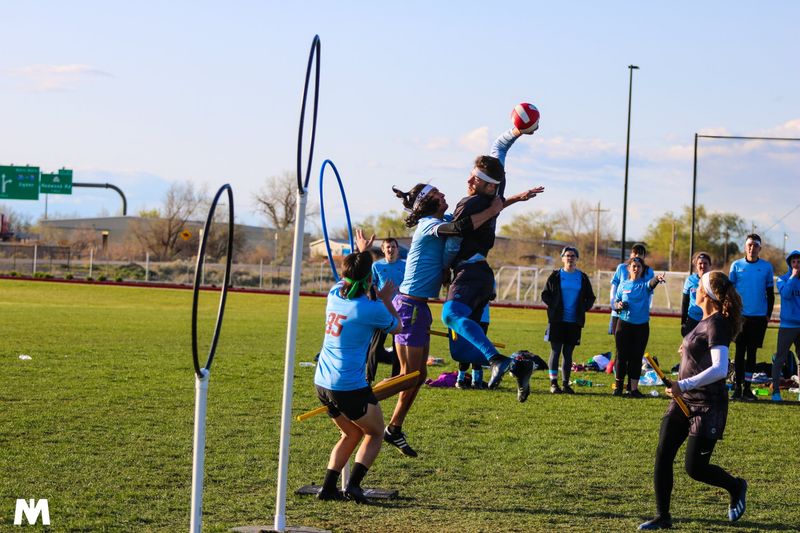
A prospective UK season study tracking 699 quadball athletes across major 2017-18 tournaments found time-loss injury rates in the range of other full-contact sports, with concussion the clearest red flag. Coaches, officials, and medical staff need to focus there.
The sport’s real shape matters before the numbers do
Quadball traces back to 2005 at Middlebury College, where Xander Manshel and Alex Benepe adapted the sport that older studies still call quidditch. It is a mixed-gender contact sport with up to 21 athletes on a roster, seven players on the field at once, and a broom that must be kept between the legs at all times. The organization was founded in 2010 as a 501(c)(3) nonprofit and now serves thousands of athletes, coaches, and volunteers nationwide.
The game has tackling, ball pressure, transitions through open space, and repeated contact around the line of play. US Quadball also oversees competition, certifies officials, coaches, and tournament directors, and supports college and club teams across the country, with activity extending to school levels as well.
What the UK season study actually found
The overall time-loss injury rate was 20.5 per 1,000 hours of play, or 8.0 per 1,000 athletic exposures. The combined concussion rate was 7.3 per 1,000 hours, or 2.8 per 1,000 athletic exposures.
The study found no statistically significant difference between male and female players in either time-loss injuries or concussion rates. Its bottom line was blunt: total injury rates appear comparable with other full-contact sports, including football, while concussion rates for both males and females may still be relatively high compared with many other contact sports.
Quadball is not emerging from the literature as a low-risk novelty with a few awkward falls. The injury profile looks familiar to anyone who has worked around contact sports, and the concussion numbers make head protection, contact management, and sideline decision-making especially important.
Why concussion risk still defines the debate
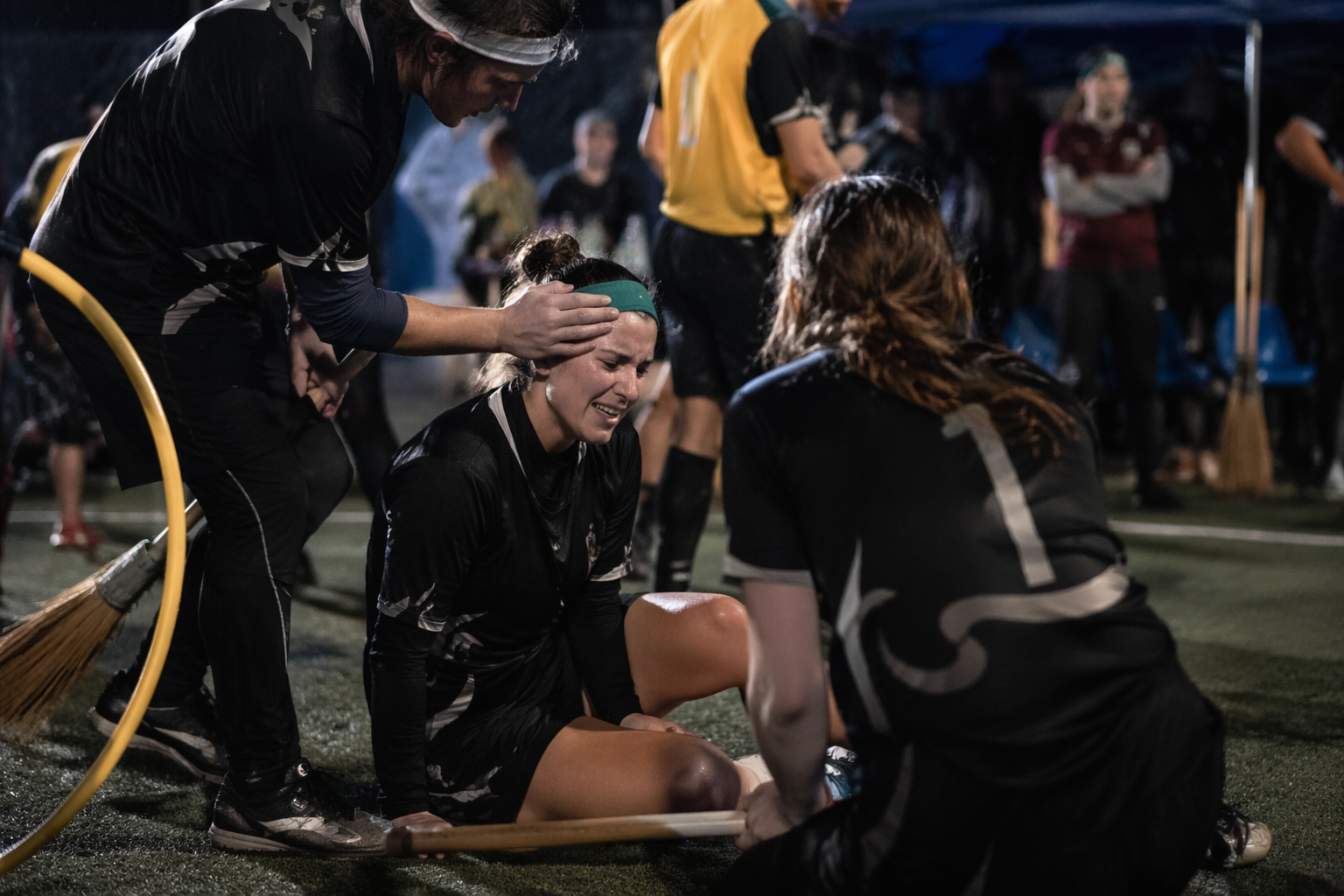
The overall injury burden sits in a range that resembles other full-contact sports, while the concussion rate remains high enough to demand attention. That combination is useful for coaches and medical staffs because it separates routine contact from the specific problem that tends to drive missed time, protocol checks, and return-to-play decisions.
In practical terms, that means the game should be managed like other collision sports. Officials need to recognize when contact is escalating beyond normal play, especially in crowded transition moments. Coaches need to train players to finish plays without turning every loose ball into a high-speed collision, and sideline personnel need to treat head impacts as events that trigger removal and evaluation, not as moments to play through.
The research base is still small
The McGill systematic review makes the field’s limits just as clear as the UK study makes its risks. It identified five studies on concussion and injury rates in the sport over the previous 15 years, and only two of those included overall epidemiological injury rates. In those two studies, injury rates appeared lower than in other high-contact sports, but the review stressed how thin the evidence base remains.
The sport now stretches well beyond its Middlebury origin, with a nationwide presence and nearly 600 teams in 40 countries.
Education is improving, but it is uneven
A 2025 cross-sectional study of 237 U.S. players found 57.8% reported some prior concussion training or education, and players answered 77.0% of concussion-knowledge items correctly. That suggests a meaningful baseline of awareness, but not a finished job.
Concussion education cannot be assumed just because the sport is organized or because players understand the rules. Knowledge gaps are the difference between a smart sideline pause and a player returning too quickly. If more than four in 10 players have had no prior concussion training or education, then preseason briefings, spotter training, and repeat reminders become part of the competitive infrastructure.

The name change also changed the frame
On July 19, 2022, US Quadball and Major League Quidditch announced they were changing the sport’s names to US Quadball and Major League Quadball. The move was designed to distance the sport from J.K. Rowling and to open sponsorship and broadcast opportunities, and the International Quidditch Association planned to adopt the new name worldwide.
The quadball name is now a trademark of The Queue Project, LLC. The sport now has governing bodies, trademarks, certifications, and a developing safety record that sponsors, schools, and broadcasters can evaluate on the same terms they would use for any other emerging contact sport.
US Quadball calls quadball one of the most gender-inclusive sports leagues in the country and uses Pride Month fundraising and visibility campaigns to support trans, non-binary, and queer athletes.
What coaches and officials should take from the evidence
Quadball should be coached and officiated as a real contact sport with a concussion problem that deserves its own protocols. The numbers do not support treating it like a novelty game with rare injuries, and they do not support treating all contact as equal. They point to a sport where overall injury rates resemble other full-contact codes, while head trauma remains the issue that can alter a season.
For teams, that means repeated concussion education, clear reporting pathways, disciplined sideline assessment, and a conservative return-to-play culture. For officials, it means enforcing contact rules with an eye toward collision-heavy transitions and crowded play.