Quadball rebrands worldwide, embracing identity beyond Harry Potter roots
US Quidditch and Major League Quidditch became US Quadball and Major League Quadball in 2022, and the international governing body said it would carry the new name worldwide. The switch landed after the sport had already grown to nearly 600 teams across 40 countries, with thousands of players and formal international competition in place.
The new name came from polling players and fans, and organizers said Quadball reflected the game’s four balls and four positions. That mattered because the sport was no longer a campus oddity with a borrowed label. It had become a structured competition with its own rules, its own governing bodies and a footprint that stretched far beyond the college fields where it began.

US Quadball traces the sport to 2005 at Middlebury College in Vermont, where Xander Manshel, Alex Benepe and their friends adapted the fictional game into something that could be played in real life. That origin gave the sport its cultural hook, but it also left a constant burden. Every time the old name came up, the conversation had to pass through Harry Potter first, even as the real-world game was trying to stand on its own as a global sport.
The rebrand answered that problem in practical ways. USQ framed the change as a way to give the community more creative control over the sport’s future, while also acknowledging trademark realities that came with keeping a literary name on an independent athletic competition. For a sport trying to recruit beyond core fandom, attract broader attention and present itself in international settings, the old label could work as shorthand but not as a lasting identity.
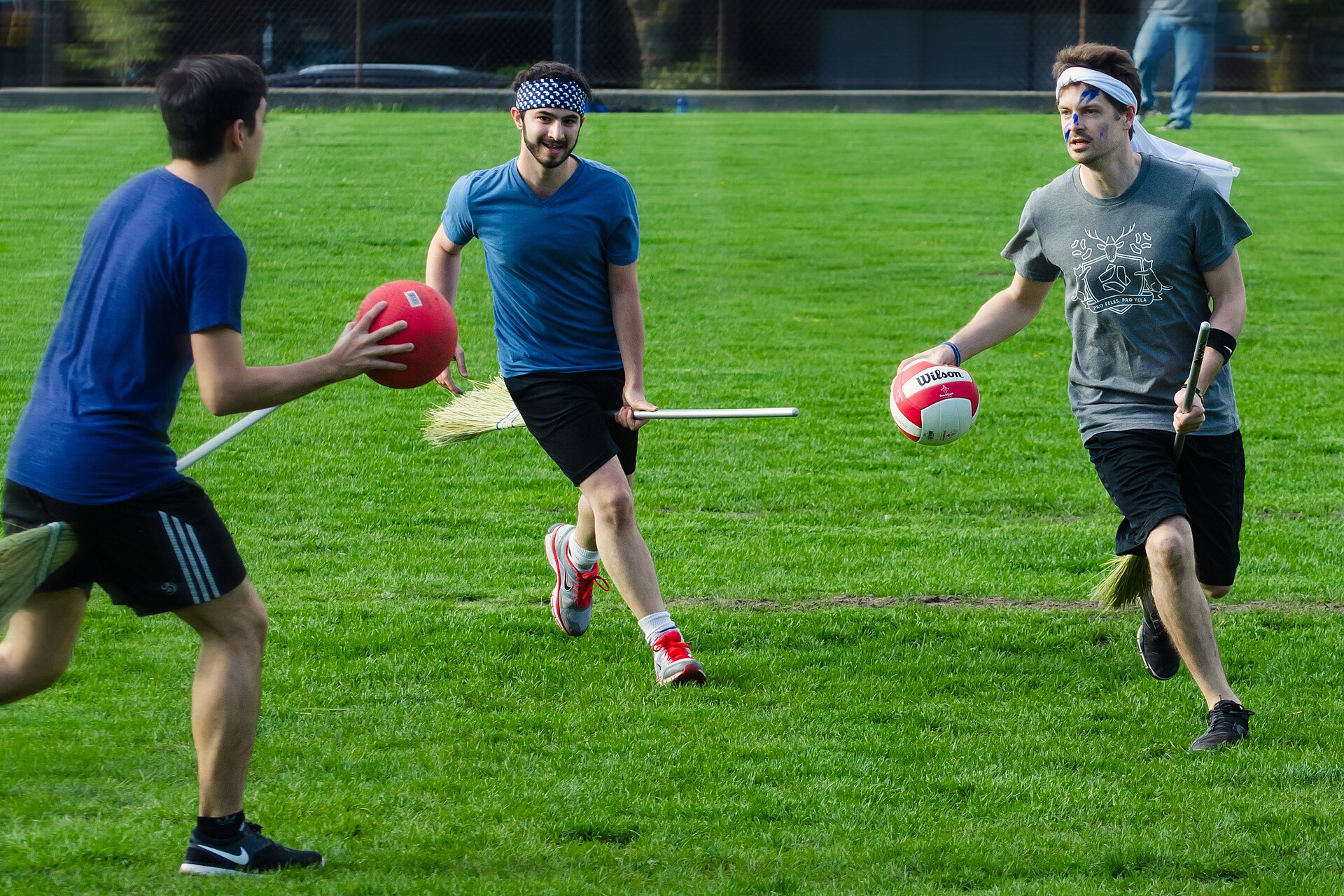
Quadball did not erase the sport’s roots, and it did not need to. What it did was make room for an international structure that had outgrown its origin story, including the IQA’s 2024 edition of the rulebook. The new name gave the sport a cleaner way to talk about itself as a serious competition, while still carrying the energy of the community that built it from the start.