QuadballUK explains promotion, relegation and cup qualification ladder
The 2026 Community League champions will be decided at Barn Elms Sports Centre in London on September 12-13. A side can rise, fall, or secure a better path to the British Quadball Cup in the space of a single round robin, and the 2026 calendar stretches that tension across both the university and community tracks.
How the community ladder works
The community season is built around one-day fixtures, not loose stand-alone tournaments. QuadballUK splits teams into divisions, has them play a round robin inside that division, and then uses promotion and relegation to move the top and bottom teams between levels for the next event. A club’s Saturday performance can also change the strength of the opposition waiting at the next fixture.
Picture a community side entering Division 2. Win enough games in that round robin and it can push into a stronger division, where the next weekend carries a sharper edge and a harder road. Finish at the bottom and relegation sends it the other way, a drop that changes not only who it plays, but how quickly it can climb back toward the national picture.
That ladder does not stop at the division. Community results affect qualification and seeding for the British Quadball Cup, and the 2026 community season begins with Community Shield before running toward the British Quadball Cup in September. The Community Shield will not affect BQC seeding.
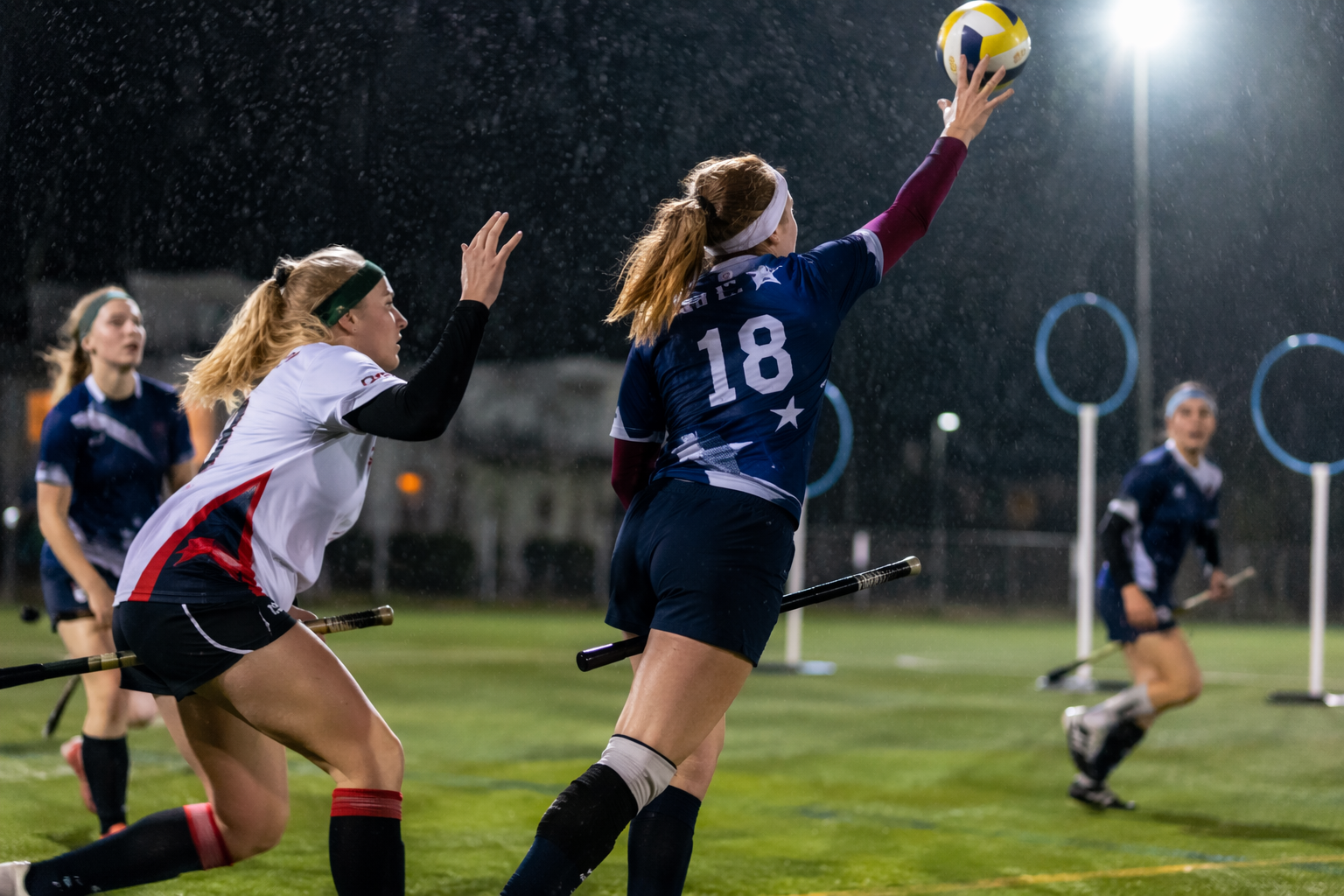
Starting in 2026, that path reaches beyond Britain as well. The British Quadball Cup will serve as the qualifying tournament for the European Quadball Cup, with UK places feeding into Quidditch Europe’s Divisions 1 and 2. For clubs that survive the domestic ladder, a strong BQC run now opens the door to the continental stage.
The university route mirrors it, with a development lane built in
The university season now runs from October to April, ending with the British University Quadball Cup. QuadballUK made that shift to help a student who discovers the sport at university move more smoothly through the year, and it gives campus teams a clear runway from autumn recruitment to spring finals.
That pathway includes the Development Cup, aimed at university players and leadership and split into Northern and Southern events depending on numbers. QuadballUK’s August 2025 fixture announcement set the Northern Development Cup for November 1-2 at York St John University Sports Park and the Southern Development Cup for November 15-16 at Warwick University, with free training workshops plus coaching, refereeing and club leadership seminars. Each team was guaranteed at least three games on Sunday.
The British University Quadball Cup crowns the top end of that route. In QuadballUK’s 2026 recap, four university teams with members representing eight universities converged on Keele University, the home of the very first competitive quadball match. Day one was a round robin that set seeding for the double-elimination bracket.
Cross play turns the season into a player pipeline
QuadballUK added cross play in 2023 so university players can also appear in community fixtures, giving students more experience and building links to the community teams they may join after university.
QuadballUK dates quadball to 2005 and puts UK participation in the hundreds across community and university teams. Cross play lets a player who arrives on campus in October keep developing through community fixtures in the spring and summer, instead of disappearing when the university bracket ends.
QuadballUK moved to the International Quadball Association rulebook at the start of the 2017/2018 season and still uses it, which keeps domestic fixtures aligned with the international game. Referees and flag runners are expected to know that rulebook.
Why the stakes are felt all season
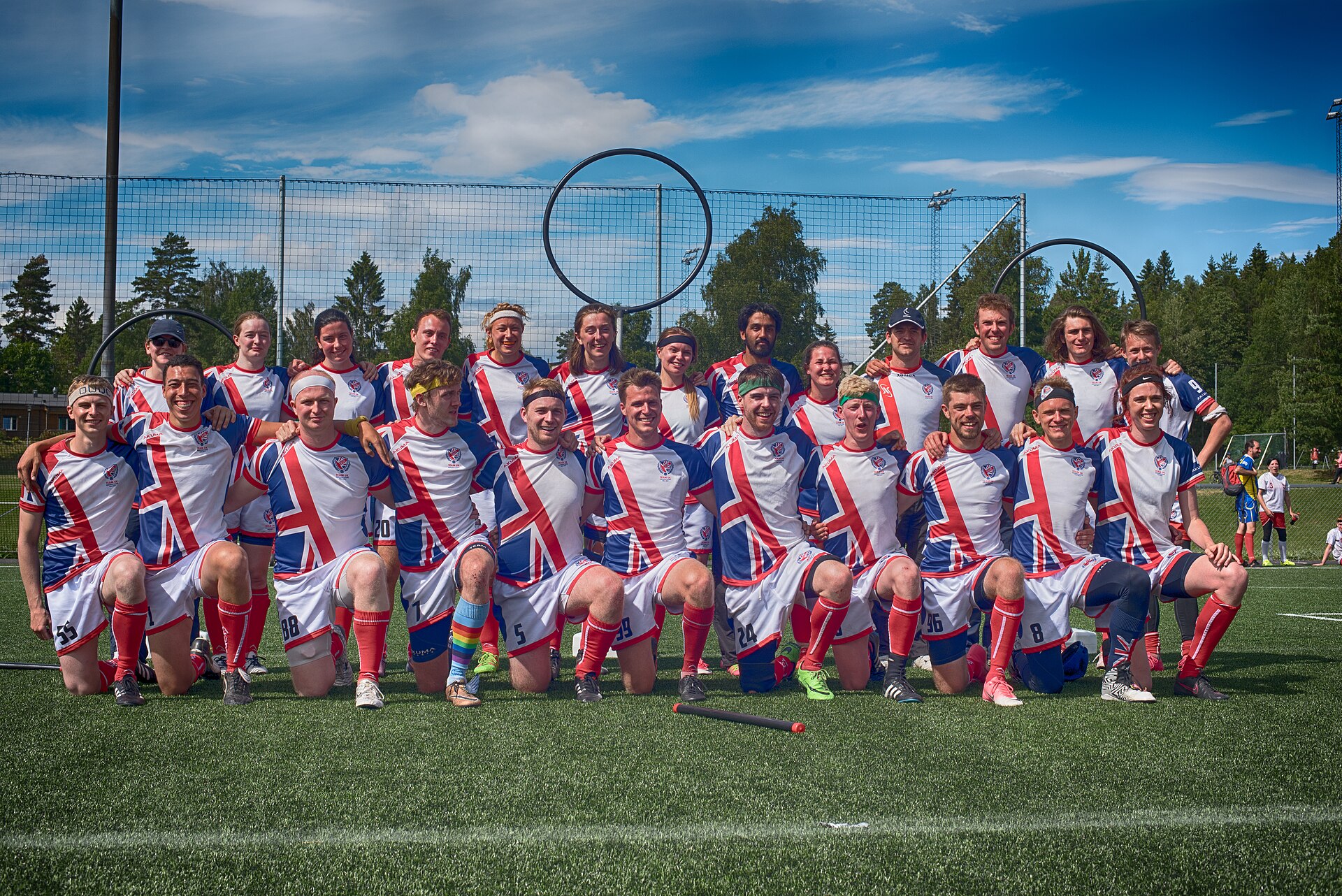
QuadballUK describes quadball as a full-contact mixed-gender sport that welcomes trans and non-binary players. One day can affect division placement, cup seeding, development opportunities and, now, European qualification.
Community League had three fixtures scheduled on July 2, August 13 and September 17, 2022, while the University League was split into Northern and Southern regions with two fixtures each before BQC. The top 12 teams across both university regions qualified for the British Quidditch Cup.
Community teams start in April, university teams in October, and both paths now feed a national ladder that ends in championship weekends and, from 2026 onward, a European qualifier.