Racquetball and squash differ most in ball speed and rebounds
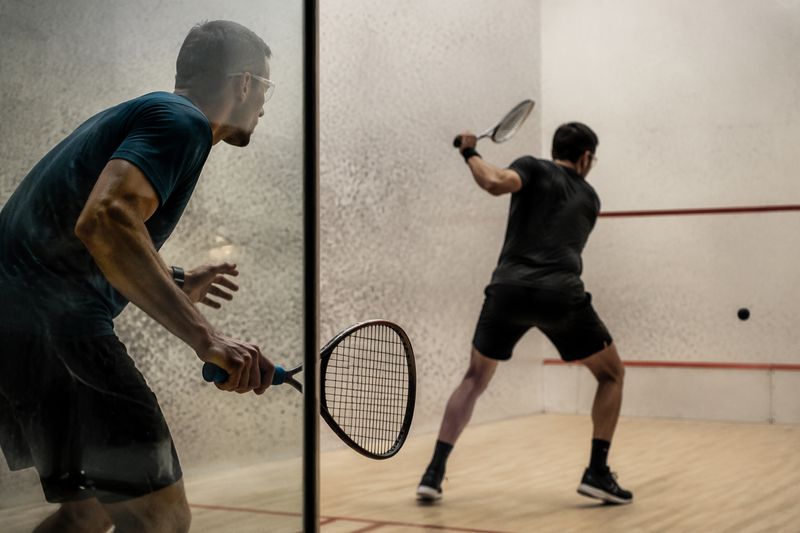
A racquetball ball weighs 40.0 to 44.0 grams and measures 2.25 to 2.5 inches in diameter; a squash ball weighs 23 to 25 grams and measures 39.5 to 40.5 mm across. Racquetball’s longer rallies tend to feel more open and explosive, while squash more often punishes a late read with a dying ball and a scramble into the corners.
The ball is the sport’s first split
USA Racquetball’s equipment rules cap the racquet at 22 inches in length, but the ball defines the tempo. The racquetball’s larger size and livelier rubber give it more pace off the front wall and more carry off the back wall and side walls, which is why a point can stay alive after a shot that looks ordinary in flight. In squash, the smaller, lighter ball tends to lose pace sooner, so a shot that lands cleanly can still die quickly and force a longer chase.
That difference changes shot selection in a way newcomers notice immediately. Racquetball invites drives, cross-courts, and ceiling balls without reducing the sport to simple retrieval. Squash rewards precision in a tighter geometric space, where the same swing can produce a much softer rebound and a much harsher punishment for being late.
The court shapes the rally
USA Racquetball sets the standard court at 20 feet wide, 40 feet long, and 20 feet high. The World Squash Federation’s singles court is narrower and shorter at 9,750 mm long and 6,400 mm wide, with a front wall 4,575 mm high and a back wall that sits lower than the front.
Racquetball’s extra height and broader playing space make rebounds feel more generous and more chaotic at the same time. The ball can come off the front wall, clip a side wall, or rebound off the back wall and still remain a live scoring chance. Squash compresses the same basic idea into a smaller room, so the defender spends more time running down deadening shots to the corners and less time recovering from lively rebounds.
What a rally feels like in each game
The quickest way to tell the sports apart is the rhythm of a rally. Racquetball gives the attacker several ways to stay aggressive because the ball comes back faster and from more surprising angles after the first wall contact. That is why a bad position can still be salvaged, especially when the ball sits up off the back wall or kicks unpredictably off the side walls.
Squash asks for more sustained corner work and more precision on the first bounce. A missed read often ends the exchange much sooner because the smaller ball drops off pace and heads into dead zones more quickly. In practical terms, racquetball feels more forgiving when you are late, while squash feels more exacting when you are even a step behind.
For a first-time player, the difference shows up fast:
• In racquetball, the ball often stays playable after a defensive swing, so a rally can flip from scramble to attack in one bounce. • In squash, the same swing is more likely to leave the ball dead or dying, which means the point can tilt decisively toward the player who read it first. • In racquetball, the back wall is part of the offense as much as the defense. • In squash, the corners do more of the trapping work.
A sport with its own history, not indoor tennis
Racquetball is easy to mistake for “tennis indoors” until the wall game starts. The sport asks players to think in three dimensions, reading the front wall, side walls, and back wall as part of the same shot pattern.
Its modern identity has a clear origin story. The European Racquetball Federation credits Joseph G. Sobek with inventing racquetball, and Merriam-Webster dates the first known use of the word “racquetball” to 1965. The International Racquetball Federation was formed in 1979 with 13 National Racquetball Federations across four continents before later expanding to more than 70 countries.
The rules keep evolving, and participation keeps shifting
USA Racquetball’s most recent rulebook includes seven rule changes passed by its Board of Directors in July 2023. More Americans took part in at least one sport, fitness exercise, or outdoor recreation activity in 2022 than in any of the five previous years, the Sports & Fitness Industry Association found. The association’s 2024 Topline Participation Report found that all seven major sport and fitness physical activity categories increased year over year.