Racquetball clubs tap National Tennis Month to attract new players

National Tennis Month runs through all of May in 2026, with Hit to Be Fit expanded into a May 15-17 weekend. Racquetball clubs do not need to manufacture a May audience from scratch. The event already puts court sports in front of families, returners and casual athletes, and the smartest clubs can use that visibility to sell a first racquetball experience that feels easy, local and low-risk.
Why May is the opening clubs have been waiting for
The United States Tennis Association has rebuilt National Tennis Month as a grassroots hook since 2021. The calendar gives racquetball operators a ready-made promotional window: one month for broad awareness, then a focused weekend to push trial play, open houses and beginner events.
USTA participation data shows U.S. tennis participation reached 27.3 million players in 2025, up 1.6 million from the prior year and 54 percent since 2019. The association also broke the market into 14.5 million core players, 20.7 million retained players and 4.9 million first-time players, which is exactly the mix racquetball clubs want to intercept: serious players, lapsed players and people who are still deciding whether a court sport fits their life.
The playbook: make racquetball look like the easy next step
Clubs should stop selling racquetball as a standalone curiosity and sell it as part of the broader racquet sports ecosystem. That framing lowers the barrier for tennis families and crossover athletes who already understand the rhythm of lessons, rallies and recreational league play.
The best conversion tools are also the least expensive ones. Free court time, trial lessons, demo sessions, family programming and a clear follow-up offer can do more than a glossy campaign ever will because they remove the two things that usually block first-time participation: cost and uncertainty. A club does not need a full-scale advertising budget to do this well; it needs a schedule, a coach or ambassador, and a clean entry point.
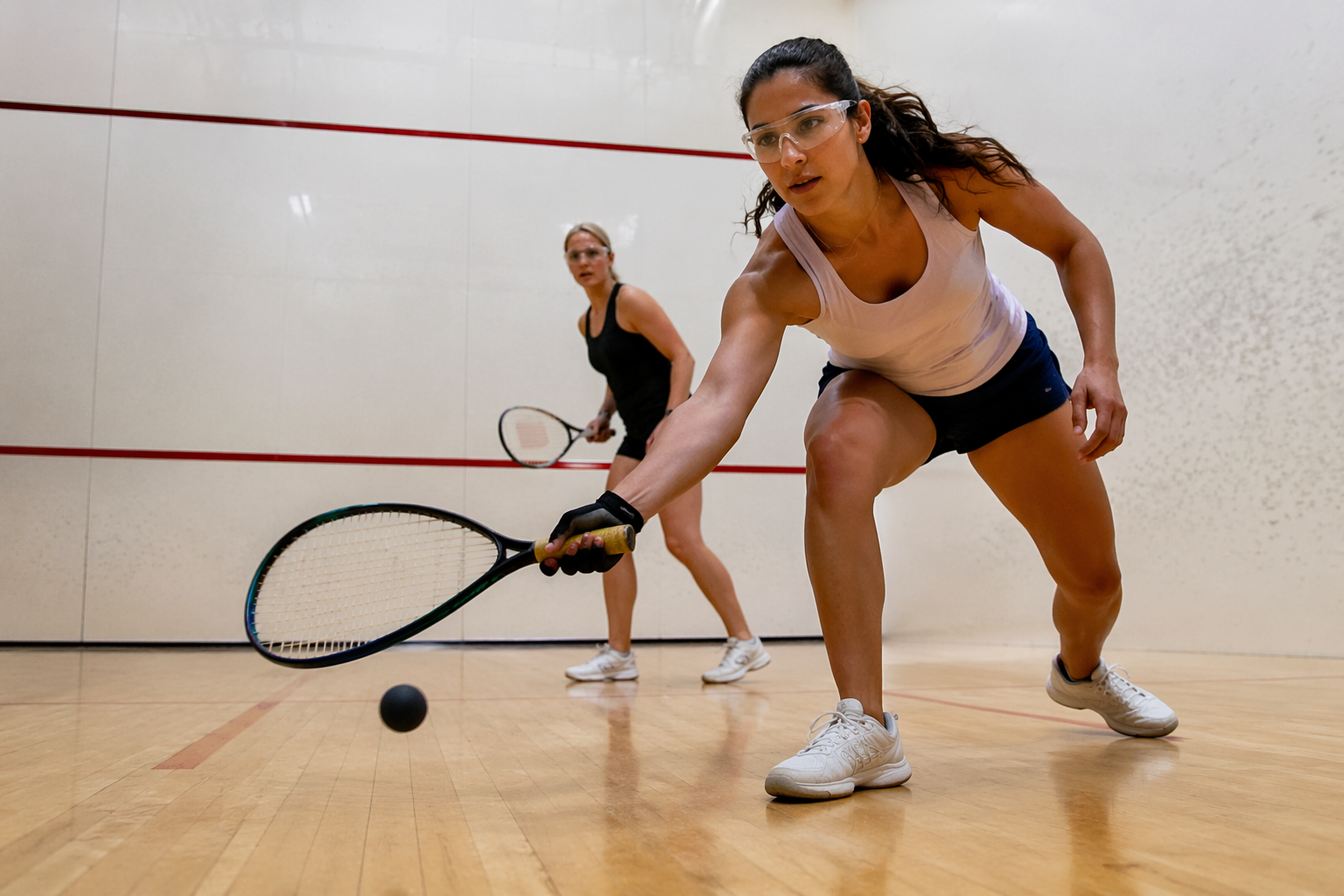
For lean operators, the most realistic May tactics are the ones that reuse what the club already has:
- Open houses that put people on court without a long commitment
- Bring-a-friend days that turn a member into the first salesperson
- Beginner clinics that teach grip, serve and basic scoring fast
- Short demo sessions that fit between work and dinner
- Family programming that keeps parents and kids in the same building
- Follow-up offers that give a newcomer a second visit before the excitement fades
How to borrow tennis traffic without pretending to be tennis
The best clubs will lean into shared language. National Tennis Month messaging centers on getting people to play, reconnect and try something new, which overlaps cleanly with racquetball’s pitch. A club can talk about fast rallies, cardio benefits, beginner-friendly instruction and family play without pretending the sports are identical.
That crossover becomes even more useful when local tennis groups are part of the plan. National Tennis Month can activate facilities, parks and recreation departments, CTA groups, NJTLs, retailers and manufacturers. That opens the door for racquetball clubs to co-promote with tennis facilities, local leagues and parks departments, especially if both sides can drive the same audience into a May event or a short-term trial membership.
Some USTA sections also offer grants for National Tennis Month programming, and USTA Missouri Valley counted nearly 100 events, 17 proclamations and 16 grants in its 2026 effort.
What clubs can actually convert
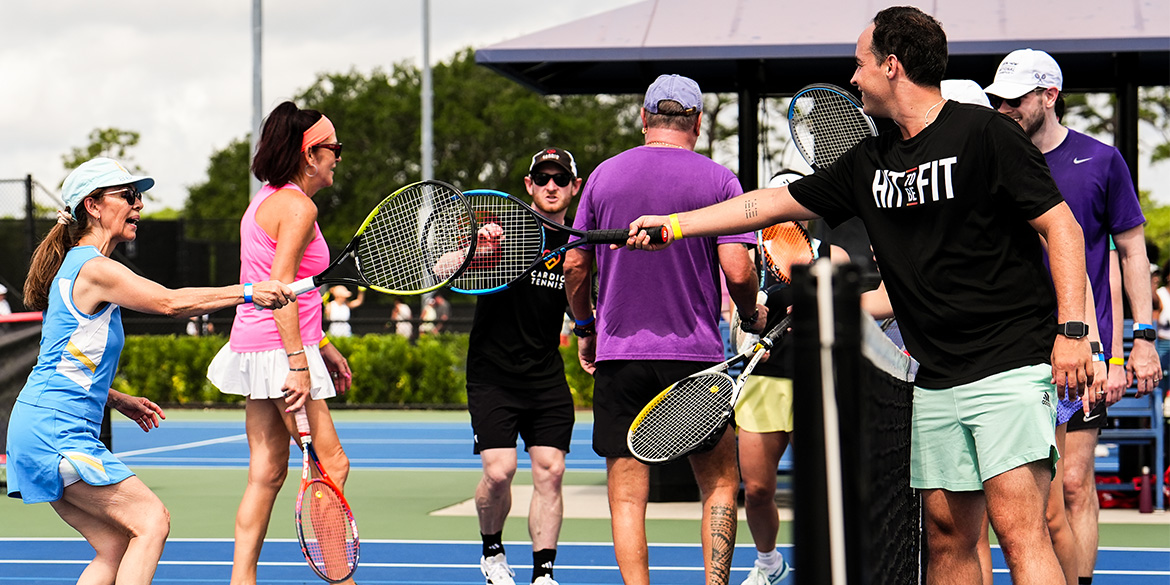
Not every traffic source is worth the same effort. A one-day social post may generate attention, but it rarely changes behavior. A beginner clinic with a clear next step, by contrast, can move someone from curiosity to participation if the club gives them a second touchpoint before they walk out the door.
The follow-up matters. If a family comes in during May, the club needs a June path: a second lesson, a discounted ladder entry, a junior night, a league sampler or a punch-card offer. Without that second step, clubs are just hosting a good afternoon. With it, they are building a retention funnel.
USA Racquetball already gives facilities a model for that funnel through its Facility Partnership Program, which is designed to help clubs introduce new players through introductory lessons, club challenge ladders, leagues and after-school junior programming.
Why the bigger tennis boom matters to racquetball
USTA’s own growth strategy targets 35 million U.S. tennis players by 2035, or about 10 percent of the population. When a sport with millions of active and former players is telling people to come back in May, racquetball can meet them with a shorter learning curve and a more intimate club experience.
USA Racquetball traces the sport to Joseph Sobek, often called the Father of Racquetball. The game developed alongside equipment advances and formal competition in the 1970s.