Racquetball eye protection remains a standardized safety requirement
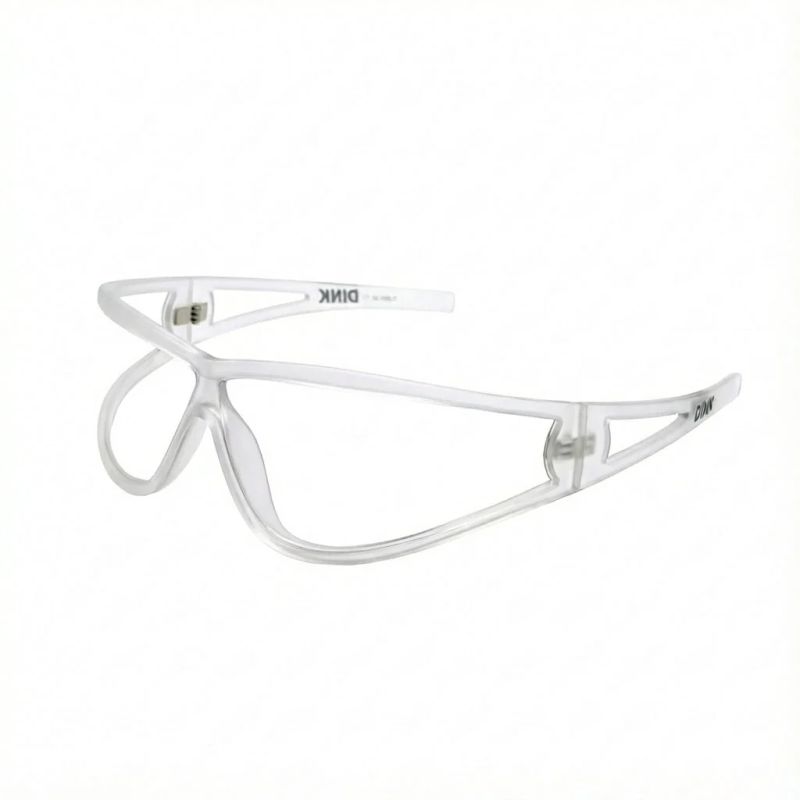
Racquetball’s eye-protection rule is not a courtesy layer added after the fact. In a four-wall court where a hard rubber ball can ricochet off every surface in an instant, eye guards sit at the center of how the sport is played, taught, and policed. The practical question for players, clubs, and junior programs is simple: is the eyewear built to a racket-sport safety standard, or is it just casual gym gear that looks close enough?
The standard that separates real protection from ordinary glasses
The clearest reference point is ASTM F3164-24, the current standard for eye protectors for racket sports. The earlier ASTM F3164-19 was titled “Standard Specification for Eye Protectors for Racket Sports (Racquetball, Squash, Tennis),” and the updated version broadened the scope to include pickleball as well. The Vision Council announced the publication of ASTM F3164-24 on December 6, 2024, in Alexandria, Virginia, giving the sport a current, named benchmark for compliant eyewear.
That matters because the standard is what separates regulated protection from eyewear that merely resembles it. For racquetball, the right lens is not a fashion accessory or a pair of lightweight gym glasses. It is an impact-resistant, sport-specific eye protector built to stay in place during sprints, dives, sudden direction changes, and contact in tight quarters. The more the equipment looks like ordinary eyewear, the more carefully it needs to be checked against the actual standard.
What compliant eyewear should look like on court
Real racquetball protection starts with coverage and stability. The eyeguard needs to shield the eyes fully, resist impact, and remain secure when a player is moving hard enough to lose balance, fall, or reach for a ball near the floor. Because racquetball is played close to walls and often close to another player, a frame that shifts, slips, or fogs at the wrong moment is a performance problem and a safety problem at the same time.
A practical equipment check should focus on a few concrete markers:
• It should be identified as meeting the current ASTM F3164 standard for racket-sport eye protectors. • It should be shatterproof-lensed when a league or school rule requires that language. • It should fit snugly enough to stay put through sprints, dives, and abrupt turns. • It should be sport-specific, not a casual pair of glasses borrowed from another activity.
That last point matters because racquetball’s enclosed court punishes the small compromises that might be acceptable elsewhere. A lens that seems fine during warmups can become a liability once a rally turns fast and the rebounds start coming off the front, side, and back walls in quick succession.
Why racquetball treats eye protection as part of the game
Racquetball’s safety culture is built into its rule materials. USA Racquetball’s instructional content refers to eye guards as required equipment, and its official rules and courts-and-equipment pages treat protective eyewear as part of the sport’s structure rather than an optional add-on. That approach is reinforced in the September 2023 rulebook, which followed seven rule changes passed by the Board of Directors in July 2023.

The teaching culture carries the same message. USA Racquetball’s 2025 video transcript pairs eye guards with a wrist tether as basic equipment, which tells players something important about how the sport views gear. The tether helps keep the racquet attached to the hand if the grip slips, a useful safeguard in a game with confined angles, fast hand speed, and little room for a stray swing. In racquetball, both items support control, and control is part of safety.
Where enforcement still has to catch up
The sport has the right rules on paper, but enforcement still depends on the level of play. A Michigan high-school racquetball league rule page says USA Racquetball-approved shatterproof-lensed eyeguards are mandatory, which is exactly the kind of hard line junior programs need when young players are learning habit patterns that can last for years. If the rule is only mentioned in a handout and never checked at the court door, the safety culture weakens fast.
Clubs and school programs that want better compliance need to make the requirement visible before the first rally. That means listing the eyewear rule in registration materials, repeating it in equipment checklists, and treating missing eye guards the same way they would treat a missing racquet. In a sport defined by fast rebounds and close-range action, soft enforcement creates the wrong lesson: that protection is negotiable when it is actually central.
Why the injury numbers matter beyond the court
The push for strong eyewear rules is part of a larger sports-safety picture. The American Academy of Ophthalmology says nearly 30,000 sports-related eye injuries are treated in U.S. emergency rooms each year, and other eye-safety materials cite more than half a million sports-related eye injuries annually in the United States. Those figures explain why racquetball’s safety standards deserve more than a casual reminder. They place the sport inside a national prevention effort where the eyes are treated as high-risk equipment, not a minor concern.
That broader context also helps explain why racket-sport standards keep evolving. ASTM’s move from the 2019 specification to the 2024 update shows a market and a safety framework that now spans racquetball, squash, tennis, and pickleball. For manufacturers, that creates a clearer product lane. For clubs and schools, it creates a more usable checklist. For players, it gives a practical answer to a basic question: if the eyewear is truly meant for racket sports, it should carry the standard that says so.
Racquetball’s identity is tied to protection
For a sport that Merriam-Webster dates to the first known use of the word “racquetball” in 1965, the equipment story is now part of the sport’s identity. The game’s speed, the wall rebounds, and the hard plastic or rubber ball never allowed eye safety to remain an afterthought. Instead, the sport’s governing material, school rules, and technical standards all point in the same direction: if the eyewear is not built for racquetball, it is not good enough for racquetball.
That is why the issue is less about preference than accountability. When clubs and junior programs enforce ASTM-backed eyeguards, they are not adding bureaucracy. They are protecting the feature that makes the sport playable at full speed.
Sources
- [1]store.astm.org
- [2]astm.org
- [3]thevisioncouncil.org
- [4]usaracquetball.com
- [5]assets.contentstack.io
- [6]mohsrball.com
- [7]aao.org
- [8]cvw1.davisvision.com
- [9]merriam-webster.com
- [10]youtube.com