Racquetball Ireland guide breaks down grips, stance and swings
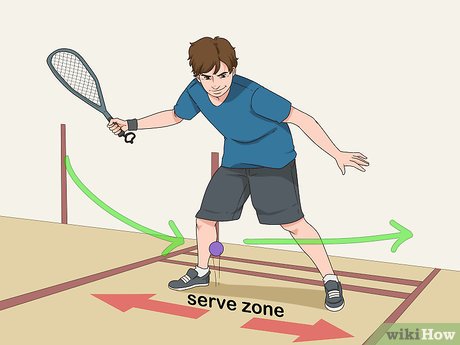
The cleanest racquetball points usually start before the swing ever fires. Racquetball Ireland’s coaching fundamentals guide treats grip, stance and contact position as the real separators between casual and consistent players, because the same small errors keep turning into off-line drives, rushed recoveries and wasted swings.
Grip comes first because the racquet face starts here
The forehand grip is built like a handshake, with the racquet held perpendicular to the side wall, the thumb and index finger making a clear V, and the grip held down near the bottom for more power. That lower hand position matters because it gives the swing a more stable lever, which helps control contact instead of chasing the ball with the face open or closed at the last second.
The backhand grip is nearly the same base shape, but it turns slightly so the V sits around 11 o’clock. The purpose is simple and practical: keep the racquet face perpendicular to the floor at contact so the ball travels straight. That detail is not beginner trivia, it is the difference between a backhand that holds the line and one that leaks into the side wall or dies early.
Stance sets the shot before the swing starts
Racquetball Ireland’s forehand stance is plain, repeatable, and built for clean mechanics. Face the side wall, bend the knees, keep the feet shoulder-width apart, and carry the racquet near ear level with the wrist cocked and the elbow almost parallel to the ground. That position loads the body without making the swing feel loose or rushed, and it gives you a ready shape that can survive pressure.
The backhand setup is just as specific. Face the side wall again, keep the knees bent, hold the racquet above the shoulder, bend the arm to 90 degrees, cock the wrist, and keep the elbow chest-high. That posture protects the swing path and makes the contact window more reliable, which is why good backhands often look compact rather than violent.
The swing is a body sequence, not a flail
On the forehand, the swing starts with weight on the back foot and moves forward as the hips and lower body rotate first. Contact comes at the front heel, then the wrist snaps, and the follow-through continues “out and around,” not “up and down.” That sequence matters because it forces the player to use the ground, hips and timing before the arm finishes the job.
That is where racquetball separates itself from flashier-looking habits. A big arm swing can produce one highlight shot, but the Racquetball Ireland model is built to produce the same shot twice, then a third time, then another one when the rally gets messy. The compact path also helps recovery, because a swing that finishes out and around leaves the body in a position to move again instead of falling out of balance.
The backhand works the same way in principle, even though the setup changes. With the racquet above the shoulder, the arm bent and the wrist cocked, the shot stays connected to the body instead of being slapped across the ball. That is what keeps the contact cleaner and the return straighter, which is the point of the entire mechanics package.
Why a foundation course matters even to players who already hit the ball
Racquetball Ireland’s coach education page makes clear that these basics are not ad hoc advice. Working with Sport Ireland Coaching, the organization offers a Foundation Level course aimed at clubs and individuals starting their coaching journey, and it is a one-day course that costs 25 euros. The course is meant to give a basic knowledge of the coaching process and the fundamentals of racquetball, which is exactly the kind of structure that keeps players from building bad habits around half-remembered tips.
The course is already producing new coaches on the ground. Racquetball Ireland said five new coaches recently began their certification through the Foundation Level Coaching Course at Tullaroan Racquetball Club. That matters because coaching depth is part of the sport’s infrastructure, and the more people who can teach the same grip, stance and swing details, the fewer players get steered into shortcuts that break down under pressure.
A sport shaped by equipment change, but not by changed fundamentals
USA Racquetball’s history traces the sport back to Joseph Sobek, the “Father of Racquetball,” who started with the idea of paddle rackets with strings during the Korean War. The same history notes the first racquets were requested from NJ Magnum Co. and that a ball emerged after several prototypes. That origin story is useful because it shows how the game was built from experimentation, yet the basic hand and body mechanics remain central decades later.
The equipment timeline makes the same point. USA Racquetball lists aluminum alloy frames in 1971, fiberglass in 1972, graphite in 1979 and oversize frames in 1984. Every one of those changes altered how the ball could be struck, but none of them replaced the need for a stable grip, a balanced stance and a controlled swing path. Better gear widened the possibilities; it did not erase the fundamentals.
The global game still runs on the same basics
The International Racquetball Federation was formed in 1979 with 13 national federations across four continents, according to the IRF. The US Racquetball Museum’s timeline lists that same 1979 federation count as 14 countries, a reminder that the early record is sometimes described differently. The broader point holds either way: racquetball spread quickly, and the same core mechanics had to work across a global player base.
That international footprint grew fast. The IRF says it gained International Olympic Committee recognition in 1985 and was one of the charter members of the World Games in 1981. It also lists the 2024 World Championships in San Antonio, Texas, which keeps the sport’s competitive center visible in the present tense. Fundamentals matter more, not less, when a sport has to travel well between countries, clubs and competitive levels.
Rules and safety sit right next to technique
USA Racquetball says the latest rulebook includes seven changes passed by the board in July 2023. Among them are one-minute timeouts, a limit of two timeouts per game, and two minutes between games two and three. Those details shape pacing and recovery, and they reward players who can settle into a repeatable swing instead of relying on emotional, high-variance shot selection.
The rulebook also requires protective racquet-sport eyewear in sanctioned events and points to ASTM-F803 standards. That is not a side note in a sport built around a hard ball and close court walls. It is part of the same discipline as grip and stance: the player who respects the mechanics also respects the frame of the game.
The wider participation picture is still expanding
The Sports & Fitness Industry Association’s 2025 topline participation report says 247.1 million Americans were active in 2024. Racquet sports were among the categories showing increases, which gives this kind of fundamentals guide a wider audience than the old club-house crowd. More players means more chances to build correct habits early, and in racquetball the earliest habits tend to stick.
That is why the small details in Racquetball Ireland’s guide do so much work. A handshake grip with the racquet face set correctly, a shoulder-width stance with bent knees, a swing that turns the hips first and finishes “out and around” instead of “up and down”: those are not cosmetic choices. They are the mechanics that keep the ball straight, keep the body balanced and keep a rally from unraveling before it starts.