Racquetball returns to The World Games, showing its global staying power
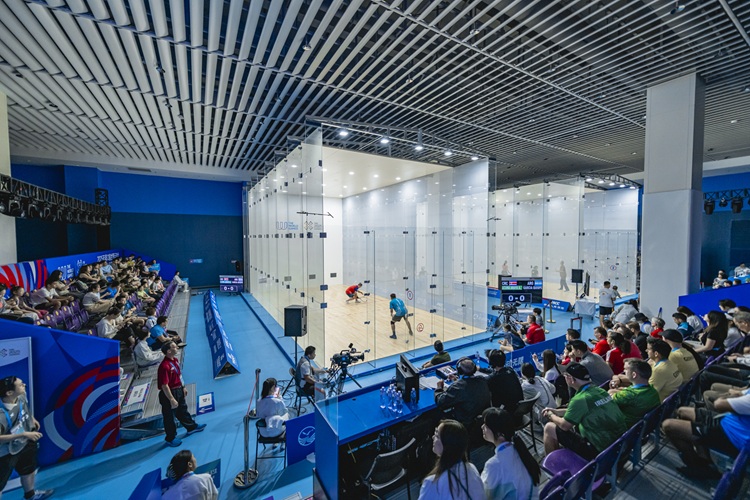
Racquetball keeps getting invited back to The World Games because it solves a problem every multi-sport event has: it is fast, easy to stage, and backed by an international federation that was organized early enough to matter. The sport was one of The World Games’ charter members in 1981, then returned in Santa Clara, London, The Hague, Kaohsiung, Cali, Birmingham, and Chengdu. That kind of repetition is not a courtesy slot, it is institutional staying power.
The federation first, the spotlight second
The International Racquetball Federation was formed in 1979 with 13 national federations across four continents, and the International Olympic Committee recognized it in 1985. Those details matter because they show racquetball did not arrive on the world stage as a loose club pastime trying to be taken seriously later. It had a governing structure, an international footprint, and a formal place in the sports hierarchy before many niche sports had even figured out how to unify their rules across borders.
That early organization is the reason racquetball could keep fitting the multi-sport model. The World Games rewards sports that are compact, visually obvious, and simple to run in a tournament setting, and racquetball checks those boxes cleanly. A court, a clear scoring system, and short, high-intensity matches make the sport easy to package for an international audience without losing its edge.
A World Games trail that spans decades and continents
The best historical spine for racquetball’s case is the list of host cities, because the geography tells the story as much as the dates do. Santa Clara in 1981, London in 1985, The Hague in 1993, Kaohsiung in 2009, Cali in 2013, Birmingham in 2022, and Chengdu in 2025 show a sport that has stayed in circulation across multiple eras and regions. This is not a one-off appearance or a brief trend line that faded when the calendar turned.

Each return placed racquetball in a different international setting, which matters for a sport still fighting to be seen beyond its strongest domestic markets. The World Games has functioned as a recurring showcase, giving racquetball a stage between world championships and the regular club or national-team circuit. That recurring visibility is the point: it keeps the sport legible to fans, officials, and athletes who might otherwise only see it as a regional specialty.
Why the slot still matters
The value of a World Games berth is bigger than the medal table. Visibility is the first currency, because every appearance gives racquetball a chance to remind sports fans that it has an international ladder and not just a domestic one. For a niche sport, that kind of exposure can be the difference between being filed away as local recreation and being understood as a legitimate global discipline.
Funding leverage is the next layer. When a federation can point to repeated inclusion on The World Games program, it strengthens the case for support from national sporting bodies, sponsors, and Olympic-adjacent institutions that want proof of relevance. A sport that keeps showing up on a recognized international stage has a better argument for travel budgets, coaching resources, and development pathways.
National-team relevance follows naturally from that. World Games selection gives athletes a target that sits above local leagues and below the biggest Olympic conversation, and that matters in a sport built around international competition. It tells federations that their best players have a reason to stay in the system, train for selection, and treat representation as more than an occasional exhibition.
Does repeated inclusion equal real growth?
The honest answer is that it is growth, but not the loud, overnight kind. Racquetball’s path from 13 national federations across four continents in 1979 to repeated World Games slots over more than four decades shows durable international reach, not just survival by inertia. That is meaningful growth in the language of sports governance, because the sport has remained organized enough, broad enough, and useful enough to keep earning scarce program space.
What it has not done, at least from the record laid out here, is explode into a mass-market phenomenon. Racquetball’s story is steadier than that. The sport has stayed relevant by being useful to the event, useful to federations, and useful to athletes who need a credible international destination for their best years.
That is why The World Games still matters so much to racquetball. Every return says the same thing in a different city: this is a sport with rules, a federation, a global calendar, and a place worth protecting on the world stage.