Racquetball rides racquet sports boom as clubs embrace shared facilities
Clubs that are already adding pickleball or padel can keep racquetball alive by treating it as part of a multi-sport floor plan, not a legacy court that must justify itself on its own.
Racquetball is no longer fighting for space as a stand-alone product. It is trying to prove it belongs inside a crowded racquet-sports economy where tennis, padel, and pickleball are pulling the same clubs, the same families, and in many cases the same dollars.
Shared facilities are now the real battleground
Racquetball gains more from shared infrastructure than from isolation. The value is not only in play volume; it is in programming density, with lessons, leagues, and rentals all working under one roof.
The broader market is already behaving that way. A Rally Racket analysis puts the market at about 19.8 million U.S. pickleball players, 19.4 million global padel players, and a tennis equipment market worth roughly $10.35 billion.
The participation boom is bigger than one sport
The Sports & Fitness Industry Association's 2024 topline report shows all seven major sport and fitness activity categories grew year over year, and racquet sports were among the categories that rose by more than 9%. In 2023, 242 million Americans, or 78.8% of the population, took part in an activity at least once. Participation has increased every year for a decade.
Pickleball’s growth is the clearest sign of what clubs are chasing. SFIA's 2024 pickleball report shows the sport grew 51.8% from 2022 to 2023 and 223.5% over three years. The report also shows the largest participation age group is 25 to 34, with 2.3 million participants.
Racquetball’s history shows how fast it can scale when the format fits
USA Racquetball's historical timeline places Joseph Sobek's early rules in 1949, his short-strung racket in 1950, and the National Paddle Rackets Association in 1952. The sport took the name racquetball in 1969, the first pro tour formed in 1972, and the first World Championships were held in 1981 in Santa Clara, California.
The same timeline puts the number of amateur players in the United States at an estimated 3 million in 1974. Britannica dates racquetball’s invention to 1950 by Joseph G. Sobek and puts participation at about 10 million players in more than 90 countries by the early 21st century.
The hard part is not popularity alone, it is court economics
The problem now is structural. In a November 19, 2024 farewell note, then-executive director Mike Grisz wrote that racquetball participation in the United States had “leveled off” while courts continued to be lost across the country. He also wrote that USA Racquetball’s proposed 2025 budget showed the organization could survive only if membership revenue, sponsorships, and donations increased, and that the group had only one paid employee.
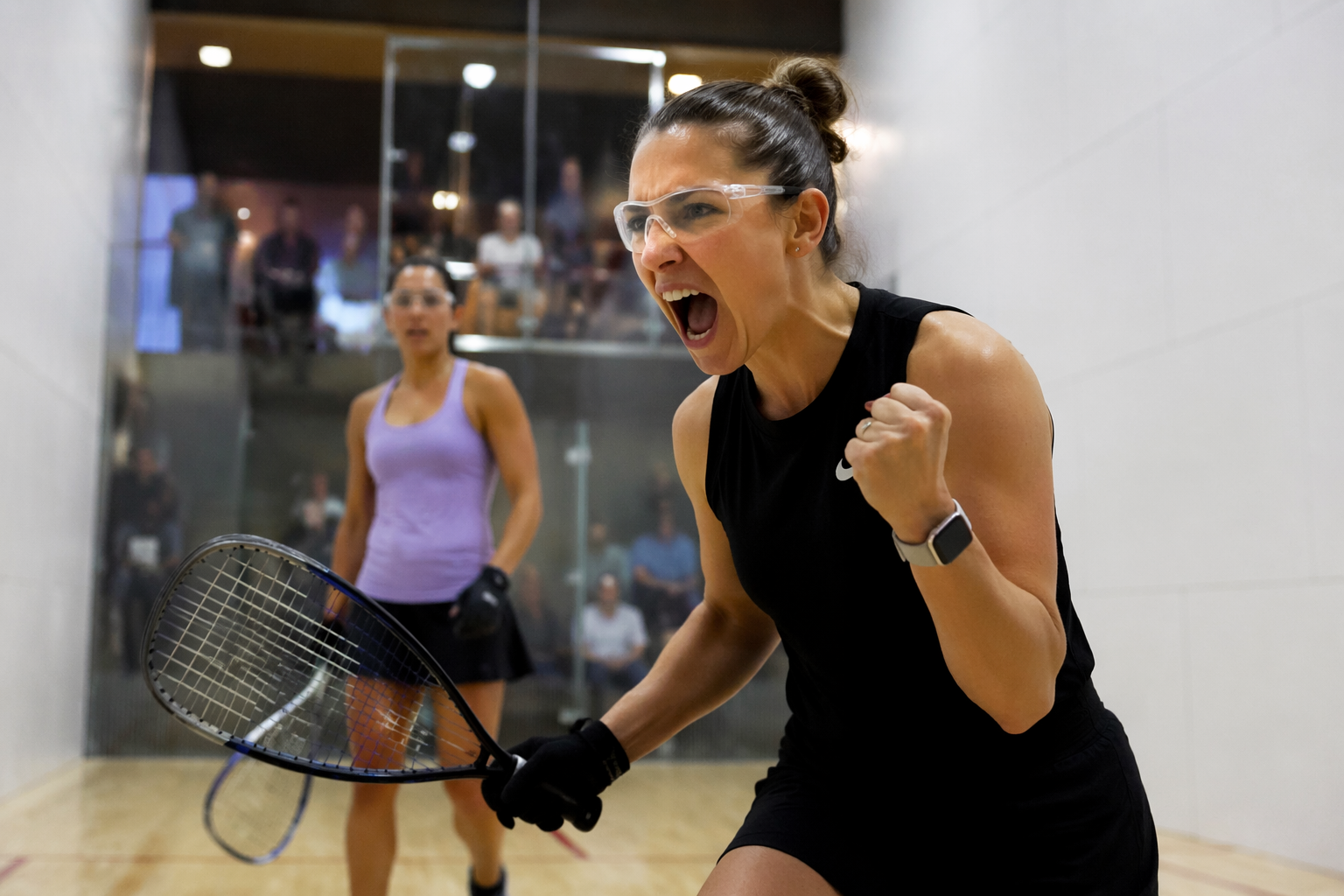
For club operators, racquetball needs a facility model that protects playable space. If a club is already investing in paddle-based sports, the smartest move may be to preserve one or two racquetball courts as part of a broader indoor offering rather than to abandon them entirely.
Beginner conversion is where racquetball can borrow from the boom
The racquet-sports leaders have been better at lowering the barrier to entry. Pickleball’s easy setup and quick learning curve have turned it into a social gateway sport, while padel has benefited from a format that feels approachable for first-timers and marketable for clubs seeking something fresh. Racquetball can borrow the same logic without changing its identity: shorten the path from first try to second visit.
That means packaging racquetball as an indoor alternative for players who are already rotating through other court sports. A club that offers tennis lessons, pickleball open play, and padel clinics can use racquetball for fast-paced cardio, small-group leagues, and rainy-day programming.
Youth growth will decide whether the pipeline survives
USA Racquetball partnered with Manilla Athletics to begin new junior programs in six to eight new cities, while relaunching its instructor program with Jim Winterton and Fran Davis and continuing partnerships with Head/Penn and Gearbox.
A 2024 Manilla Athletics trial with nine groups created seven new programs, 85 new kids playing racquetball, and 14 local tournaments involving more than 700 players.
The 2026 calendar shows a sport trying to stabilize its center
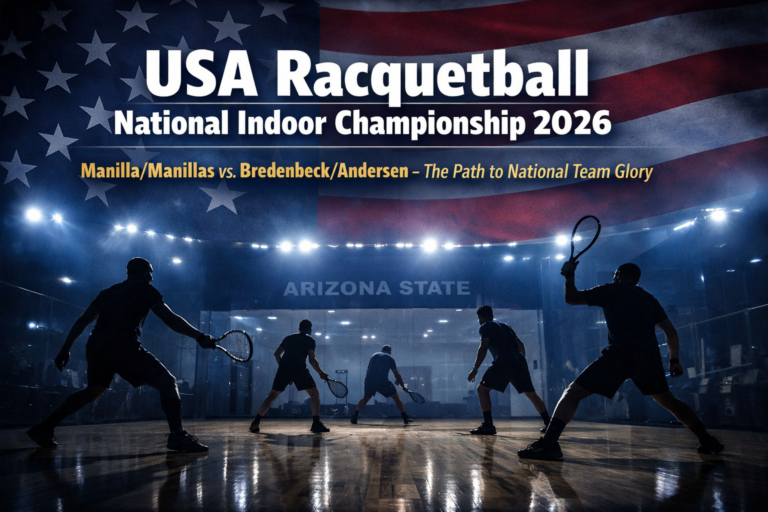
USA Racquetball scheduled the 2026 National Indoor Championships in Tempe, Arizona, for February 10 to 15, 2026, with Hall of Fame inductions for Rhonda Rajsich and Scott Winters. USA Racquetball's calendar also lists the National Junior Championships for June 2026 in Des Moines, Iowa.
USA Racquetball's March 2026 election results brought Juan Carlos Canals and Alexxander Purcell onto the Board of Directors. USA Racquetball called the 2024 IRF World Championships in San Antonio the first international competition in the United States since 1996.
What clubs can adopt right now
The practical steps are already clear: • Keep racquetball courts inside mixed racquet-sport facilities instead of treating them as dead weight. • Package beginner sessions with the same club traffic that feeds pickleball, padel, and tennis. • Use junior programs and instructor pipelines to create repeat play, not one-time trials. • Build event rentals, leagues, and crossover programming around indoor courts that can serve multiple audiences.