Racquetball rules clarify replay hinders and penalty hinders
A racquet in the swing path or a body drifting into the lane can stop a racquetball rally on a hinder call. Under International Racquetball Federation rules, a rally is over when a hinder is called, and USA Racquetball sorts the issue into Rule 3.14, Replay Hinders, and Rule 3.15, Penalty Hinders.
The rulebook draws a bright line
That split is the difference between a clean reset and a lost point. A replay hinder restarts the rally without penalty, and the server resumes at first serve. A penalty hinder, by contrast, results in the immediate loss of the rally, which means the call does not just pause play, it changes the score.
USA Racquetball also places hinders inside its broader Play Regulations section, alongside serve, readiness, delays, and rallies.
What a replay hinder looks like in real play
Replay hinders are the no-fault do-over that keep fairness intact when neither player has clearly earned an advantage from the interference. Screen balls, racquet or body contact on the backswing, and safety holdups are classic replay-hinder situations. The 2026 rules explainer also identifies ball-on-opponent, backswing contact, and fair-chance-to-see-or-return cases as the kinds of hinders that can stop play.
If the situation matches one of the stoppable hinder categories in Rules 3.14(a)(2), (5), and (6), the player should call it immediately. In self-officiated matches, waiting to see whether the shot lands well can turn a legitimate hinder into a disputed one.
When a hinder becomes a penalty
The old phrase “avoidable hinder” no longer controls the analysis. USA Racquetball amended the rulebook more than twenty years ago to replace that wording with “penalty hinder,” because the question is not whether the contact could have been avoided in some abstract sense. The real issue is whether a player failed to give the opponent a fair shot.
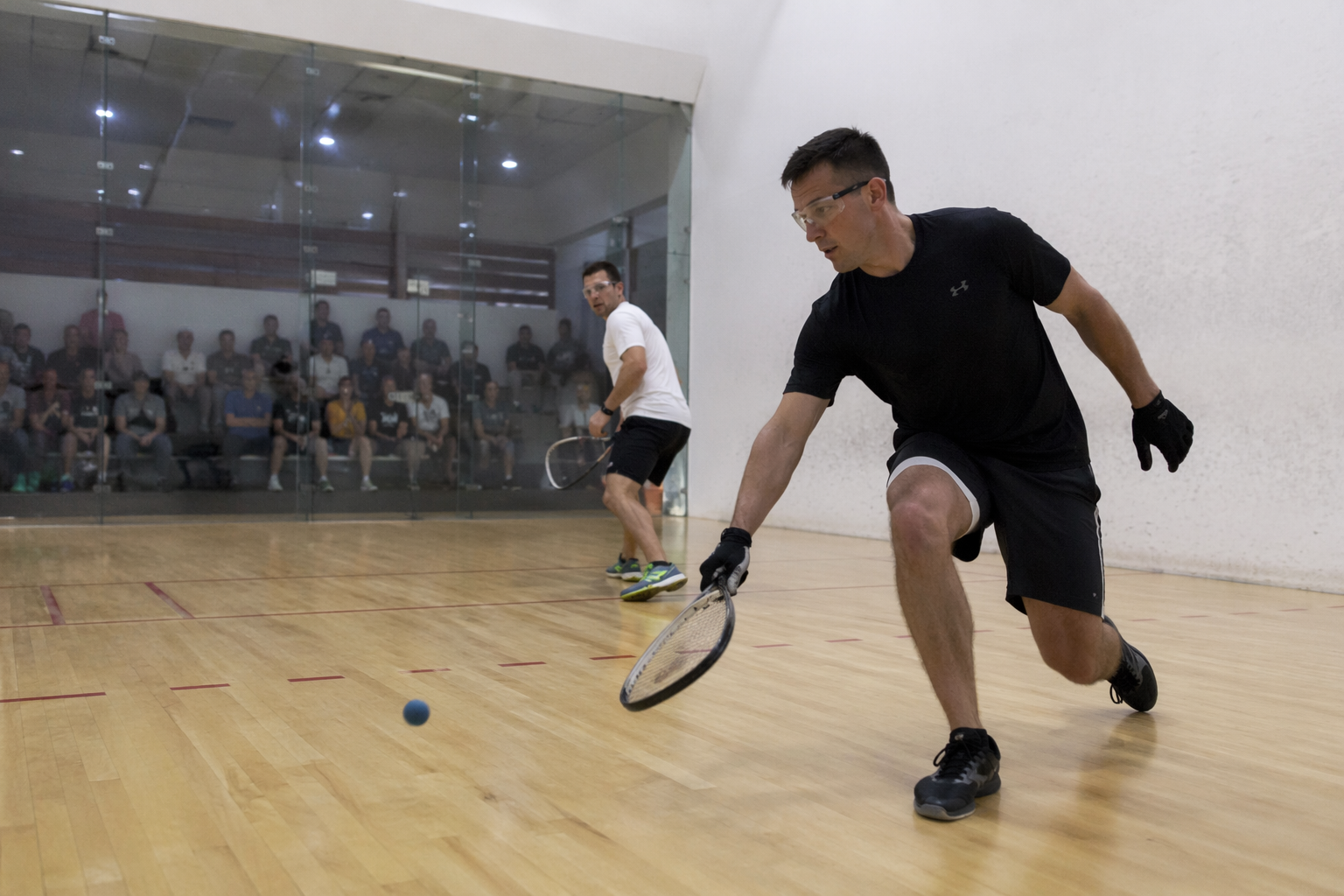
That distinction shows up in concrete match situations. A player who moves into the ball’s path and is struck can be penalized even if the movement was not intentional. So can a player who does not move enough to allow the opponent both a direct shot to the front wall and the possible cross-court option. In the March 2026 rules Q&A, USA Racquetball also addresses racquet or body contact on the backswing or immediately before returning the ball: if the contact was unpreventable, the referee may call a replay hinder; otherwise, it should be a penalty hinder.
Unavoidable contact can still be a replay, but a player who causes the opponent to lose a fair chance at the shot commits a penalty hinder even without bad intent.
Why the call changes tactics and momentum
It changes how players move between shots, especially in tight rallies near the back wall where the swing path is crowded and the body-to-body margin is thin. Defenders have to clear a legal lane to the front wall without drifting into the projected shot path, while attackers have to decide whether a threatened swing means stop or continue.
The service game is part of this too. The server, and the non-serving partner in doubles, may leave the service zone as soon as the ball is struck, but their movement cannot interfere with the return attempt. That means interference rules begin at the serve and continue through the rally, not only during frantic exchanges in open court.
Why the language keeps evolving
The rulebook has not stood still. USA Racquetball’s broader rules pages include clarifying wording changes, including added jumping language in the hinder section, and future changes are governed through its Competition Policy and Procedure E-1.
The International Racquetball Federation’s site reflects the same continuity across editions, listing rulebook and policy materials from 2016, December 2022, August 2024, and 2026-2028. The wording has shifted, but the structure has stayed consistent: replay hinders restart without penalty, while penalty hinders can end the rally immediately.
The practical read for match day
The cleanest way to use the rules is to separate safety, fairness, and fault. If the interference is one of the replay categories, the rally is replayed and the server goes back to first serve. If a player’s position, movement, or swing interference denies the opponent a fair chance, the call moves into penalty-hinder territory and the rally is lost.