Racquetball’s shot vocabulary reveals the sport’s practice map
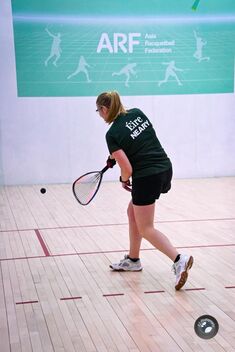
“Drop and hit down the line,” “Crack Serve,” “Jam Serve,” “Drive Z back view,” “Drive serve,” “Lob Nick Straight Forehand Lob,” and “Wide angle pass” sit together on Racquetball Ireland’s Solo Skills page. The list maps pressure, angle, and control into repeatable ways to create awkward returns in a closed court.
Serve patterns are the first rally script
Racquetball points often begin before the opponent ever gets comfortable. “Crack Serve,” “Jam Serve,” and “Drive serve” all point to the same job: put the receiver under immediate strain and make the first contact difficult to organize. USA Racquetball rules give the server two opportunities to put the ball into play in sanctioned competition, which gives the opening shot real strategic weight.
That is why serve practice belongs at the center of the sport’s training map. A drill such as “Jam Serve” is not just about pace. It is about body position, reaction time, and whether the returner can even get the racquet into the right lane. “Drive Z back view” uses the serve to steer the next bounce into a place that forces a rushed or defensive answer.
Control shots are really court-position drills
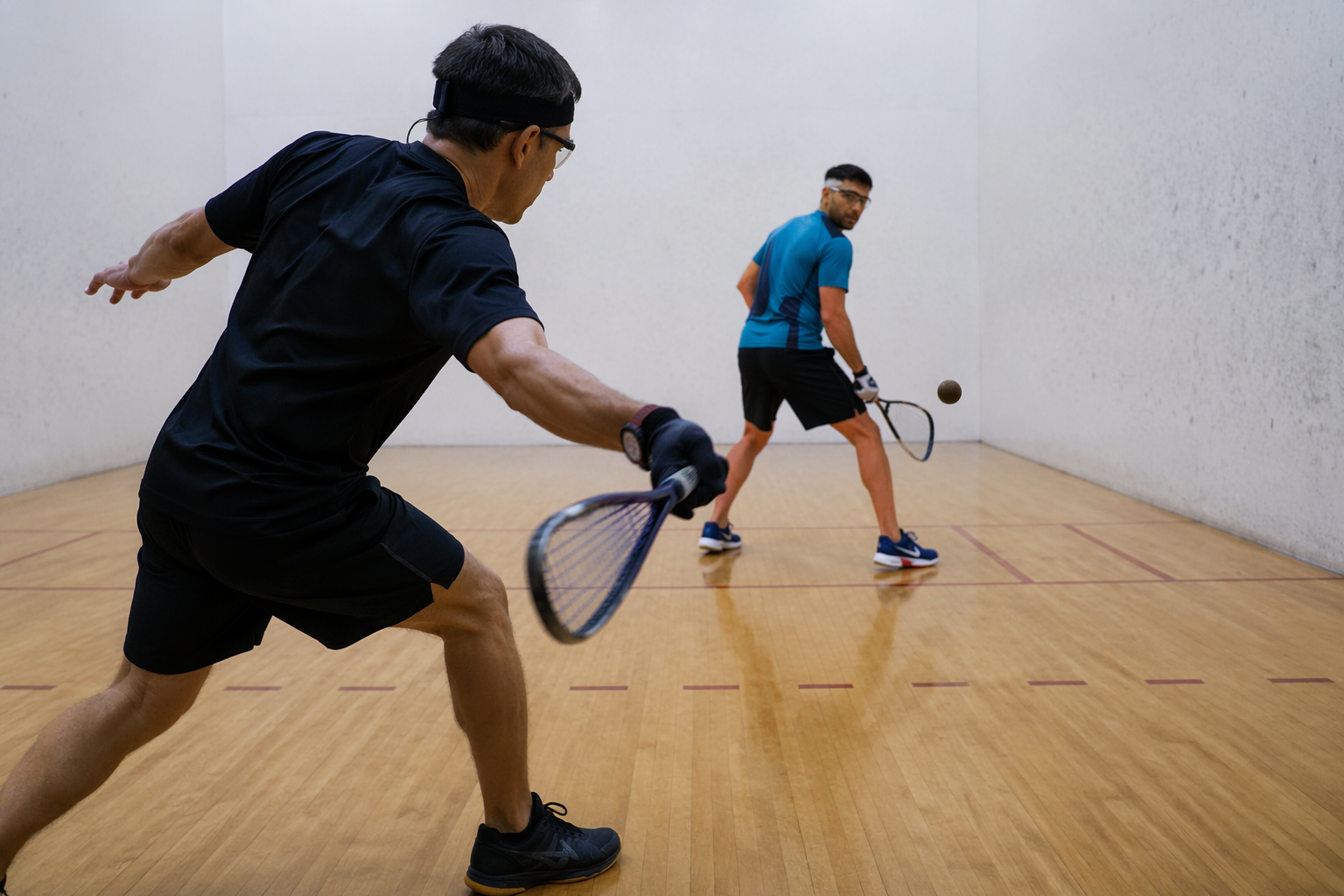
The rest of the Solo Skills list shows how much of racquetball is built on ball placement rather than sheer power. “Drop and hit down the line,” “Wide angle pass,” and “Lob Nick Straight Forehand Lob” all describe shots that ask the player to manage space, not just speed. A down-the-line ball narrows the opponent’s recovery path; a wide-angle pass stretches the court; a lob nick tries to use rebound and angle to turn defense into trouble.
These are repeatable answers to recurring rally problems: the ball is high and needs to be controlled, the opponent is out of position and needs to be stretched, or the exchange needs to be slowed and reset. Once you know the names, you start seeing the patterns in real matches, especially when a player repeatedly uses the same geometry to push the opponent deep, then pull the next ball away from the center of the court.
Footwork and grip are part of the shot, not separate from it
On Racquetball Ireland’s Fundamental & Techniques page, instruction is organized around Forehand Essentials, Grip Essentials, Forehand to Backhand Transitions and Footwork, and Backhand Grip. That structure matters because a shot in racquetball is never just contact with the ball. It is the product of how a player sets the feet, adjusts the grip, and transitions between forehand and backhand under pressure.
This is where beginners often misread the sport. A clean straight pass or a sharp ceiling ball can look like a single technical action, but the training system treats grip, footwork, and transition as part of the same chain. The better the preparation, the more likely the player can produce the exact lane or rebound needed, whether the goal is to attack open space or survive a fast exchange near the corners.
The shot library is bigger than it looks
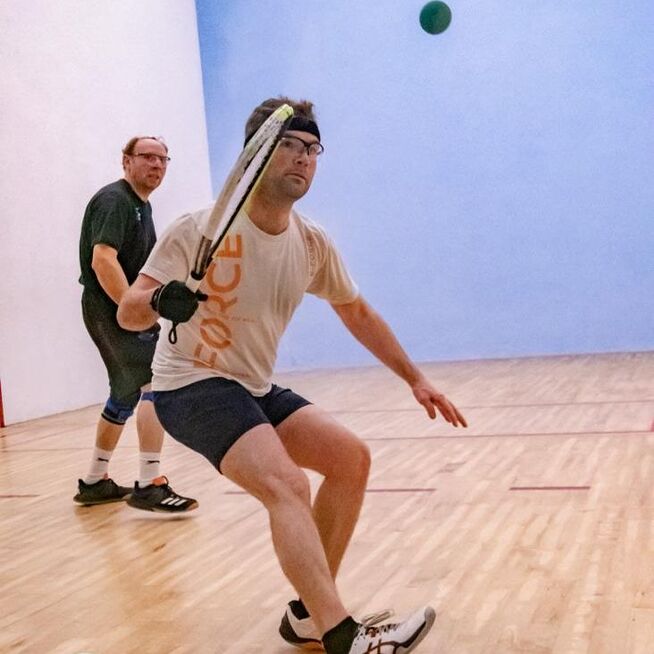
Human Kinetics’ racquetball title covers more than 35 shots and includes serves, serve returns, and front-wall, side-wall, ceiling, and back-wall shots, then expands into court positioning, shot selection, strategy, and game management.
The full shot set also shows how the walls shape every decision. In racquetball, a front-wall shot may be the obvious answer, but the side wall, ceiling, and back wall are all active parts of the attack and defense cycle.
The rules make the vocabulary matter
Racquetball is a competitive match played in a closed court, where the objective is to win each rally by serving or returning so the opponent cannot keep the ball in play. The International Racquetball Federation lists play by two or four players.
The modern rulebook has also sharpened the importance of pattern practice. USA Racquetball’s most recent rulebook includes seven board-approved changes passed in July 2023, including one-minute timeouts limited to two per game and a shorter changeover between games two and three.
An international sport built around coaching and development
The International Racquetball Federation was formed in 1979 with 13 national federations across four continents, was recognized by the International Olympic Committee in 1985, and became a charter member of the World Games when those games were first held in 1981. Its World Championships have been staged in San Antonio in 2024, San Luis Potosi, Mexico in 2022, Guatemala City, Guatemala in 2021, and San Jose, Costa Rica in 2018.
At home, the development pipeline includes club-finding tools, instructor certification, junior nationals, and rank guidelines. The IRF says its World Senior Racquetball Championships have raised more than $500,000 for development since 1989.