RacquetX 2026 shows racquetball’s growing role in the racquet-sports economy
RacquetX 2026 made one thing obvious in Fort Lauderdale: racquetball is no longer sitting off to the side of the racquet world, waiting to be noticed. At the Broward County Convention Center from March 13-15, the event pulled together more than 175 brands and, by RacquetX’s own count, 3,000-plus attendees, 150-plus companies, and 1,000-plus industry leaders under the banner of the "Home Court for Racquet Sports." That is not a nostalgia tour. It is a market map.
Racquetball is now part of the same deal flow as the rest of the racquet economy
The important shift is not that racquetball showed up at RacquetX. It is how it showed up, alongside tennis, pickleball, padel, squash, badminton, and table tennis, in a setting built for crossover business. The message from the floor was clear: clubs, brands, investors, and operators are no longer treating these sports as separate silos. They are treating them as one ecosystem with shared consumers, shared facilities, and shared growth problems.
That matters because the racquet category is where much of the industry’s momentum now lives. Racquet sports are being bundled together in product development, facility planning, and event strategy, and racquetball benefits when it is viewed through that larger lens. The sport gets a bigger audience, a broader commercial argument, and a better chance to borrow what is working elsewhere instead of trying to grow alone.
USA Racquetball still gives the sport a real backbone
The clearest counter to the old decline narrative is that USA Racquetball still has active national governance, an event calendar, and credible pathways for the next generation. Its 2026 National Junior Championships are scheduled for June 24-28 in Des Moines, Iowa, which tells you the sport still has a competitive pipeline, not just a memory bank. Rhonda Rajsich and Scott Winters also appear on USA Racquetball’s Hall of Fame list as 2026 inductees, a reminder that the sport is still defining its own standards of excellence.
That infrastructure matters because visibility without structure rarely turns into participation. A trade show can create buzz for a weekend, but a junior championship calendar and a Hall of Fame class signal continuity. Racquetball is still organizing itself like a living sport, not a relic waiting for a tribute video.
The equipment story is getting more technical, and that is a good sign
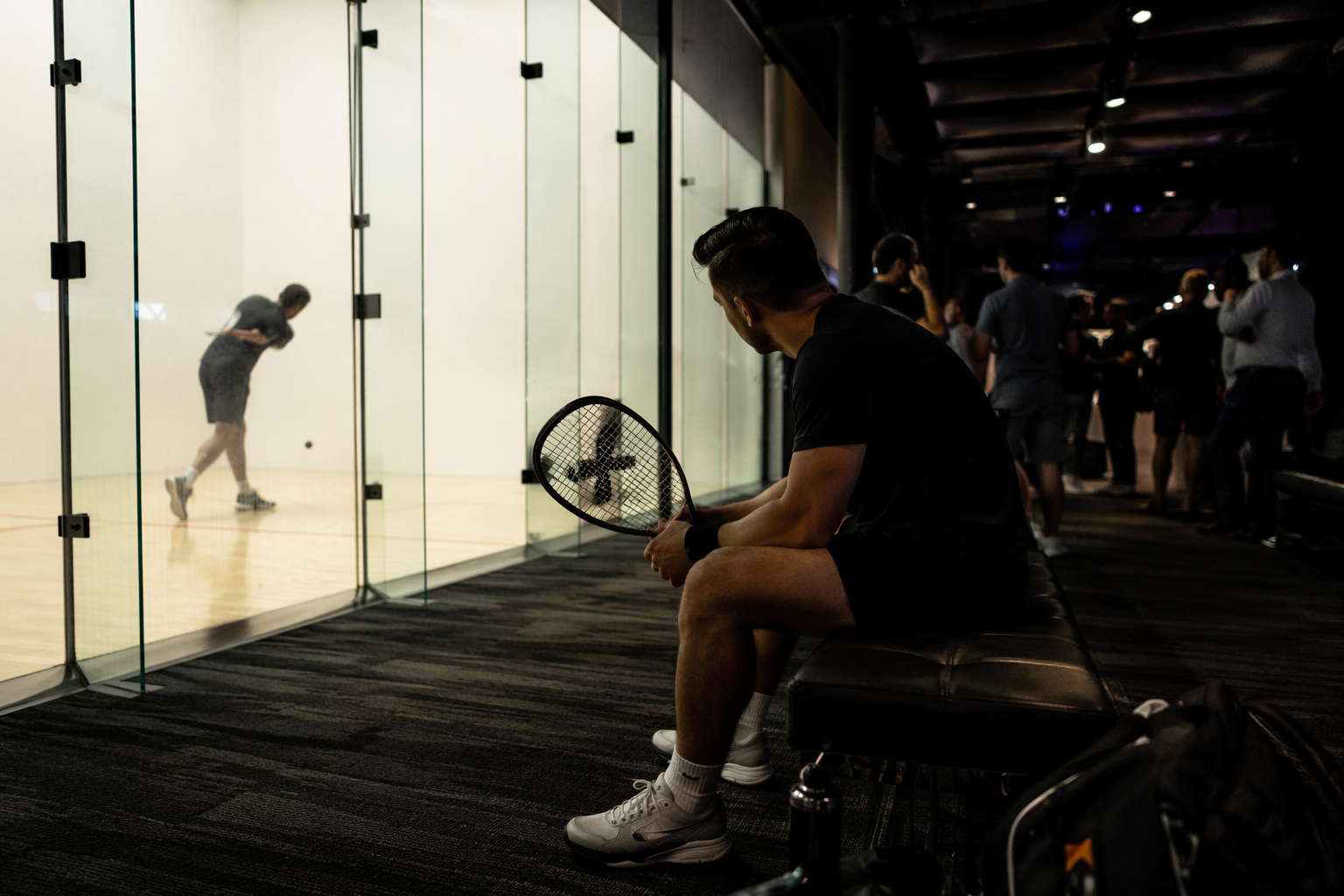
One of the most interesting themes around RacquetX 2026 was how much technology has started to bleed across racquet sports. Dual-tube racquet-frame technology, long associated with tennis, is now influencing racquetball equipment design too. That kind of crossover sounds small until you realize what it means: the sport is no longer sourcing ideas only from inside its own shrinking circle.
The same goes for AI ball machines, smart courts, and sensor-equipped rackets. These tools can shorten the feedback loop for players, help coaches see patterns faster, and make practice feel more modern to younger athletes who expect data to explain performance. In plain English, that is how you make a sport feel current instead of quaint. If racquetball wants more committed juniors and more serious adult players, the training environment has to keep pace with the rest of the racquet market.
Capital is entering the lane, and that changes the conversation
The money trail may be the strongest evidence that this is a business inflection point. Racquet 360 closed a $9 million funding round in Q4 2025 and announced it publicly in March 2026, with Sunrise Padel Capital, Profluence Capital, and Taktika Equity among the participants. Investors do not put that kind of capital into a category they believe is frozen in place.
What they are buying into is a broader operating model: better facilities, better equipment, better consumer engagement, and more efficient ways to grow participation across multiple racquet sports at once. That is why this matters for racquetball even if the headline investment was not exclusively about racquetball. When capital flows into the racquet-sports lane, racquetball can ride the same infrastructure and the same customer acquisition logic.
The winning venue model is multi-sport, not single-sport
The smartest operators are starting to build for overlap. Multi-sport facilities that combine racquetball with padel and pickleball fit the market better than single-sport spaces that can sit underused when demand shifts. That is the practical takeaway from RacquetX 2026: the future belongs to clubs that can serve different players at different times without turning one court into one bet.

Cross-disciplinary partnerships are already gaining ground, and that is where racquetball has a real opening. The sport does not need to pretend it is the center of the universe. It needs to be part of the club model that is growing fastest, because that is where new players, new memberships, and new revenue streams are being built.
Even the celebrity layer at RacquetX fits that strategy. Terrell Owens and Jarvis Landry took part in racquet-sports activities, and that kind of crossover matters because it widens the audience beyond the usual racket-sport diehards. The point is not celebrity for celebrity’s sake. The point is that mainstream visibility helps the whole category feel bigger, and bigger categories attract more investment.
The numbers behind the boom explain why this moment is different
This is not happening in a vacuum. RacquetX and LaneTerralever previously published "Who’s on the Court," a player-profile report aimed at understanding today’s racquet-sports consumer, which is exactly the kind of data the industry needs if it wants to convert interest into retention. The Sports & Fitness Industry Association reported 247.1 million active Americans in 2024, and racquet sports were among the categories that grew. That is a giant base, and racquetball does not need to own all of it to benefit from the tailwind.
USA Racquetball’s demographic reporting also sits inside the USOPC’s annual data framework, which gives the sport a more formal place in how participation gets tracked and understood. Put all of that together and RacquetX 2026 looks less like a convention recap and more like proof of concept. Racquetball is not being rescued by the racquet boom, but it is being repositioned inside it, and that is the difference between survival and growth.
The final tell is that RacquetX already has April 9-11, 2027 on the calendar back at the Broward County Convention Center in Fort Lauderdale. The market would not keep booking the same stage if it thought the story was a one-off. Racquetball’s best path forward is now tied to the same forces lifting the rest of the racquet-sports economy: technology, capital, and clubs built for more than one game.
Sources
- [1]rallyracket.com
- [2]theracquetx.com
- [3]racquet360.com
- [4]usaracquetball.com
- [5]insider.fitt.co
- [6]sfia.org
- [7]usopc.org
- [8]sgieurope.com
- [9]floridatennis.com