Ray Navarrete anchors Atlantic League's all-time offensive record book
The Atlantic League’s record book only makes sense when it is read alongside the league itself. Founded in 1998 by Frank Boulton with six teams clustered mostly in the Northeast, the circuit has grown to 10 clubs and now plays a 126-game split-season schedule that sends teams toward a League Championship Series and the Boulton Trophy. The league calls itself MLB’s first Professional Partner League and the highest level of professional baseball outside Major League Baseball, and that positioning helps explain why its offensive records carry real weight.
This is not a static independent league built only on novelty. The Atlantic League says more than 40 percent of its players have major league service time, that nearly 1,500 players have moved on to MLB organizations and international leagues, and that it has drawn nearly 50 million fans over its history. It has also served as a laboratory for rule experiments that later spread elsewhere, while becoming the first modern-era pro league to manufacture its own official baseball, Drake. The numbers in the record book come out of that mix of legitimacy, experimentation, and constant roster churn.
Navarrete as the standard of accumulation
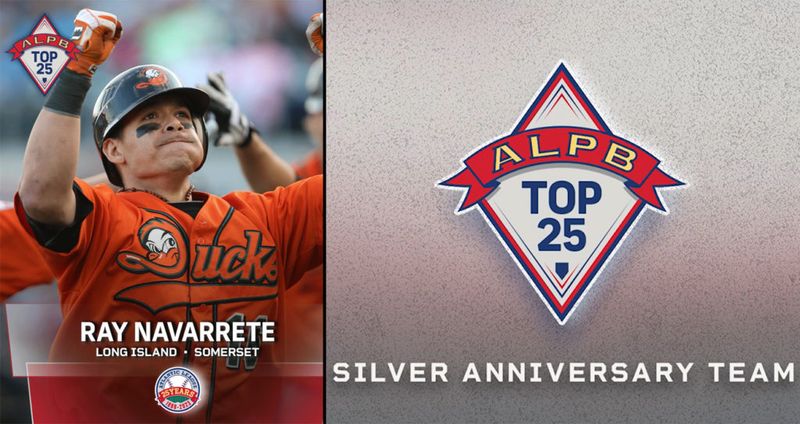
Ray Navarrete is the clearest way into the league’s offensive identity because his career line is built on every kind of everyday production. For Long Island, he is the Atlantic League’s all-time leader in runs scored with 635, doubles with 264, extra-base hits with 416, and hit by pitches with 118. He also ranks second all-time in RBIs with 578 and total bases with 1,742, and third in home runs with 143, at bats with 3,634, and games played with 939.
Those numbers tell you what kind of hitter mattered here: one who could stay on the field, hit the ball hard into the gaps, take his pitches, and keep his team moving inning after inning. Navarrete’s value was not built on a single explosive season; it came from repeated production over multiple years, the kind that leaves a mark on an entire franchise. That Long Island run also included back-to-back Atlantic League championships in 2012 and 2013, and he reached the playoffs in seven of his eight seasons with the Ducks.
The Ducks selected Navarrete for their 25th Anniversary team in 2025, which fits the way his career reads in the league’s broader history. His place at the top of the all-time lists is not just a franchise honor, but a template for what sustained offensive value looks like in this circuit.
Ford’s case for contact, volume, and peak seasons
Lew Ford gives the record book a different shape. Where Navarrete’s value spread across power, patience, and run production, Ford’s line is a reminder that the Atlantic League has also rewarded pure hit volume and year-over-year consistency. He collected 1,036 hits for the Long Island Ducks, a franchise record, and his .318 batting average, with a minimum of 1,000 at bats, stands as another team mark.
Ford also sits near the top of nearly every Long Island offensive category. He ranks second in franchise history in games played with 877, RBIs with 511, runs scored with 549, doubles with 227, extra-base hits with 324, and total bases with 1,541. That breadth matters because it shows how the league has long valued players who could anchor an order for an entire season, not just punish mistakes in isolated bursts.
His 2014 season pushes the point even further. Ford was named Atlantic League Player of the Year that season, when he set league single-season records for hits with 189 and games played with 140. He also appeared in three Atlantic League All-Star Games and earned two postseason All-Star selections, evidence that his production was sustained enough to keep him near the center of the league’s conversation. After starting the 2012 season with Long Island, his contract was purchased by the Baltimore Orioles, and he returned to Major League Baseball later that year.
Jennings and the league’s on-base power lane
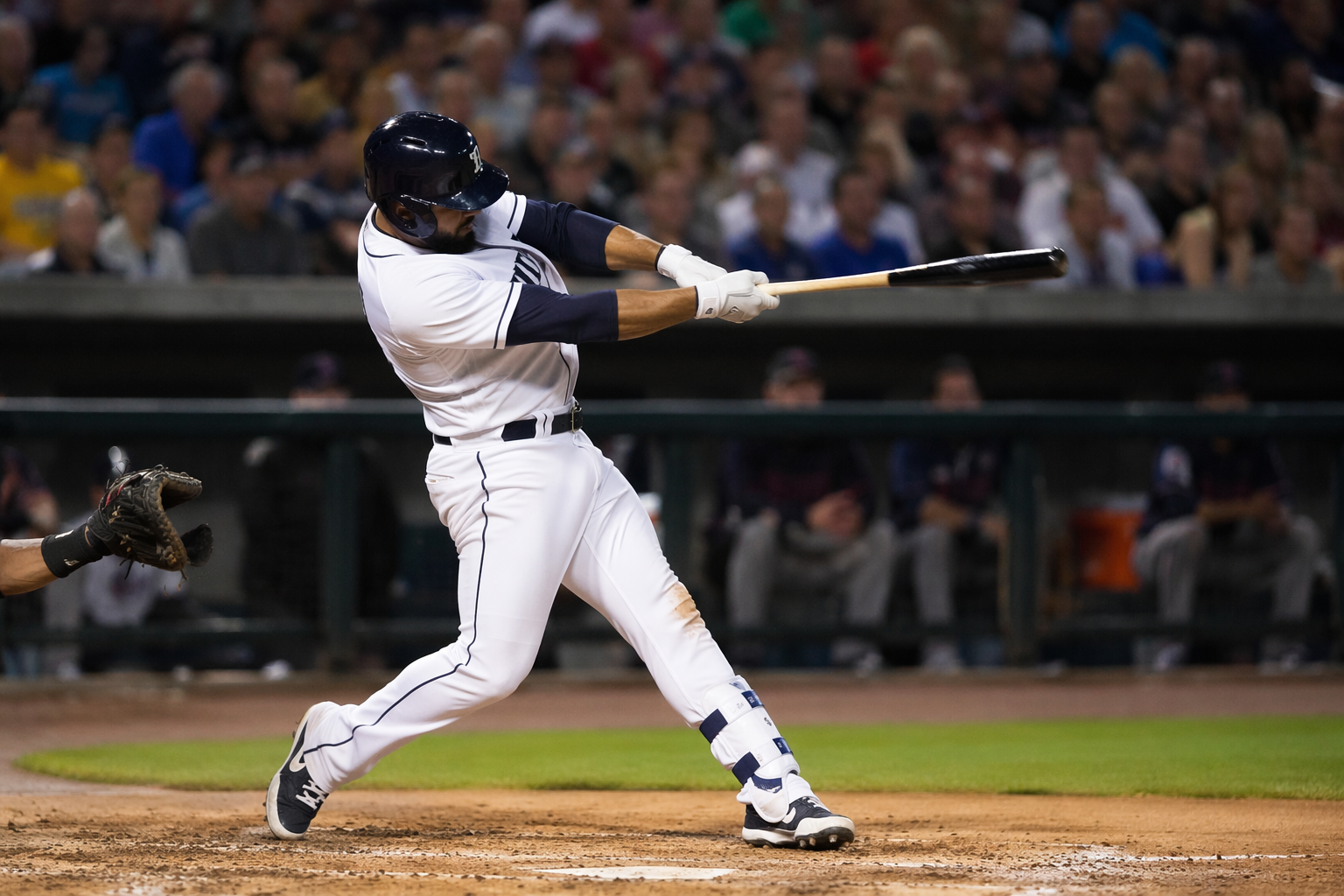
Doug Jennings occupies a different corner of the same record book. His career .440 on-base percentage, among players with at least 1,000 plate appearances, is the best in Atlantic League history, and his 117 hit by pitches trail only Navarrete. Jennings’ profile shows a hitter who was willing to work counts, absorb contact, and keep reaching base even in a league that has often celebrated power.
His best season came during Long Island’s 2004 championship run, when he posted an Atlantic League-record .505 on-base percentage and a franchise-record .359 batting average. His .612 slugging percentage also stood as the league’s single-season record until 2021. That combination is important because it separates true elite seasons from the broader offensive climate: Jennings did not just benefit from a good lineup around him, he produced one of the cleanest all-around offensive peaks the circuit has seen.
When team power starts to define an era
The league’s recent team power marks show how much context can shape the offensive environment. Gastonia hit a league-record 220 home runs in 2023, then became the first ALPB organization with multiple 200-homer seasons in 2024 when it hit 201. In 2025, Gastonia became the first franchise to reach 200 home runs in three separate seasons.
Those numbers are different from Navarrete’s and Ford’s in one important way: they reflect a full roster, a season’s run environment, and the way an organization builds its lineup. They do not diminish individual greatness, but they do show how easily the Atlantic League can tilt toward power when the right mix of hitters, parks, and conditions come together. That is why team records deserve to be read as era markers as much as as signs of single-player excellence.
Charleston offered one of the loudest single-game statements in league history by hitting 10 home runs in a game. That tied the professional record and matched the last 10-homer game by an MLB club, the Toronto Blue Jays on September 14, 1987. In one night, the Atlantic League showed that its offensive ceiling can still reach historically rare territory.
A league that keeps changing the frame
The Atlantic League has not treated its record book as a museum piece. For the 2025 season, it introduced QR codes on its official baseballs, with each of its 10 clubs assigned a unique code that fans can scan from foul balls or home runs for promotions and team messaging. The QR-code balls debuted on Opening Day, April 25, 2025, and built on the league’s distinction as the first professional league in more than 100 years to have its own manufactured baseball, Drake, introduced in 2022.
That matters because the record book sits inside a league that still likes to test the edges of the sport. The offensive numbers are not just statistics from a stable environment; they are the product of a circuit that has mixed veteran talent, league-wide experimentation, and franchise-specific run creation for nearly three decades. Navarrete, Ford, and Jennings show the different ways hitters can leave a mark there, while Gastonia and Charleston show how quickly the league can still swing toward the extreme.