Rose Bowl helped launch ultimate’s rise on the West Coast
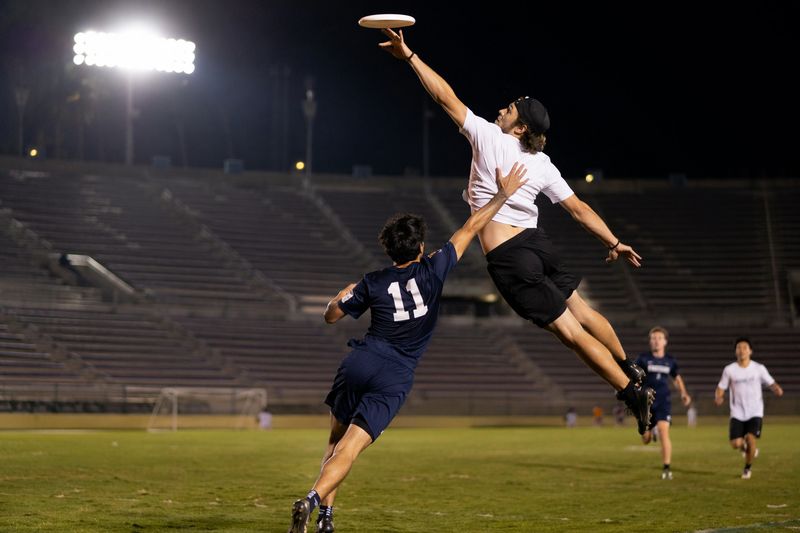
Ultimate’s rise on the West Coast did not begin in a vacuum. It passed through Columbia High School in Maplewood, New Jersey, then into places that already knew how to celebrate a flying disc, and the Rose Bowl became the most important of those stages. By the time ultimate appeared at the Second World Frisbee Championships in Pasadena, the sport had moved far enough beyond its schoolyard origin to be seen by a broader audience with its own disc-sports language.
From Maplewood to Pasadena
The modern game started in the summer of 1968 at Columbia High School, where Joel Silver, Buzzy Hellring, and Jon Hines experimented with rules while playing with a Frisbee. WFDF’s early-history timeline places the first known ultimate game there in 1968, followed by the first interscholastic game in 1970 and the first intercollegiate game in 1972. USA Ultimate’s archive frames that same origin story as a New Jersey experiment that expanded first to colleges around the Northeast and then across the country.
That pathway matters because ultimate did not spread only through leagues and campuses. It also spread through public showcases, and those showcases gave the sport an identity that could travel. Early players, as USA Ultimate’s “Johnny Appleseeds” material puts it, were crucial to carrying ultimate beyond central New Jersey high schools, and the Rose Bowl is one of the places where that broader migration became visible.
Why the Rose Bowl mattered
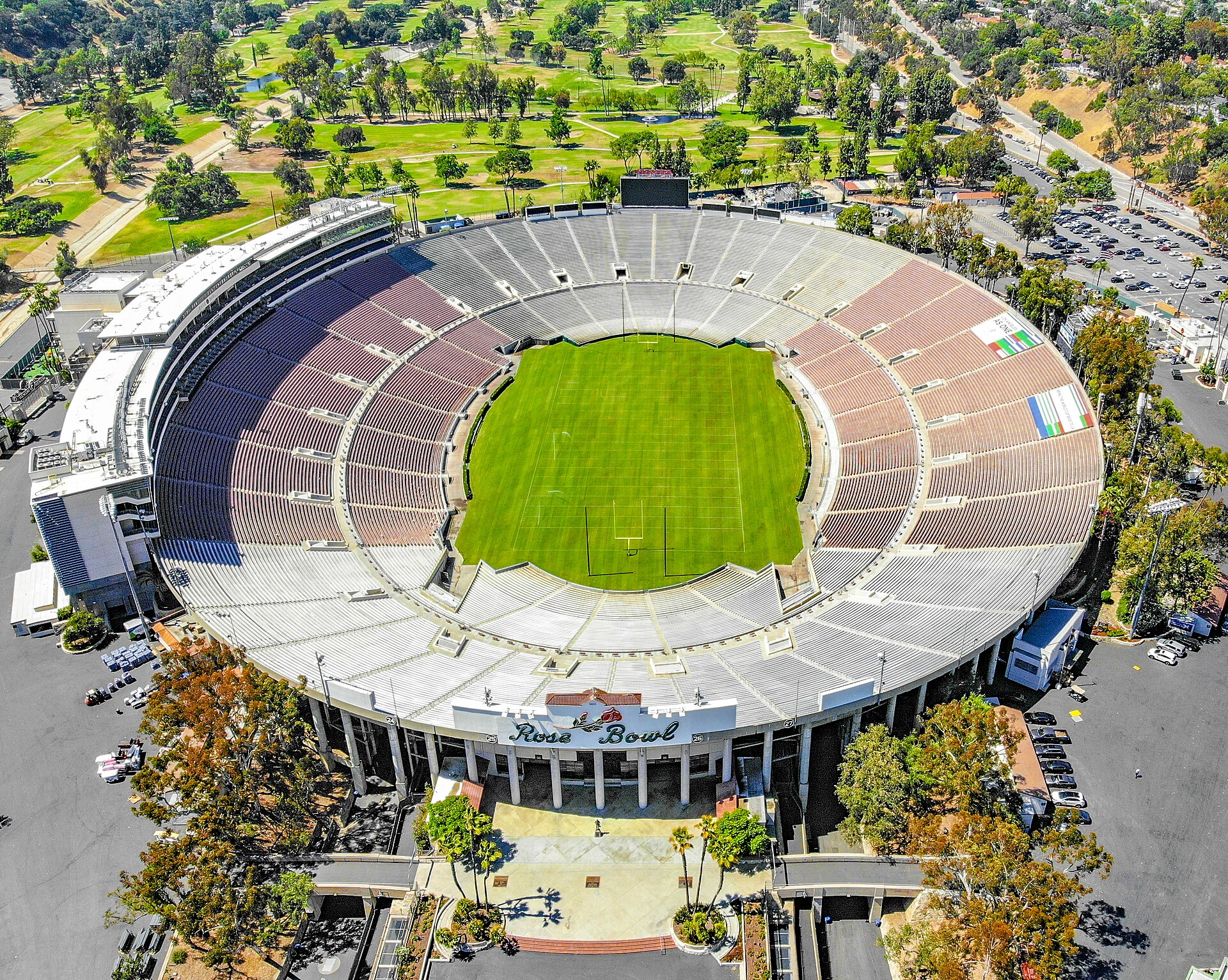
The Rose Bowl gave ultimate something rare in its early years: a prestigious public venue attached to a larger flying-disc event. WFDF says the International Frisbee Association staged a Masters Qualifying Meet and Tournament there on April 27, 1968, and Jay Shelton won that competition. That put the Rose Bowl into the flying-disc story almost from the beginning, before ultimate had its own major championship structure.
The bigger breakthrough came in 1975, when ultimate was introduced at the Second World Frisbee Championships at the Rose Bowl. WFDF says that appearance helped develop ultimate on the West Coast of the United States, and the venue itself helped explain why. Pasadena was not just a football cathedral converted for a weekend of disc play; it was a place where ultimate could be seen alongside other Frisbee disciplines, making the game legible to fans who already understood throws, catches, distance, and disc flight.
The World Frisbee Championships at the Rose Bowl were part of a broader annual series that ran from 1974 to 1982. That run gave the sport repeated exposure in a setting that felt bigger than a college tournament and more polished than a campus demo. The Rose Bowl did not invent ultimate, but it helped move it from an internal experiment into a public performance with recognizable stakes.
1975: the bridge year for ultimate
The same year ultimate arrived at the Rose Bowl, the sport also took another formal step at Yale. WFDF says the first organized collegiate ultimate tournament was played there on April 25, 1975, with eight teams in attendance. Rutgers beat Rensselaer Polytechnic Institute 28-24 in that event, giving the college game a concrete competitive marker just as the sport was beginning to show itself on a bigger stage in Pasadena.
That sequence is the key to understanding ultimate’s early growth. Yale supplied structure, with eight college teams and a first organized tournament. The Rose Bowl supplied visibility, placing ultimate inside a broader disc festival where the sport could be understood as part of a larger culture rather than as a one-off campus oddity. Together, those moments helped the game make the jump from local novelty to organized competition with a public face.
A marketing machine with real consequences
The Rose Bowl finals were not a neutral showcase. The Flying Disc Museum describes the World Frisbee Championships finals there as an invitation-only, all-expense-paid event built as a marketing promotion for the Frisbee. Wham-O, the company that made the Frisbee, sponsored the 1975 World Frisbee Championships, and the same event also carried sponsorship from Pepsi and American Airlines.
That commercial frame helps explain why the Rose Bowl mattered so much. It brought ultimate into a polished, sponsor-backed environment with money, promotion, and a ready-made audience. For a young sport, that kind of exposure could be more influential than a scoreline. It also placed ultimate in the orbit of a broader family-friendly Frisbee ecosystem, where flying-disc play was not just an athletic curiosity but something visible enough to sell and stage at scale.
The West Coast ripple effect
WFDF is explicit about the outcome: ultimate’s Rose Bowl appearance helped the sport develop on the West Coast. That line is doing real work. Southern California was already a place where outdoor recreation, park culture, and spectacle could overlap, so Pasadena gave the sport an audience that was not limited to college athletes or East Coast alumni networks. Once ultimate was seen there, it looked less like a campus pastime and more like a traveling competitive format.
That shift also changed how the sport could be imagined. Instead of remaining tied only to Columbia High School and the early triangle of Maplewood, New Jersey, Rutgers, and Yale, ultimate could now be placed inside a larger national map of disc gatherings. The Rose Bowl helped turn that map into something concrete: a place where the sport could be introduced, watched, and remembered by people already invested in Frisbee culture.
The pre-world-championship era
The Rose Bowl story sits in the years before ultimate had its own true world championship. WFDF says the first true World Ultimate Championship was held in Gothenburg, Sweden, in 1983. That means Pasadena belongs to the pre-global championship era, when ultimate was still being folded into broader Frisbee spectacles instead of standing alone as an international property.
That distinction matters because it shows how the sport matured. First came the New Jersey invention, then the college spread, then the Yale tournament, then the Rose Bowl showcase, and only later the standalone world stage in Gothenburg. In that sequence, the Rose Bowl is the hinge: a prestige venue that helped a campus-born game enter mainstream Southern California disc culture and prepared it for the more formal competitive world that followed.